
About Basanti Dulal Nagchaudhuri
Lived 1917 – 2006 (aged 88). Basanti Dulal Nagchaudhuri was an Indian physicist and nuclear physicist, known for India and Nuclear physics.
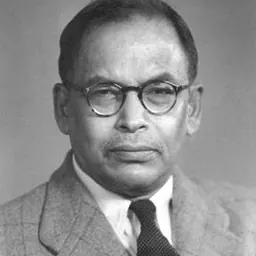
Basanti Dulal Nag Chaudhuri (6 September 1917 – 25 June 2006) was an Indian Nuclear scientist and academic, and Scientific Advisor to the Ministry of Defence, Government of India. He is known as one of the pioneers of nuclear physics in India. While serving as the Director General (chairman) to the Defence Research and Development Organisation (DRDO), he played influential role in Pokhran-I (Smiling Buddha), India's first successful Nuclear bomb test on 18 May 1974. This historic achievement made India the sixth nation in the world to become a nuclear superpower, after the United States of America, Soviet Union (now Russia), England, France, and China. He also initiated the first feasibility studies on India's ballistic missile program.
In the early 1970s, as the Scientific Advisor to the Ministry of Defence and chair of the Cabinet Committee on Science and Technology, Basanti Dulal Nagchaudhuri played an influential role in Smiling Buddha, India's first nuclear test. He also initiated the first feasibility studies on India's ballistic missile program. Later, he also served as a member of the Planning Commission and as Vice Chancellor of the Jawaharlal Nehru University.
Early life Basanti Dulal Nag Chaudhuri hailed from a Bengali Hindu family of Narayanganj, Dhaka, Bengal Presidency, British India (present-day Bangladesh). During the partition of India in 1947 and the ensuing communal violence in East Bengal (now Bangladesh) of Pakistan, his family moved to West Bengal, India.
His father became a professor of English at the Banaras Hindu University, now Indian Institute of Technology (Banaras Hindu University) Varanasi (IIT-BHU).
He graduated with a Bachelor of Science degree from the Banaras Hindu University. During his doctorate at Berkeley, he had worked with the pioneers of the cyclotron. Before returning to India in 1941, with support from Saha and funding from the Tatas, Nagchaudhuri had arranged for shipment of parts for a cyclotron magnet to the Calcutta University. However, ship carrying the second consignment of parts for the cyclotron was sunk by the Japanese. The team under the leadership of Saha and later under Nagchaudhuri took on the task of building the remaining parts themselves. Problems with the vacuum pumps continued to afflict the project. The demountable oscillators also proved difficult to build. It was only in 1954, after a visit from Emilio Segre to the laboratory, that the cyclotron started to function. Nagchaudhuri is thus credited with building the first cyclotron in India.
In 1953, he succeeded Meghnad Saha as the Palit Professor of Physics at Calcutta University, a post which he held until 1959. He was a visiting professor at University of Illinois at Urbana-Champaign in 1961-62 and nominated as a Lincoln Lecturer.
Government Being well-connected to the political elite of West Bengal through his relationship with B.C. Roy and with P.N. Haksar, Nagchaudhuri was nominated to serve as the Chairman of the Cabinet Committee of Science & Technology from 1969 to 1972. It was in the scientific laboratories of the DRDO, headed by Nagchaudhuri, that the explosive lenses for the test were fabricated. The test was successfully conducted in May 1974.
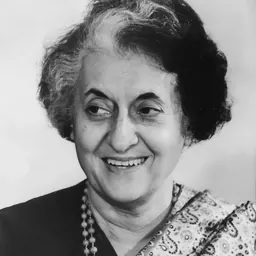
In 1970, he was also tasked by Indira Gandhi to prepare a classified feasibility study for building long-range ballistic missiles. Another initiative, Project Devil, was initiated at the Defense Research & Development Laboratory (DRDL) to produce short-range surface-to-air missiles. While both projects were terminated in 1974 due to conflicts within DRDL and resulting lack of progress, they laid the foundation for the successful Integrated Guided Missile Development Program in the early 1980s.
In 1970-71, Nagchaudhuri also chaired a committee that examined India's maritime security issues. The committee made several key recommendations about the requirement to patrol India's vast coastline, set up a registry of offshore fishing vessels in order to identify illegal activity, and establish a capable and well-equipped force to intercept vessels engaged in illegal activities. The recommendations of the committee formed the foundation of the subsequent Rustamji Committee in 1974, that led to the establishment of the Indian Coast Guard.
Later work From 1 July 1974 to 1 January 1979, he served as the Vice Chancellor of the Jawaharlal Nehru University (JNU). From 1975 to 1977, he served as the Chairman of the National Committee on Environmental Planning and Coordination.
He also served on the Board of Governors of the Indian Institute of Technology, Delhi. He was awarded the Padma Vibhushan in 1975. He also received honorary doctorates from Andhra University and the Kanpur University.
Death Nagchaudhuri died of a cerebral infarction on 25 June 2006. He was survived by his wife, Dipali Nag, his son and his family.
Don’t just read it —
keep it.
Full-length biographies made to live with: read them, listen on the way to work, watch them tonight.
- E-book
- Audio
- Video
Instant download · yours to keep · every purchase keeps this site free
Important facts
People in Basanti Dulal Nagchaudhuri's life
Named in this biography and alive at the same time
Related people
Same field, nearest in time


Contemporaries
People whose lives overlapped Basanti Dulal Nagchaudhuri's

Frequently asked questions
Who was Basanti Dulal Nagchaudhuri?
Indian physicist
When was Basanti Dulal Nagchaudhuri born?
Basanti Dulal Nagchaudhuri was born on 6 September 1917 in Dhaka District.
When did Basanti Dulal Nagchaudhuri die?
Basanti Dulal Nagchaudhuri died on 25 June 2006 in India, Kolkata.
What was Basanti Dulal Nagchaudhuri's occupation?
Basanti Dulal Nagchaudhuri was a physicist and nuclear physicist.
What was Basanti Dulal Nagchaudhuri known for?
Basanti Dulal Nagchaudhuri was known for India and Nuclear physics.
What nationality was Basanti Dulal Nagchaudhuri?
Basanti Dulal Nagchaudhuri was Indian.
Sources & further reading
· Wikipedia: Basanti Dulal Nagchaudhuri
· DBpedia: Basanti Dulal Nagchaudhuri
Cite this page
APA: Biography.guide. (2026). Basanti Dulal Nagchaudhuri. https://biography.guide/basanti-dulal-nagchaudhuri/
MLA: "Basanti Dulal Nagchaudhuri." Biography.guide, https://biography.guide/basanti-dulal-nagchaudhuri/.
Chicago: "Basanti Dulal Nagchaudhuri." Biography.guide. https://biography.guide/basanti-dulal-nagchaudhuri/.
Data last updated: 2026-09-22 · Spot an error? Report a correction.
Page generated 2026-09-27 05:27 UTC