
About Bart de Ligt
Lived 1883 – 1938 (aged 55). Bart de Ligt was a Dutch theologian, writer, philosopher, women's rights activist, pastor and politician.
Bartholomeus de Ligt (17 July 1883 – 3 September 1938) was a Dutch anarcho-pacifist and antimilitarist. He is chiefly known for his support of conscientious objectors.
Life and work Born on 17 July 1883 in Schalkwijk, Utrecht, his father was a Calvinist pastor. Following his father's footsteps, he became a theology student at the University of Utrecht. While there, he was exposed to liberal thinking and Hegelian philosophy for the first time. In 1909, became a member of the League of Christian Socialists. In 1910, he was appointed pastor of the Reformed Church at Nuenen, near Eindhoven in Brabant where Van Gogh's father had been pastor 25 years before.
First anti-war activities In 1914, de Ligt joined fellow pastors A. R. de Jong and Truus Kruyt to write "The Guilt of the Churches", charging that the Christian establishment had been complicit in the events that produced World War I. Afterward, his writings became forbidden literature for the Dutch armed forces. His impassioned sermons supporting conscientious objection resulted in his being banned from those parts of the Netherlands considered to be in the war zone.
In 1918, he resigned as pastor declaring that, because of his increasingly universalist approach to religion, he no longer considered himself to be specifically a Christian.
Later activities In 1918, De Ligt married the Swiss activist Catherina Lydia van Rossem, with whom he had a son. He was imprisoned in 1921 for organizing a general strike to gain the release of , a jailed conscientious objector who had gone on a hunger strike. Later that year, he founded the IAMB (International Anti-Militarism Bureau). As he was becoming more involved with the work of the League of Nations, in 1925 he moved to Geneva, where he remained for the rest of his life. However, De Ligt became sceptical about the League's efforts, viewing it as how the colonial powers maintained an unjust world order. De Ligt instead regarded the Brussels Congress Against Colonial Oppression and Imperialism, held in 1927, as more representative of the world's population. At a meeting of the War Resisters International in 1934, he presented his now-famous "Plan of a Campaign Against All Wars and Preparation for War". (The full text of which may be found in The Conquest of Violence.) De Ligt also took a firm stand against fascism and Nazism in the 1930s.
De Ligt's ideas were especially influential in Britain; they strongly influenced the British No More War Movement. Writing in the pacifist magazine Peace News, playwright R. H. Ward praised De Ligt as "the Gandhi of the West". and details his rejection of antisemitism, militarism, imperialism, capitalism, fascism and Bolshevism. The Conquest of Violence drew on British philosopher Gerald Heard's idea that human aggression had become "a useless evil" with the advent of industrialized warfare. Anarchist historian George Woodcock reports that The Conquest of Violence "was read widely by British and American pacifists during the 1930s and led many of them to adopt an anarchistic point of view".
Major writings The Conquest of Violence : an Essay on War and Revolution, introduction by Aldous Huxley; new introduction by Peter van den Dungen; translated by Honor Tracy from the French text revised and enlarged by the author. Pluto; Winchester, MA, USA : La Paix Créatrice; Histoire des Principes et des Tactiques de L'Action Directe Contre la Guerre, 2 vols., Paris, Marcell Riviere, (1934). Erasmus, Arnhem, (1936).
Don’t just read it —
keep it.
Full-length biographies made to live with: read them, listen on the way to work, watch them tonight.
- E-book
- Audio
- Video
Instant download · yours to keep · every purchase keeps this site free
Important facts
People in Bart de Ligt's life
Named in this biography and alive at the same time
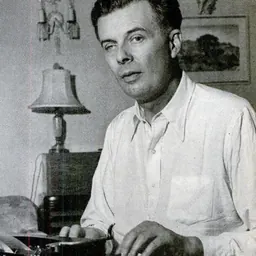

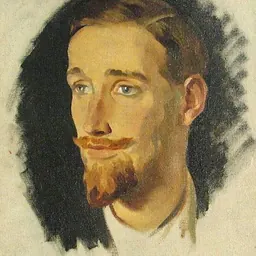

Related people
Same field, nearest in time

Contemporaries
People whose lives overlapped Bart de Ligt's


Frequently asked questions
Who was Bart de Ligt?
Dutch politician (1883–1938)
When was Bart de Ligt born?
Bart de Ligt was born on 17 July 1883 in Utrecht.
When did Bart de Ligt die?
Bart de Ligt died on 3 September 1938 in Nantes.
What was Bart de Ligt's occupation?
Bart de Ligt was a theologian, writer, philosopher, women's rights activist, pastor and politician.
What nationality was Bart de Ligt?
Bart de Ligt was Dutch.
Sources & further reading
Cite this page
APA: Biography.guide. (2026). Bart de Ligt. https://biography.guide/bart-de-ligt/
MLA: "Bart de Ligt." Biography.guide, https://biography.guide/bart-de-ligt/.
Chicago: "Bart de Ligt." Biography.guide. https://biography.guide/bart-de-ligt/.
Data last updated: 2026-09-20 · Spot an error? Report a correction.
Page generated 2026-09-27 05:21 UTC