
About Gerald Heard
Lived 1889 – 1971 (aged 81). Gerald Heard was a British novelist, writer and science fiction writer.
Henry FitzGerald Heard (6 October 1889 – 14 August 1971), known commonly as Gerald Heard, was an English-born American historian, science writer and broadcaster, public lecturer, educator, and philosopher. He wrote many articles and more than 35 books.
Heard was a guide and mentor to numerous well-known people from the 1940s through the 1960s, including Aldous Huxley, Henry Luce, Clare Boothe Luce, and Bill Wilson, co-founder of Alcoholics Anonymous. His work was a forerunner of, and influence on, the consciousness development philosophy that has spread in the Western world since the 1960s.
Early life The son of an Anglo-Irish clergyman, Heard was born in London, but spent much of his youth in Ireland. His temperamental father practised corporal punishment, but his stepmother (his father's second wife) was kind to him.
Due to his inquisitive mind and interest in science, by age eight Heard began to become a skeptic regarding the conventional Christianity of his forebears — a process that was completed by the time he was age sixteen. He was educated at Sherborne School, Dorset, leaving in 1909. Heard studied history and theology at Gonville and Caius College, Cambridge, graduating with honours in history.
Heard became the literary secretary to William Snowdon Robson. As well, he worked for the Agricultural Cooperative Movement in Ireland. During the 1920s and early 1930s, he acted as the personal secretary of Sir Horace Plunkett, promoter of cooperativism, who spent his last years at Weybridge, Surrey. Naomi Mitchison, who admired Plunkett and was a friend of Heard, wrote of that time: "H.P., as we all called him, was getting past his prime and often ill but struggling to go on with the work to which he was devoted. Gerald [Heard] who was shepherding him about fairly continually, apologized once for leaving a dinner party abruptly when H.P. was suddenly overwhelmed by exhaustion".
Horace Plunkett owned real estate in the U.S. states of Nebraska and Wyoming, and left some properties to Heard in his will. This inheritance proved invaluable when it enabled financing projects Heard pursued after his eventual emigration to the United States. though he continued to cohabit with Wood periodically until the 1950s.
Meanwhile, Heard played a minor part in the development of the Peace Pledge Union. Heard became well known as an advocate for pacifism and argued for the transformation of behaviour by meditation and "disciplined nonviolence".
Heard was the first among a group of literati friends (several others of whom, including Christopher Isherwood, were also British) to discover Swami Prabhavananda and Vedanta. Heard became an initiate of Vedanta. Like that of his friend Aldous Huxley (another in the circle), the essence of Heard's mature philosophy was that a human being can effectively pursue intentional evolution of consciousness. He maintained a regular discipline of meditation, along the lines of yoga, for many years. He became interested in parapsychology and was a member of the Society for Psychical Research.
Heard concluded that the impediment to be addressed was "the problem of letting in a free flow of comprehension beyond the everyday threshold of experience while keeping the mind clear." In 1942, he founded Trabuco College as a facility where comparative religion studies and practices could be pursued. Living as a freelance scholar, Heard had enjoyed security in America by way of what he had inherited from Horace Plunkett as well as his own family. He used some of his inherited resources toward this most ambitious of projects. The idealistic experiment required land, and Heard bought 300 acres in Trabuco Canyon, in the Santa Ana Mountains.
Psychedelics In 1954 Heard tried mescaline and, in 1955 tried LSD. He felt that, used properly, these had strong potential to "enlarge Man's mind" by allowing a person to see beyond his ego.
In August 1956, Alcoholics Anonymous founder Bill Wilson first took LSD—- under Heard's guidance and with the officiating presence of Sidney Cohen, a psychiatrist then with the California Veterans Administration Hospital. According to Wilson, the session allowed him to re-experience a spontaneous spiritual experience he had had years before, which had enabled him to overcome his own alcoholism. During the late 1950s, Heard also worked with psychiatrist Cohen to introduce others to LSD, including John Huston and Steve Allen. With experience, Heard developed a judicious opinion of the value of psychedelics, since at their best the insights and ecstasies they facilitate are temporary states. Religion writer Don Lattin wrote that Heard's view was "LSD might provide an experience of the great mysteries, but it offered no instant answers."
Five Ages of Man In January 1964, what some consider to be Heard's magnum opus, a book titled The Five Ages of Man, was published. (A new edition, retitled The Five Ages of Humanity, has been published. ) According to Heard, the prevalent developmental stage among humans in modern, well-industrialized societies (especially in the West) should be regarded as the fourth: the "humanic stage" of the "total individual," who is dominated mentally, feeling him- or herself to be autonomous, separate from other persons. Heard writes (p. 226) this stage is characterised by "the basic humanic concept of a mankind that is completely self-seeking because it is completely individualized into separate physiques that can have direct knowledge of only their own private pain and pleasure, inferring but faintly the feelings of others. Such a race of ingenious animals, each able to see and to seek his own advantage, must be kept in combination with each other by appealing to their separate interests."
In modern industrial societies, a person, especially if educated, has the opportunity to begin entering the "first maturity" of the humanic "total individual" in his or her mid teens. However, according to Heard, a fifth stage is in the process of emerging, a post-individual psychological phase of persons and therefore of culture. According to Heard, the second maturity can be one that is beyond "personal success, economic mastery, and the psychophysical capacity to enjoy life"
Death Toward the end of his life, Heard was given a bit of financial assistance by Henry Luce and Clare Boothe Luce. Heard died on 14 August 1971 at his home in Santa Monica, California, of the effects of several earlier strokes he had, beginning in 1966. At his request, there was not any memorial service, and his body was donated to the Willed Body Program at UCLA Medical Center.
Legacy Heard's general philosophy and the ideas and opinions of his later years, were influences on Myron Stolaroff, the electrical engineer who in 1961 founded the Institute for Advanced study, in Menlo Park, California. Trabuco College and Heard's philosophy and ideas were also an important influence on the founding of the Esalen Institute. Michael Murphy and Dick Price started organizing seminars at Esalen near Big Sur in 1962, with Heard being a notable presenter. Murphy and Price went on to officially establish the Esalen Institute in 1964. In turn, the institute has been a source of inspiration, and a prototype, for many other retreats and growth centers extending the human potential movement.
In popular culture: James Lapine's Broadway musical Flying Over Sunset includes a character named "Gerald Heard," modeled on the real-life Gerald Heard. The Heard character was played by Robert Sella in the first Broadway run (beginning in December 2021, though closing early during the mid-COVID period). Three other characters—Cary Grant, Aldous Huxley and Claire Boothe Luce—are modeled on those widely known public figures, each of whom, in real life, actually had repeated LSD experience. In the play (set during the 1950s), each of these three characters deals with a nagging emotional challenge, and Lapine delivers the play's essence in Act II, when the three have a shared LSD session with Heard serving as their guide.
Fiction Heard wrote fiction using the name H.F. Heard. This included three detective novels about Mr. Mycroft (implied to be Sherlock Holmes after his retirement). Mr. Mycroft and his friend, Mr. Silchester, featured in three novels: A Taste for Honey, 1941 (televised in 1955 as Sting of Death and filmed, as The Deadly Bees, 1967); Reply Paid; and The Notched Hairpin. Hugh Lamb has described The Great Fog and The Lost Cavern as "two splendid books of short stories". The Black Fox is an occult thriller featuring black magic. Anthony Boucher described Doppelgangers as "in style and imagination, the most exciting and provocative piece of science fiction since the heyday of M. P. Shiel."
Don’t just read it —
keep it.
Full-length biographies made to live with: read them, listen on the way to work, watch them tonight.
- E-book
- Audio
- Video
Instant download · yours to keep · every purchase keeps this site free
Important facts
People in Gerald Heard's life
Named in this biography and alive at the same time
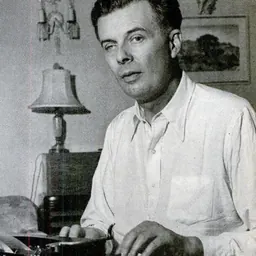



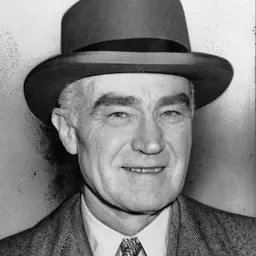


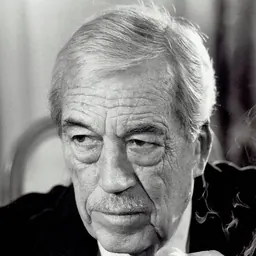
Related people
Same field, nearest in time

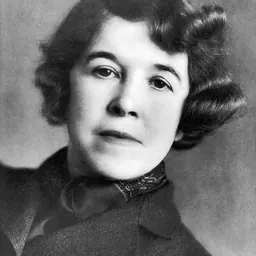


Contemporaries
People whose lives overlapped Gerald Heard's

Frequently asked questions
Who was Gerald Heard?
British writer and academic (1889–1971)
When was Gerald Heard born?
Gerald Heard was born on 6 October 1889 in London.
When did Gerald Heard die?
Gerald Heard died on 14 August 1971 in Santa Monica.
What was Gerald Heard's occupation?
Gerald Heard was a novelist, writer and science fiction writer.
What nationality was Gerald Heard?
Gerald Heard was British.
Sources & further reading
Cite this page
APA: Biography.guide. (2026). Gerald Heard. https://biography.guide/gerald-heard/
MLA: "Gerald Heard." Biography.guide, https://biography.guide/gerald-heard/.
Chicago: "Gerald Heard." Biography.guide. https://biography.guide/gerald-heard/.
Data last updated: 2026-09-27 · Spot an error? Report a correction.
Page generated 2026-09-27 05:17 UTC