
About Barry Mazur
Born 1937. Barry Mazur is an American mathematician and university teacher, known for Artin–Mazur zeta function, Diophantine geometry and Eilenberg–Mazur swindle.
Barry Charles Mazur (; born December 19, 1937) is an American mathematician and the Gerhard Gade university professor at Harvard University. His contributions to mathematics include his contributions to Wiles's proof of Fermat's Last Theorem in number theory, Mazur's torsion theorem in arithmetic geometry, the Mazur swindle in geometric topology, and the Mazur manifold in differential topology.
Life
Born in New York City, Mazur attended the Bronx High School of Science, and left after his junior year to attend MIT; he did not graduate from the university on account of failing a then-present ROTC requirement. He was nonetheless accepted for graduate studies at Princeton University, where he received his PhD in mathematics in 1959 after completing a doctoral dissertation titled On embeddings of spheres. Thus, his only academic degree is a PhD. He is the Gerhard Gade University Professor and a Senior Fellow at Harvard. He is the brother of Joseph Mazur and the father of Alexander J. Mazur.
Work
His early work was in geometric topology. In an elementary fashion, he proved the generalized Schoenflies conjecture (his complete proof required an additional result by Marston Morse), around the same time as Morton Brown. Both Brown and Mazur received the Veblen Prize for this achievement. He also discovered the Mazur manifold and the Mazur swindle.
His observations in the 1960s on analogies between primes and knots were taken up by others in the 1990s giving rise to the field of arithmetic topology.
Coming under the influence of Alexander Grothendieck's approach to algebraic geometry, he moved into areas of diophantine geometry. Mazur's torsion theorem, which gives a complete list of the possible torsion subgroups of elliptic curves over the rational numbers, is a deep and important result in the arithmetic of elliptic curves. Mazur's first proof of this theorem depended upon a complete analysis of the rational points on certain modular curves. This proof was carried in his seminal paper "Modular curves and the Eisenstein ideal". The ideas of this paper and Mazur's notion of Galois deformations were among the key ingredients in Wiles's proof of Fermat's Last Theorem. Mazur and Wiles had earlier worked together on the main conjecture of Iwasawa theory.
In an expository paper, Number Theory as Gadfly, Mazur describes number theory as a field which
He expanded his thoughts in the 2003 book Imagining Numbers and Circles Disturbed, a collection of essays on mathematics and narrative that he edited with writer Apostolos Doxiadis. In 1982 he was elected a member of the National Academy of Sciences. Mazur was elected to the American Philosophical Society in 2001, and in 2012 he became a fellow of the American Mathematical Society.
Mazur has received the Veblen Prize in geometry (1966), the Cole Prize in number theory (1982), the Chauvenet Prize for exposition (1994), In 2022, he was awarded the Chern Medal for outstanding lifelong achievement in mathematics.
Publications
Books
Don’t just read it —
keep it.
Full-length biographies made to live with: read them, listen on the way to work, watch them tonight.
- E-book
- Audio
- Video
Instant download · yours to keep · every purchase keeps this site free
Important facts
more
Mazur's Conjecture B, Mazur's control theorem, Mazur's torsion theoremPeople in Barry Mazur's life
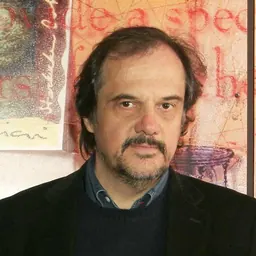
Named in this biography and alive at the same time



Related people
Same field, nearest in time

Contemporaries
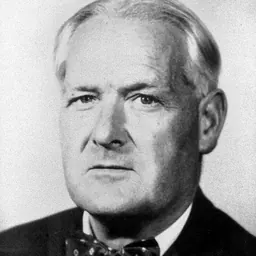
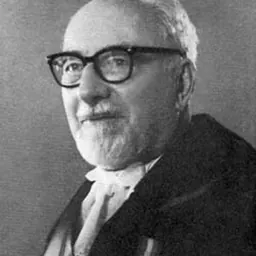
People whose lives overlapped Barry Mazur's



Frequently asked questions
Who is Barry Mazur?
American mathematician
When was Barry Mazur born?
Barry Mazur was born on 19 December 1937 in New York City.
What is Barry Mazur's occupation?
Barry Mazur is a mathematician and university teacher.
What is Barry Mazur known for?
Barry Mazur is known for Artin–Mazur zeta function, Diophantine geometry, Eilenberg–Mazur swindle, Fontaine–Mazur conjecture, Generalized Schoenflies conjecture and Mazur manifold.
What nationality is Barry Mazur?
Barry Mazur is American.
Sources & further reading
Cite this page
APA: Biography.guide. (2026). Barry Mazur. https://biography.guide/barry-mazur/
MLA: "Barry Mazur." Biography.guide, https://biography.guide/barry-mazur/.
Chicago: "Barry Mazur." Biography.guide. https://biography.guide/barry-mazur/.
Data last updated: 2026-09-26 · Spot an error? Report a correction.
Page generated 2026-09-27 05:14 UTC