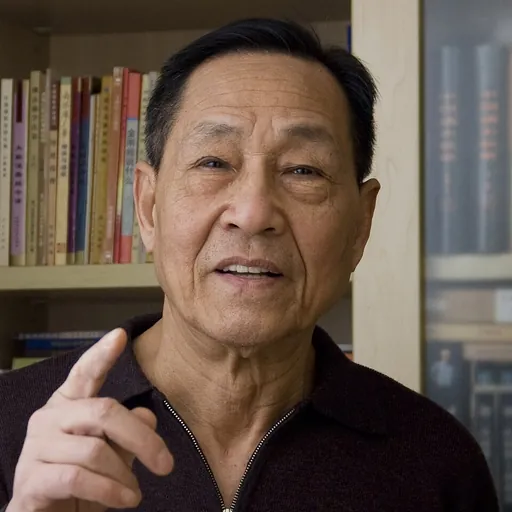
Bao Tong
Policy secretary of former CCP general secretary & Chinese premier Zhao Ziyang
About Bao Tong
Lived 1932 – 2022 (aged 90). Bao Tong was a Chinese politician, writer and head of government.
Bao Tong (; 5 November 1932 – 9 November 2022) was a Chinese writer and activist. He was Director of the Office of Political Reform of the Central Committee of the Chinese Communist Party (CCP) and the Policy Secretary of Zhao Ziyang (Chinese Premier from 1980 to 1987 and CCP General Secretary from 1987 to 1989). He was also Director of the Drafting Committee for the CCP 13th Party Congresses, known for its strong support of market reform and opening up under Deng Xiaoping. Prior to this, he was a committee member and then deputy director of the Chinese State Commission for Economic Reform. During the 1989 Tiananmen Square protests, he was one of the very few Chinese senior officials to express understandings with the demonstrating students, which led to his arrest shortly before the massacre on June 4.
Biography
Early life
Bao was born in Haining, Zhejiang Province, but he grew up and received his primary and secondary education in Shanghai. Through the influence of his uncle, Wu Shichang (a well-known political commentator in the 1930s-1940s and major contributor to The Observer, a key journal of Chinese liberal intellectuals), Bao turned to political liberalism and left-wing ideology promoted by the CCP, when he was still a high school student. She was an active member of the communist underground who was kicked out of many schools for organising demonstrations. Bao was Director of the Drafting Committee for the CCP 13th Party Congresses, which successfully passed a political reform package that attempted to end nepotism and separate party and state.
Prior to this, he was a committee member and then deputy director of the Chinese State Commission for Economic Reform. Bao was the political secretary of the Politburo Standing Committee between November 1987 and May 1989.
End of government career
Bao, along with Zhao Ziyang, helped Hungarian-American investor George Soros establish the Beijing-based Fund for the Reform and Opening of China (China Fund) in 1986. After Zhao and Bao were arrested in 1989, representatives from the organization were arrested and interrogated by Chinese authorities. Zhao's supporters expressed concern that the Chinese government wanted to link Bao and Zhao to "foreign subversive forces", including the Central Intelligence Agency (CIA). He was a signer of the Charter 08 manifesto and called for the release of Liu Xiaobo, an organiser of the charter who was arrested in December 2008.
On 19 January 2005, the Washington Post reported that Bao Tong and his wife were injured in attacks by more than 20 plainclothes security agents as they attempted to leave their home to pay their respect to the family of Zhao Ziyang, who died on 17 January. The authorities would only allow him access to a doctor if he removed a white flower (traditional symbol of mourning) pinned to his vest. He refused. His wife, pushed to the ground by a policeman, received a bone fracture in her spine that resulted in her being hospitalized for three months.
On 1 January 2007, Reuters tested a new government relaxing of regulations on foreign reporters by visiting Bao Tong at his home, purportedly to conduct an interview about the 2008 Summer Olympic Games. Since then, several foreign reporters have done the same. The guards sometimes attempt to intimidate or deny visitation, but were apparently allowing most foreign reporters to enter, if prior arrangements were made. Local Chinese reporters were not included in this new relaxation of regulations.
Sky News reporter Peter Sharp describes his visit to Bao Tong in his blog.
Their home telephone continued to be tapped and periodically cut off, especially when overseas callers asked to speak to Bao Tong. He was followed everywhere he went, and was occasionally blocked from "sensitive" events or places, for example, the home of Zhao Ziyang while he was alive, and his funeral after his death in 2005. Bao was allowed to leave Beijing on three occasions since his arrest in 1989, the last time in 2009 for a holiday by invitation and escort of the Public Security from 22 May to 7 June, neatly avoiding the 20th anniversary of the Tiananmen Massacre. Visits from his son, Bao Pu, a resident of Hong Kong, were permitted by special arrangements only; under normal circumstances of application, he was unable to obtain a visa.
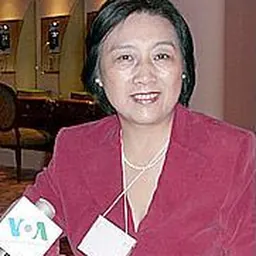
Bao died in Beijing on 9 November 2022, at the age of 90; the death was announced on Twitter by Bao Pu. Journalist Gao Yu, a close friend of Bao, stated that he had died of myelodysplastic syndrome, and that the funeral would take place on 15 November 2022. On mourning Zhao Ziyang: "[his] life formed part of a heroic and mighty task, that of pioneering the protection of human rights and democracy for the Chinese people... To mourn Zhao is to defend human rights. To mourn Zhao is to pursue democracy and the rule of law."
Don’t just read it —
keep it.
Full-length biographies made to live with: read them, listen on the way to work, watch them tonight.
- E-book
- Audio
- Video
Instant download · yours to keep · every purchase keeps this site free
Important facts
People in Bao Tong's life
Named in this biography and alive at the same time



Related people
Same field, nearest in time






Contemporaries
People whose lives overlapped Bao Tong's

Frequently asked questions
Who was Bao Tong?
Policy secretary of former CCP general secretary & Chinese premier Zhao Ziyang (1932–2022)
When was Bao Tong born?
Bao Tong was born on 5 November 1932 in Haining, Republic of China (1912–1949).
When did Bao Tong die?
Bao Tong died on 9 November 2022 in Beijing.
What was Bao Tong's occupation?
Bao Tong was a politician, writer and head of government.
What nationality was Bao Tong?
Bao Tong was Chinese.
Sources & further reading
Cite this page
APA: Biography.guide. (2026). Bao Tong. https://biography.guide/bao-tong/
MLA: "Bao Tong." Biography.guide, https://biography.guide/bao-tong/.
Chicago: "Bao Tong." Biography.guide. https://biography.guide/bao-tong/.
Data last updated: 2026-09-21 · Spot an error? Report a correction.
Portrait: Wikimedia Commons · author & licence
Page generated 2026-09-27 04:59 UTC