
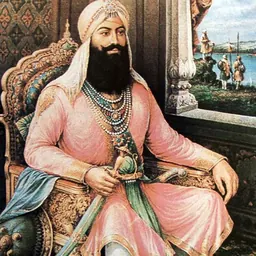
Baghel Singh
Leader of the Singh Krora Misl
About Baghel Singh
Lived 1730 – 1802 (aged 71–72).
Early life
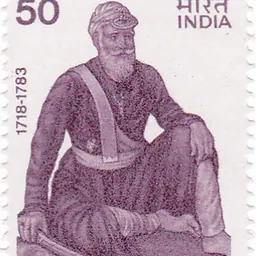
Baghel Singh was born in village Chabhal Kalan, Tarn Taran district of Punjab around 1730s into a Dhillon Jat family. After the death of Karora Singh, Baghel Singh succeeded him to the headship of the Misl.
Military career Following Adina Beg Khan's death in September 1758, and during Ahmad Shah Durrani's invasion of the Marathas (1759-1761), Sikh sardars expanded their territories, establishing themselves as regional chieftains. Baghel Singh acquired a significant portion of Hoshiarpur district and nearly one-fourth of the Jalandhar Doab. He established his primary headquarters in Hariana, 12 kilometers west of Hoshiarpur, and entrusted administrative responsibilities to his wife, Rup Kanwar, who governed effectively.
After the partition of the Sarhind province in January 1764, Baghel Singh expanded his territories to include Chhalondi, Jamaitgarh, Khurdin, and Kinori. He established a secondary headquarters in Chhalondi, 30 kilometers from Karnal on the Jagadhri road, with his second wife, Ram Kanwar, overseeing administration. His third wife, Ratan Kaur, managed Kalawar. While his wives handled regional governance, Baghel Singh focused on external affairs and military campaigns.
In Ganga Doab Following the conquest of Sirhind province, the Taruna Dal returned to West Punjab, while the Budha Dal, a formidable force of 40,000, marched into the upper Ganga Doab under the leadership of Jassa Singh Ahluwalia and Baghel Singh Dhaliwal. In February 1764, they sacked the town of Saharanpur and ravaged the districts of Saharanpur, Muzaffarnagar, and Meerut.
In 1779, Abdul Ahad Khan, the Mughal Empire's deputy prime minister, led an expedition against the Cis-Satluj Sikhs to collect tribute. He departed Delhi on June 18 with Emperor Shah Alam's second son, Prince Mirza Jahln, and Sial Farkhundah Bakht. When they arrived at Karnal, several Sikh chiefs, including Baghel Singh, met with the Nawab.
Baghel Singh had a long-standing grudge against Gajpat Singh of Jind, so he advised the Nawab to demand a hefty tribute from the Raja and imprison him if payment was delayed. To avoid imprisonment, Gajpat Singh agreed to pay 200,000 rupees. This amount secured his freedom, showcasing the complex power dynamics at play during this time.
In 1779, Baghel Singh influenced Nawab Abdul Ahad Khan to demand a substantial tribute from Dasu Singh, the ruler of Kaithal. On September 9, Abdul Ahad dispatched Baghel Singh and others to escort Dasu Singh from Kaithal to his camp in Thanesar. Dasu Singh requested the restoration of his territories, seized by Raja Amar Singh of Patiala. Abdul Ahad insisted on a three-lakh tribute, but Dasu Singh offered only two lakhs, leading to his imprisonment along with eight companions Dasu Singh was released after paying four lakhs of rupees. As a mediator, Baghel Singh and other Sikh chiefs received one-fourth of this amount.
On September 26, 1779, Abdul Ahad, at Ghuram, struggled to get Raja Amar Singh's compliance despite multiple summons. He consulted Baghel Singh, tasking him to bring Amar Singh to his camp on September 29. However, Amar Singh sought help from Majha Sikhs, prompting Baghel Singh to warn Abdul Ahad of impending danger. To ensure safety, Baghel Singh suggested bribing Trans-Satluj Sikh chiefs and escaping to Delhi. Abdul Ahad gave Baghel Singh three lakhs of rupees, recently collected from Desu Singh. Baghel Singh distributed most of it to Majha sardars, keeping some for himself. Abdul Ahad retreated on October 14, reaching Panipat on October 18. Nawab Abdul Ahad was frequently attacked by the Cis-Satluj Sikhs already present in his camp, and most of his luggage and equipment were plundered by them. Baghel Singh did not join in the loot, as he had already secured the lion's share.
Dispute with Raja Amar Singh In 1780, Raja Amar Singh of Patiala took advantage of the infighting among Sikh chiefs and seized several villages belonging to Cis-Satluj Sikh leaders, including Baghel Singh, who lost Bhuni, Lalru, and Mullanpur. This move sparked a retaliation from Baghel Singh and other Sikh sardars.
As tensions escalated, Amar Singh formed alliances with additional sardars and the Raja of Nahan. The conflict culminated in a battle at Ghuram, just 25 kilometers south of Patiala. However, the outcome was indecisive, leaving both sides seeking new strategies. Baghel Singh launched a bold attack on Patiala city, but was repelled by the fortress's defenses. Undeterred, he shifted focus to the countryside, laying waste to Amar Singh's territories. Faced with this renewed pressure, Amar Singh opted for peace talks. his vakil, Chain Singh, intervened, grasping the horse's reins and appealing, "Singh Ji, spare a servant of the Guru's house." Moved, Baghel Singh welcomed Raja Amar Singh to his Lahal village camp. In a prearranged gesture, Amar Singh's five-year-old son, Sahib Singh, saluted Baghel Singh, who warmly took the child onto his lap. At Amar Singh's request, Baghel Singh baptized Sahib Singh, becoming his protector and cementing a sacred bond that transcended past conflicts.
Expedition to Farrukhabad In February 1783, the 60,000-strong Budha Dal, led by Jassa Singh Ahluwalia and Baghel Singh, advanced on Delhi amidst the severe Chalisa famine ravaging northern India. They initiated their campaign of plunder in Ghaziabad, 20 kilometers south of Delhi, thoroughly ravaging the area. Next, they attacked Bulandshahr, 50 kilometers from Delhi, and subsequently sacked Khurja, a prominent market for grain and ghi, 33 kilometers farther south. Upon entering the town, the Sikhs prompted widespread panic, causing residents to flee in terror. The Sikh forces then apprehended wealthy locals, securing them to pillars and employing coercive methods to reveal the locations of their concealed treasures. Following the thorough plunder of the town, Baghel Singh and Jassa Singh initiated a unique gesture of devotion. Unfurling a cloth, they appealed to their fellow chiefs to contribute one-tenth of their spoils in cash as an offering to their revered Guru. This collective gesture yielded a substantial sum of one lakh (100,000) rupees. The accumulated funds were subsequently dedicated to the enhancement of the sacred Sri Harmandir Sahib in Amritsar. The Sikh forces, led by Baghel Singh, continued their relentless march southward, leaving a trail of plunder in their wake. They swept through Aligarh, 126 kilometers from Delhi, Hathras at 156 kilometers, Tundla at 204 kilometers, and Shikohabad at 241 kilometers, claiming riches from each town. Their next conquest was Farrukhabad, merely 107 kilometers from Shikohabad, which fell swiftly to the Sikh forces. The Nawab's palace was ravaged, yielding an astonishing haul: gold, precious ornaments, diamonds, pearls, the Nawab's golden huqqa, and a diamond-studded stick, all of which fell into Baghel Singh's hands.
Battle of Delhi
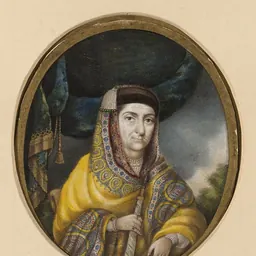
Baghel Singh, Jassa Singh Ahluwalia, and Jassa Singh Ramgharia marching through Delhi next to the Red fort. The Sikh forces, led by Baghel Singh and Jassa Singh Ahluwalia, returned to Delhi on March 8, 1783, after their successful expedition from Farrukhabad. Upon arrival, they divided their massive army of 50,000 men into two groups, with Baghel Singh commanding 30,000 troops. These forces encamped at Tis Hazari and swiftly launched a series of plundering raids on Maika Ganj, Sabzi Mandi, and Mughalpura. The following day, March 9, 1783, the Sikhs continued their conquest, attacking Pahari Dhiraj and killing Rao Dhiraj Ram's son in the battle. Meanwhile, Jassa Singh Ahluwalia broke through Ajmeri Gate and ravaged Hauz Qazi, forcing the inhabitants to seek refuge in the Red Fort. The Emperor, desperate for assistance, called upon Begum Samru from Sardhana in the Meerut district. Jassa Singh Ramgarhia arrived in Delhi from Hisar with 10,000 troops in 1783, right as the Sikhs were wrapping up their conquest of the walled city and its suburbs. Having been driven out of Punjab by Jassa Singh Ahluwalia and others, Ramgarhia's timely arrival would prove pivotal, The Sikhs then turned their attention to the Red Fort, seeking to seize the property of refugees who had taken shelter there. They halted before Diwan-e-Am, where Ahluwalia's 20,000-strong force sought to install their leader on the throne. In a symbolic gesture, Ahluwalia was seated on the throne and proclaimed "Badshah Singh." However, Ramgarhia's arrival on the scene quickly complicated matters. He demanded Ahluwalia's immediate withdrawal from Diwan-e-Am, and tensions escalated as both sides drew their swords ¹. Ahluwalia wisely chose to defuse the situation, vacating the throne and ordering his men to exit the fort. The rival factions retreated to their respective camps, averting a potentially disastrous conflict. Gurdwara Bangla Sahib Gurdwara Rakab Ganj Gurdwara Sis Ganj Gurdwara Majnu Ka Tilla
Treaty with Mahadaji Sindhia (1785) Mahadaji Shinde, the Regent of the Mughal Empire appointed by Emperor Shah Alam II, sought to put an end to Sikh raids in the Ganga Doab and Delhi regions. To achieve this, his agent Ambaji Ingle forged a treaty with Baghel Singh and other prominent Sikh sardars on March 30, 1785. The treaty, ratified by Sindhia on May 9, 1785, stipulated that the Sikhs would refrain from exacting levies on crown lands, while the Marathas would provide them with one-third of the revenues from their affiliated territories. However, the Sikhs failed to uphold their end of the agreement and continued their raids unabated. In response, Ingle launched an expedition into the Cis-Satluj region in June 1787. Interestingly, Baghel Singh, who had received parganahas worth four lakhs annually, joined forces with Ingle. During this time, Mahadji was engaged in a war against Jaipur. An agent of the Raja of Jaipur approached Baghel Singh at Thanesar with an offer of money, which Baghel Singh accepted, persuading Ingle to retreat and even escorting him on his return journey.
Maratha Campaign In 1788, Mahadaji Shinde dispatched Rane Khan and Ali Bahadur to collect tribute from Sikh chiefs. The duo was joined by Baghel Singh at Batra village near Karnal. This alliance marked the beginning of Baghel Singh's collaboration with the Marathas. To solidify their partnership, Mahadji granted Baghel Singh a large jagir in April 1789. This strategic move aimed to prevent Baghel Singh's associate Sikh chiefs from plundering imperial territories and maintain amity with the Marathas. Later in 1789, Dhar Rao led an expedition into the Cis-Satluj region, with Baghel Singh joining forces. The Maratha sardar targeted Patiala, where Diwan Nanun Mal promised two lakhs of rupees for recovering territory seized by neighboring chiefs. Successful in their endeavor, they reclaimed territory from Kaithal and Jalandhar chiefs, with Baghel Singh receiving compensation from both sides. In 1794, Anta Rao and Lachhman Rao launched a campaign, with Baghel Singh serving as their guide. The chiefs of Jind, Kaithal, Thanesar, and Radaur submitted, leading the Maratha forces to advance on Patiala. Tara Singh Ghaiba from the Trans-Satluj area came to Patiala's aid, culminating in the Battle of Murdanpur near Ambala. The Mamthas were forced to retreat to Kamal.
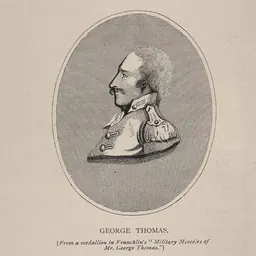
George Thomas and Perron in 1797 George Thomas, an Irish adventurer, made a name for himself in India in 1797 by commanding a formidable force of eight regiments of infantry, one thousand horsemen, and fifty guns. He declared himself the Raja of Haryana, setting up base in Hansi, which understandably made the Sikhs quite nervous.
Meanwhile, Pierre Cuillier-Perron, a French general, was working for Daulat Rao Sindhia and successfully captured Delhi. In a surprising turn of events, Baghel Singh and other Sikhs from the Sarhind province joined forces with Perron to take down George Thomas. This alliance ultimately led to Thomas's defeat and expulsion. His army consisted of eight battalions of infantry, fifty pieces of cannon, and one thousand cavalrymen. Despite his impressive military presence, Thomas was eventually driven out by the Sikhs in 1801.
Death Baghel Singh's death date is a topic of debate among historians. Raghubir Verma claims he died in 1800 at Amritsar, while Gian Singh agrees with the 1802 timeline. Interestingly, Sir Lepel Griffin states that Baghel Singh joined the British army with Bhag Singh of Jind in January 1805, which raises questions about his actual death date. Considering this, it's possible Baghel Singh died either at the end of 1805 or beginning of 1806.
Legacy
The Baba Baghel Singh Sikh Heritage Multimedia Museum in New Delhi, India was established in his namesake.
Don’t just read it —
keep it.
Full-length biographies made to live with: read them, listen on the way to work, watch them tonight.
- E-book
- Audio
- Video
Instant download · yours to keep · every purchase keeps this site free
Important facts
People in Baghel Singh's life
Named in this biography and alive at the same time


Contemporaries
People whose lives overlapped Baghel Singh's





Frequently asked questions
Who was Baghel Singh?
Leader of the Singh Krora Misl
When was Baghel Singh born?
Baghel Singh was born in 1730 in Chabhal Kalan.
When did Baghel Singh die?
Baghel Singh died in 1802 in Hariana.
What was Baghel Singh known for?
Baghel Singh was known for Battle of Delhi (1783) and Sikh raids on Delhi.
What nationality was Baghel Singh?
Baghel Singh's recorded nationality: Sikh Empire, Sikh.
Sources & further reading
Cite this page
APA: Biography.guide. (2026). Baghel Singh. https://biography.guide/baghel-singh/
MLA: "Baghel Singh." Biography.guide, https://biography.guide/baghel-singh/.
Chicago: "Baghel Singh." Biography.guide. https://biography.guide/baghel-singh/.
Data last updated: 2026-09-20 · Spot an error? Report a correction.
Page generated 2026-09-27 05:33 UTC