
About B. Wongar
Lived 1932 – 2026 (aged 93–94). B. Wongar was an Australian and Serbian writer, playwright and anthropologist.
Sreten Božić (; 1932 – 8 March 2026), known by his pen name B. Wongar, was a Serbian Australian writer. For most of his literary career, his writings concerned the culture of Aboriginal Australians, and the disintegration of their traditional society owing to the effects of colonisation and the mining industry in the 1960s and 1970s. His 1978 short story collection, The Track to Bralgu, on which he collaborated with Australian writer Alan Marshall, was released to critical acclaim by the foreign press, who were led to believe by publisher Little Brown that Wongar was of Aboriginal ethnicity. The revelation that Wongar was a Serbian immigrant, as well as inconsistencies in his life story, subsequently led to controversy and allegations of literary hoax and cultural appropriation, particularly in Australia. However, his work was lauded abroad, including by Jean-Paul Sartre and Simone de Beauvoir, and several Australian literary critics have praised the quality of his writing.
He is known for five works which came to be known as the "Nuclear Cycle", as they reflected the effects of uranium mining as well as British nuclear testing in Australia. He is also known for Totem and ore: a photographic collection, and his autobiography Dingoes Den.
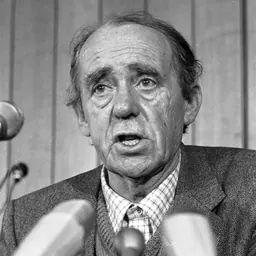
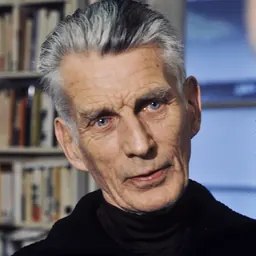
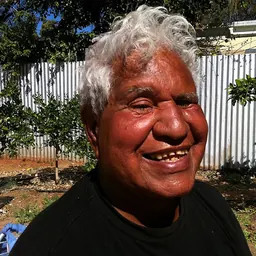
Early life Sreten Božić was born in 1932 and grew up in the village of Gornja Trešnjevica, near Aranđelovac, Serbia, then Kingdom of Yugoslavia. His birth name means "Merry Christmas" in English. While in Paris, he corresponded with the German writer Heinrich Böll, Irish writer Samuel Beckett, and South African writer Alan Paton, as well as Aboriginal leaders Sir Doug Nicholls and Yami Lester, and Australian Labor Party politician Gordon Bryant. west of Darwin for around 10 years in the 1960s. For most of his literary career, the concern of his writing was, almost exclusively, the condition of Aboriginal people in Australia. ) and the Ngolokwangga elder Jim Muluk. During this time he also became involved in the Indigenous land rights movement.
The protagonist of his 1975 novel The Trackers is a south-east Asian man, who leaves his home in Melbourne to live with Aboriginal people in the Australian desert for a time.
Some of his stories were published in 1980 and 1981 in Australian publications, and included in a collection of his stories titled Barbaru, published in the United States in 1982 by the University of Illinois Press. The publication was supported by a National Endowment for the Arts and the state government agency Illinois Arts Council. In 1991, the Australian Book Review published a review of Barbaru, by Rosie Adams et al.
In April 1981, author Robert Drewe wrote a piece in The Bulletin that revealed B Wongar's real identity. Paul Sharrad wrote in a 1982 article that, despite the problematic nature of a white man writing under an assumed identity, the stories in the collection "open to the world a window onto a little-known culture", and cast light on some important social issues. The trilogy was first published in Germany, translated from the original manuscript by Annemarie and Heinrich Böll. The first edition in English was published by Dodd, Mead & Co. in New York in 1983, and is available on the Internet Archive, complete with the review by De Beauvoir. The novel is dedicated to Wongar's wife, Djumala, and includes a note saying that it is fiction, but that around 500 tribes and 600 languages existed before the colonisation of Australia, and only a few have survived. Comparing the German translation of Walg (Der Schoß ) to its English version published by Braziller in 1990, Tess Caiter wrote in 2003 that the English edition had been censored. The novel was also translated into Spanish in 1983, and into Dutch in 1992. In his 1999 autobiography, Dingoes Den, Wongar wrote that the German translation remains the only complete text and unabridged version. The trilogy depicts "Eugenics-based experiments" carried out on an Aboriginal woman by a corporation involved in uranium mining and nuclear testing. It took Wongar about five years to write Raki again. The novel is the only one in which there is any reference to Serbia, and is told by a first-person narrator who begins telling stories of Serbian folklore that become intertwined with Aboriginal stories.
Australian publishers Angus & Robertson started republishing his earlier work in the 1990s. This was the first time a book-length work by him had been published in Australia before being published elsewhere - and also published an Australian edition of The Track to Bralgu. Australian novelist and playwright Thomas Keneally wrote in 2003 that the American publishers of The Track to Bralgu, Little Brown, had stated that he was Aboriginal, and reviewers had assessed the book "as written by a person who we now discovered did not exist". Keneally had called the stories "brilliant... an extraordinary new book", but owing to the confused identity: "Time might prove him to be a highly significant Australian writer, but his deception has soured his reception in the English-speaking world". Much of this centres around his identity, which was speculated upon incorrectly at times; the "deception" referred to by Keneally. Wongar spoke about these criticisms in an interview published in 2010, saying that he had become part of an Aboriginal family (after marrying an Aboriginal woman), a member of the tribe, and felt the responsibility towards his extended family. He said that he wrote about the plight of the Aboriginal people, who had been poorly treated since colonisation, and also wrote from the oral history that he had been privileged to hear from his group. He said that much of what he wrote was sad and depressing, and many people did not want to read about the disintegration of Aboriginal society.
As of 2006 he was dividing his time between suburban Melbourne and a rural property called "Dingoes Den" in Noojee, Gippsland, where he kept several dingoes. This resulted in the 60-minute documentary feature Wongar, which was eventually released in 2018, screening at several film festivals as well as having a cinema release. after its formation in 1985 (later Australian Ex-Services Atomic Survivors Association).
Wongar died on 8 March 2026, at the age of 94.
Awards and honours 1980: Arvon Foundation Poetry Award, UK 1982: American Library Association Award 1997: Australia Council Writers' Emeritus Award 2009: Honorary doctorate in the Faculty of Philology and Arts at the University of Kragujevac in Serbia "Dingoes, Names and B. Wongar" – interview with Jan Wositzky, for ABC Radio National's Books and Writing program (2001) Wongar (2018), a 60-minute observational documentary on his life directed by Andrijana Stojković, which won first prize at the prestigious Belgrade Documentary and Short Film Festival and was screened at Dokufest in 2019 and streamed at the Melbourne Documentary Film Festival in 2020
Don’t just read it —
keep it.
Full-length biographies made to live with: read them, listen on the way to work, watch them tonight.
- E-book
- Audio
- Video
Instant download · yours to keep · every purchase keeps this site free
Important facts
People in B. Wongar's life
Named in this biography and alive at the same time




Related people
Same field, nearest in time
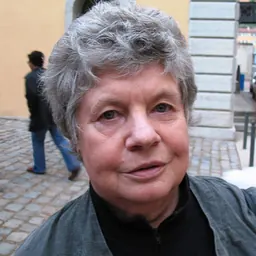


Contemporaries
People whose lives overlapped B. Wongar's
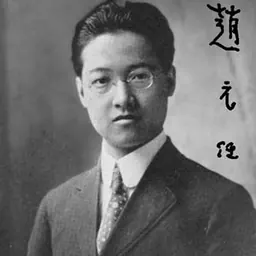

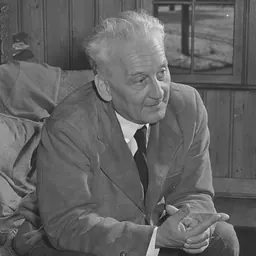
Frequently asked questions
Who was B. Wongar?
Australian writer
When was B. Wongar born?
B. Wongar was born in 1932 in Kingdom of Yugoslavia.
When did B. Wongar die?
B. Wongar died on 8 March 2026 in Melbourne.
What was B. Wongar's occupation?
B. Wongar was a writer, playwright and anthropologist.
What nationality was B. Wongar?
B. Wongar was Australian and Serbian.
Sources & further reading
Cite this page
APA: Biography.guide. (2026). B. Wongar. https://biography.guide/b-wongar/
MLA: "B. Wongar." Biography.guide, https://biography.guide/b-wongar/.
Chicago: "B. Wongar." Biography.guide. https://biography.guide/b-wongar/.
Data last updated: 2026-09-20 · Spot an error? Report a correction.
Page generated 2026-09-27 04:58 UTC