
About B.F. Skinner
Lived 1904 – 1990 (aged 86). B.F. Skinner was an American psychologist, philosopher, inventor, ethologist, autobiographer and university teacher, known for Applied behavior analysis, Operant conditioning and Radical behaviorism.
Burrhus Frederic Skinner (March 20, 1904 – August 18, 1990) was an American psychologist, behaviorist, inventor, and social philosopher. He was the Edgar Pierce Professor of Psychology at Harvard University from 1948 until his retirement in 1974.
Skinner developed behavior analysis, especially the philosophy of radical behaviorism, and founded the experimental analysis of behavior, a school of experimental research psychology. He also used operant conditioning to strengthen behavior, considering the rate of response to be the most effective measure of response strength. To study operant conditioning, he invented the operant conditioning chamber (aka the Skinner box), and to measure rate he invented the cumulative recorder. Using these tools, he and Charles Ferster produced Skinner's most influential experimental work, outlined in their 1957 book Schedules of Reinforcement.
Skinner was a prolific author, publishing 21 books and 180 articles. He imagined the application of his ideas to the design of a human community in his 1948 utopian novel, Walden Two,
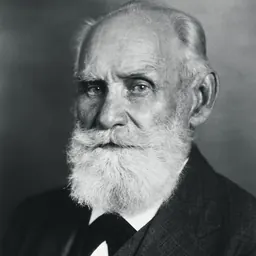
Skinner, John B. Watson, and Ivan Pavlov are considered to be the pioneers of modern behaviorism. A June 2002 survey listed Skinner as the most influential psychologist of the 20th century.
Early life Skinner was born in Susquehanna, Pennsylvania, to Grace and William Skinner, the latter, who was a lawyer. Skinner became an atheist after a Christian teacher tried to assuage his fear of the hell that his grandmother described. His brother Edward, two and a half years younger, died at age 16 of a cerebral hemorrhage.
Skinner's closest friend as a young boy was Raphael Miller, whom he called Doc because his father was a doctor. Doc and Skinner became friends due to their parents' religiousness and both had an interest in contraptions and gadgets. They had set up a telegraph line between their houses to send messages to each other, although they had to call each other on the telephone due to the confusing messages sent back and forth. During one summer, Doc and Skinner started an elderberry business to gather berries and sell them door to door. They found that when they picked the ripe berries, the unripe ones came off the branches too, so they built a device that was able to separate them. The device was a bent piece of metal to form a trough. They would pour water down the trough into a bucket, and the ripe berries would sink into the bucket and the unripe ones would be pushed over the edge to be thrown away.
Education Skinner attended Hamilton College in Clinton, New York, with the intention of becoming a writer. He found himself at a social disadvantage at the college because of his intellectual attitude. He was a member of Lambda Chi Alpha fraternity. In 1945, he moved to Indiana University, where he was chair of the psychology department from 1946 to 1947, before returning to Harvard as a tenured professor in 1948. He remained at Harvard for the rest of his life. In 1973, Skinner was one of the signers of the Humanist Manifesto II.
Personal life In 1936, Skinner married Yvonne "Eve" Blue. The couple had two daughters, Julie (later Vargas) and Deborah (later Buzan; married Barry Buzan). Yvonne died in 1997, and is buried in Mount Auburn Cemetery, Cambridge, Massachusetts.
Contributions to psychology
Behaviorism
Skinner referred to his approach to the study of behavior as radical behaviorism, which originated in the early 1900s as a reaction to depth psychology and other traditional forms of psychology, which often had difficulty making predictions that could be tested experimentally. This philosophy of behavioral science assumes that behavior is a consequence of environmental histories of reinforcement (see applied behavior analysis). In his words:
The position can be stated as follows: what is felt or introspectively observed is not some nonphysical world of consciousness, mind, or mental life but the observer's own body. This does not mean, as I shall show later, that introspection is a kind of psychological research, nor does it mean (and this is the heart of the argument) that what are felt or introspectively observed are the causes of the behavior. An organism behaves as it does because of its current structure, but most of this is out of reach of introspection. At the moment we must content ourselves, as the methodological behaviorist insists, with a person's genetic and environment histories. What are introspectively observed are certain collateral products of those histories.... In this way we repair the major damage wrought by mentalism. When what a person does [is] attributed to what is going on inside him, investigation is brought to an end. Why explain the explanation? For twenty-five hundred years people have been preoccupied with feelings and mental life, but only recently has any interest been shown in a more precise analysis of the role of the environment. Ignorance of that role led in the first place to mental fictions, and it has been perpetuated by the explanatory practices to which they gave rise.
Foundations of Skinner's behaviorism Skinner's ideas about behaviorism were largely set forth in his first book, The Behavior of Organisms (1938). and operants, by Edward Thorndike. Skinner's account differed in some ways from earlier ones, and was one of the first accounts to bring them under one roof.
The idea that behavior is strengthened or weakened by its consequences raises several questions. Among the most commonly asked are these:
Operant responses are strengthened by reinforcement, but where do they come from in the first place? Once it is in the organism's repertoire, how is a response directed or controlled? How can very complex and seemingly novel behaviors be explained?
1. Origin of operant behavior Skinner's answer to the first question was very much like Darwin's answer to the question of the origin of a 'new' bodily structure, namely, variation and selection. Similarly, the behavior of an individual varies from moment to moment; a variation that is followed by reinforcement is strengthened and becomes prominent in that individual's behavioral repertoire. Shaping was Skinner's term for the gradual modification of behavior by the reinforcement of desired variations. Skinner believed that 'superstitious' behavior can arise when a response happens to be followed by reinforcement to which it is actually unrelated.
2. Control of operant behavior The second question, "how is operant behavior controlled?" arises because, to begin with, the behavior is "emitted" without reference to any particular stimulus. Skinner answered this question by saying that a stimulus comes to control an operant if it is present when the response is reinforced and absent when it is not. For example, if lever-pressing only brings food when a light is on, a rat, or a child, will learn to press the lever only when the light is on. Skinner summarized this relationship by saying that a discriminative stimulus (e.g. light or sound) sets the occasion for the reinforcement (food) of the operant (lever-press). This three-term contingency (stimulus-response-reinforcer) is one of Skinner's most important concepts, and sets his theory apart from theories that use only pair-wise associations. Complex behavior often appears suddenly in its final form, as when a person first finds his way to the elevator by following instructions given at the front desk. To account for such behavior, Skinner introduced the concept of rule-governed behavior. First, relatively simple behaviors come under the control of verbal stimuli: the child learns to "jump," "open the book," and so on. After a large number of responses come under such verbal control, a sequence of verbal stimuli can evoke an almost unlimited variety of complex responses. Extinction is the absence of a rewarding stimulus, which weakens behavior.
Writing in 1981, Skinner pointed out that Darwinian natural selection is, like reinforced behavior, "selection by consequences". Though, as he said, natural selection has now "made its case," he regretted that essentially the same process, "reinforcement", was less widely accepted as underlying human behavior.
Schedules of reinforcement
Skinner recognized that behavior is typically reinforced more than once, and, together with Charles Ferster, he did an extensive analysis of the various ways in which reinforcements could be arranged over time, calling it the schedules of reinforcement. Interval schedule: based on the time intervals between reinforcements.
Verbal Behavior
Challenged by Alfred North Whitehead during a casual discussion while at Harvard to provide an account of a randomly provided piece of verbal behavior, Skinner set about attempting to extend his then-new functional, inductive approach to the complexity of human verbal behavior. Developed over two decades, his work appeared in the book Verbal Behavior. Although Noam Chomsky was highly critical of Verbal Behavior, he conceded that Skinner's "S-R psychology" was worth a review. Behavior analysts reject Chomsky's appraisal of Skinner's work as merely "stimulus-response psychology," and some have argued that this mischaracterization highlights a poor understanding of Skinner's work and the field of behavior analysis as a whole.
Verbal Behavior had an uncharacteristically cool reception, partly as a result of Chomsky's review, partly because of Skinner's failure to address or rebut any of Chomsky's criticisms. Skinner's peers may have been slow to adopt the ideas presented in Verbal Behavior because of the absence of experimental evidence—unlike the empirical density that marked Skinner's experimental work.
Scientific inventions
Operant conditioning chamber
An operant conditioning chamber (also known as a "Skinner box") is a laboratory apparatus used in the experimental analysis of animal behavior. It was invented by Skinner while he was a graduate student at Harvard University. As used by Skinner, the box had a lever (for rats), or a disk in one wall (for pigeons). A press on this "manipulandum" could deliver food to the animal through an opening in the wall, and responses reinforced in this way increased in frequency. By controlling this reinforcement together with discriminative stimuli such as lights and tones, or punishments such as electric shocks, experimenters have used the operant box to study a wide variety of topics, including schedules of reinforcement, discriminative control, delayed response ("memory"), punishment, and so on. By channeling research in these directions, the operant conditioning chamber has had a huge influence on course of research in animal learning and its applications. It enabled great progress on problems that could be studied by measuring the rate, probability, or force of a simple, repeatable response. However, it discouraged the study of behavioral processes not easily conceptualized in such terms—spatial learning, in particular, which is now studied in quite different ways, for example, by the use of the water maze. Skinner's major experimental exploration of response rates, presented in his book with Charles Ferster, Schedules of Reinforcement, is full of cumulative records produced by this device. Though this was the main goal, it also was designed to reduce laundry, diaper rash, and cradle cap, while still allowing the baby to be more mobile and comfortable. Reportedly it had some success in these goals as it was advertised commercially with an estimate of 300 children who were raised in the air crib. Psychology Today tracked down 50 children and ran a short piece on the effects of the air crib. The reports came back positive and that these children and parents enjoyed using the crib (Epstein, 2005). One of these air cribs resides in the gallery at the Center for the History of Psychology in Akron, Ohio (Faye, 2010). A picture published with the article showed the Skinners' daughter, Deborah, peering out of the crib with her hands and face pressed upon the glass. Skinner also used the term "experiment" when describing the crib, and this association with laboratory animal experimentation discouraged the crib's commercial success, although several companies attempted to produce and sell it.
In 2004, therapist Lauren Slater repeated a claim that Skinner may have used his baby daughter in some of his experiments. His outraged daughter publicly accused Slater of not making a good-faith effort to check her facts before publishing. Debora was quoted by the Guardian saying "According to Opening Skinner's Box: Great Psychological Experiments of the Twentieth Century, my father, who was a psychologist based at Harvard from the 1950s to the 90s, "used his infant daughter, Deborah, to prove his theories by putting her for a few hours a day in a laboratory box . . . in which all her needs were controlled and shaped". But it's not true. My father did nothing of the sort."
Teaching machine
The teaching machine was a mechanical device whose purpose was to administer a curriculum of programmed learning. The machine embodies key elements of Skinner's theory of learning and had important implications for education in general and classroom instruction in particular.
In one incarnation, the machine was a box that housed a list of questions that could be viewed one at a time through a small window. (see picture.) There was also a mechanism through which the learner could respond to each question. Upon delivering a correct answer, the learner would be rewarded.
Skinner advocated the use of teaching machines for a broad range of students (e.g., preschool aged to adult) and instructional purposes (e.g., reading and music). For example, one machine that he envisioned could teach rhythm. He wrote: The instructional potential of the teaching machine stemmed from several factors: it provided automatic, immediate and regular reinforcement without the use of aversive control; the material presented was coherent, yet varied and novel; the pace of learning could be adjusted to suit the individual. As a result, students were interested, attentive, and learned efficiently by producing the desired behavior, "learning by doing."
Teaching machines, though perhaps rudimentary, were not rigid instruments of instruction. They could be adjusted and improved based upon the students' performance. For example, if a student made many incorrect responses, the machine could be reprogrammed to provide less advanced prompts or questions—the idea being that students acquire behaviors most efficiently if they make few errors. Multiple-choice formats were not well-suited for teaching machines because they tended to increase student mistakes, and the contingencies of reinforcement were relatively uncontrolled.
Not only useful in teaching explicit skills, machines could also promote the development of a repertoire of behaviors that Skinner called self-management. Effective self-management means attending to stimuli appropriate to a task, avoiding distractions, reducing the opportunity of reward for competing behaviors, and so on. For example, machines encourage students to pay attention before receiving a reward. Skinner contrasted this with the common classroom practice of initially capturing students' attention (e.g., with a lively video) and delivering a reward (e.g., entertainment) before the students have actually performed any relevant behavior. This practice fails to reinforce correct behavior and actually counters the development of self-management.
Skinner pioneered the use of teaching machines in the classroom, especially at the primary level. Today computers run software that performs similar teaching tasks, and there has been a resurgence of interest in the topic related to the development of adaptive learning systems.
Pigeon-guided missile
During World War II, the US Navy required a weapon effective against surface ships, such as the German Bismarck class battleships. Although missile and TV technology existed, the size of the primitive guidance systems available rendered automatic guidance impractical. To solve this problem, Skinner initiated Project Pigeon, which was intended to provide a simple and effective guidance system. Skinner trained pigeons through operant conditioning to peck a camera obscura screen showing incoming targets on individual screens (Schultz-Figueroa, 2019). This system divided the nose cone of a missile into three compartments, with a pigeon placed in each. Within the ship, the three lenses projected an image of distant objects onto a screen in front of each bird. Thus, when the missile was launched from an aircraft within sight of an enemy ship, an image of the ship would appear on the screen. The screen was hinged, which connected the screens to the bomb's guidance system. This was done through four small rubber pneumatic tubes that were attached to each side of the frame, which directed a constant airflow to a pneumatic pickup system that controlled the thrusters of the bomb. Resulting in the missile being guided towards the targeted ship, through just the peck coming from the pigeon (Schultz-Figueroa, 2019). This device can be thought of as an auditory version of the Rorschach inkblots.
Influence on teaching Along with psychology, education has also been influenced by Skinner's views, which are extensively presented in his book The Technology of Teaching, as well as reflected in Fred S. Keller's Personalized System of Instruction and Ogden R. Lindsley's Precision Teaching.
Skinner argued that education has two major purposes:
to teach repertoires of both verbal and nonverbal behavior; and to interest students in learning.
He recommended bringing students' behavior under appropriate control by providing reinforcement only in the presence of stimuli relevant to the learning task. Because he believed that human behavior can be affected by small consequences, something as simple as "the opportunity to move forward after completing one stage of an activity" can be an effective reinforcer. Skinner was convinced that, to learn, a student must engage in behavior, and not just passively receive information.
Because teachers are primarily responsible for modifying student behavior, Skinner argued that teachers must learn effective ways of teaching. In The Technology of Teaching (1968), Skinner has a chapter on why teachers fail: He says that teachers have not been given an in-depth understanding of teaching and learning. Without knowing the science underpinning teaching, teachers fall back on procedures that work poorly or not at all, such as:
using aversive techniques (which produce escape and avoidance and undesirable emotional effects); relying on telling and explaining ("Unfortunately, a student does not learn simply when he is shown or told."); The former describes a fictional "experimental community" in 1940s United States. The productivity and happiness of citizens in this community is far greater than in the outside world because the residents practice scientific social planning and use operant conditioning in raising their children.
Walden Two, like Thoreau's Walden, champions a lifestyle that does not support war, or foster competition and social strife. It encourages a lifestyle of minimal consumption, rich social relationships, personal happiness, satisfying work, and leisure. In 1967, Kat Kinkade and others founded the Twin Oaks Community, using Walden Two as a blueprint. The community still exists and continues to use the Planner-Manager system and other aspects of the community described in Skinner's book, though behavior modification is not a community practice.
In Beyond Freedom and Dignity, Skinner suggests that a technology of behavior could help to make a better society. We would, however, have to accept that an autonomous agent is not the driving force of our actions. Skinner offers alternatives to punishment, and challenges his readers to use science and modern technology to construct a better society.
Political views Skinner's political writings emphasized his hopes that an effective and human science of behavioral control – a technology of human behavior – could help with problems as yet unsolved and often aggravated by advances in technology such as the atomic bomb. Indeed, one of Skinner's goals was to prevent humanity from destroying itself. He saw political activity as the use of aversive or non-aversive means to control a population. Skinner favored the use of positive reinforcement as a means of control, citing Jean-Jacques Rousseau's novel Emile: or, On Education as an example of literature that "did not fear the power of positive reinforcement." ) Skinner's utopia is both a thought experiment and a rhetorical piece. In Walden Two, Skinner answers the problem that exists in many utopian novels – "What is the Good Life?" The book's answer is a life of friendship, health, art, a healthy balance between work and leisure, a minimum of unpleasantness, and a feeling that one has made worthwhile contributions to a society in which resources are ensured, in part, by minimizing consumption.
Skinner described his novel as "my New Atlantis", in reference to Bacon's utopia.
Superstition' in the Pigeon" experiment One of Skinner's experiments examined the formation of superstition in one of his favorite experimental animals, the pigeon. Skinner placed a series of hungry pigeons in a cage attached to an automatic mechanism that delivered food to the pigeon "at regular intervals with no reference whatsoever to the bird's behavior." He discovered that the pigeons associated the delivery of the food with whatever chance actions they had been performing as it was delivered, and that they subsequently continued to perform these same actions.
Criticism
Noam Chomsky American linguist Noam Chomsky published a review of Skinner's Verbal Behavior in the linguistics journal Language in 1959. Chomsky argued that Skinner's attempt to use behaviorism to explain human language amounted to little more than word games. Conditioned responses could not account for a child's ability to create or understand an infinite variety of novel sentences. Chomsky's review has been credited with launching the cognitive revolution in psychology and other disciplines . Skinner, who rarely responded directly to critics, never formally replied to Chomsky's critique, but endorsed Kenneth MacCorquodale's 1972 reply.
Many academics in the 1960s believed that Skinner's silence on the question meant Chomsky's criticism had been justified. But MacCorquodale wrote that Chomsky's criticism did not focus on Skinner's Verbal Behavior, but rather attacked a confusion of ideas from behavioral psychology. MacCorquodale also regretted Chomsky's aggressive tone.
Chomsky also reviewed Skinner's Beyond Freedom and Dignity, using the same basic motives as his Verbal Behavior review. Among Chomsky's criticisms were that Skinner's laboratory work could not be extended to humans, that when it was extended to humans it represented "scientistic" behavior attempting to emulate science but which was not scientific, that Skinner was not a scientist because he rejected the hypothetico-deductive model of theory testing, and that Skinner had no science of behavior.
Psychodynamic psychology Skinner has been repeatedly criticized for his supposed animosity towards Sigmund Freud, psychoanalysis, and psychodynamic psychology. Some have argued, however, that Skinner shared several of Freud's assumptions, and that he was influenced by Freudian points of view in more than one field, among them the analysis of defense mechanisms, such as repression. To study such phenomena, Skinner even designed his own projective test, the "verbal summator" described above.
Temple Grandin In her 2005 book, Animals in Translation, animal behaviorist Temple Grandin claimed that Skinner attempted to touch her legs without consent during a meeting and that she verbally rebuffed him. She recalled that she was approximately 18 years old at the time. She repeated this allegation in a 2006 interview with NPR and a 2018 interview with the Center for Autism and Related Disorders (although she stated in the 2006 interview that Skinner touched her prior to being rebuffed and in the 2018 interview that he asked if he could touch her prior to being rebuffed). In the 2018 interview, Grandin further stated, "I talked to somebody just recently about it that worked with B. F. Skinner years ago, and they said, 'Oh, yeah, that's B. F.; that's the kind of stuff he did.'" 2024 Ig Nobel Peace Prize for experiments to see the feasibility of housing live pigeons inside missiles to guide the flight paths of the missiles.
Honorary degrees Skinner received honorary degrees from: Alfred University Ball State University Colby College Dickinson College Hamilton College Harvard University Hobart and William Smith Colleges Johns Hopkins University Keio University Long Island University C. W. Post Campus McGill University North Carolina State University Ohio Wesleyan University Ripon College Rockford College Tufts University University of Chicago University of Exeter University of Missouri University of North Texas Western Michigan University University of Maryland, Baltimore County.
Honorary societies Skinner was inducted to the following honorary societies: PSI CHI International Honor Society in Psychology American Philosophical Society American Academy of Arts and Sciences United States National Academy of Sciences
Publications 1938. The Behavior of Organisms: An Experimental Analysis, 1938.. 1948. Walden Two. (revised 1976 ed.). 1953. Science and Human Behavior. . 1957. Schedules of Reinforcement, with C. B. Ferster. . 1957. Verbal Behavior. . 1961. The Analysis of Behavior: A Program for Self Instruction, with James G. Holland. . 1968.The Technology of Teaching. New York: Appleton-Century-Crofts. . 1969. Contingencies of Reinforcement: A Theoretical Analysis. . 1971. Beyond Freedom and Dignity. . 1974. About Behaviorism. . 1976. Particulars of My Life: Part One of an Autobiography. . 1978. Reflections on Behaviorism and Society. . 1979. The Shaping of a Behaviorist: Part Two of an Autobiography. . 1980. Notebooks, edited by Robert Epstein. . 1982. Skinner for the Classroom, edited by R. Epstein. . 1983. Enjoy Old Age: A Program of Self-Management, with M. E. Vaughan. . 1983. A Matter of Consequences: Part Three of an Autobiography.. 1987. Upon Further Reflection. . 1989. Recent Issues in the Analysis of Behavior. . Cumulative Record: A Selection of Papers, 1959, 1961, 1972 and 1999 as Cumulative Record: Definitive Edition. (paperback) Includes reprint: Skinner, B. F. 1945. "Baby in a Box." Ladies' Home Journal. — Skinner's original, personal account of the much-misrepresented "Baby in a box" device.
Don’t just read it —
keep it.
Full-length biographies made to live with: read them, listen on the way to work, watch them tonight.
- E-book
- Audio
- Video
Instant download · yours to keep · every purchase keeps this site free
Important facts
People in B.F. Skinner's life
Named in this biography and alive at the same time



Related people
Same field, nearest in time



Contemporaries
People whose lives overlapped B.F. Skinner's

Frequently asked questions
Who was B.F. Skinner?
American behaviorist (1904–1990)
When was B.F. Skinner born?
B.F. Skinner was born on 20 March 1904 in Susquehanna Depot.
When did B.F. Skinner die?
B.F. Skinner died on 18 August 1990 in Cambridge.
What was B.F. Skinner's occupation?
B.F. Skinner was a psychologist, philosopher, inventor, ethologist, autobiographer and university teacher.
What was B.F. Skinner known for?
B.F. Skinner was known for Applied behavior analysis, Operant conditioning, Radical behaviorism and Verbal Behavior.
What nationality was B.F. Skinner?
B.F. Skinner was American.
Sources & further reading
Cite this page
APA: Biography.guide. (2026). B.F. Skinner. https://biography.guide/b-f-skinner/
MLA: "B.F. Skinner." Biography.guide, https://biography.guide/b-f-skinner/.
Chicago: "B.F. Skinner." Biography.guide. https://biography.guide/b-f-skinner/.
Data last updated: 2026-09-25 · Spot an error? Report a correction.
Page generated 2026-09-27 05:10 UTC