
About Aylett Sammes
Lived 1636 – 1679 (aged 42–43). Aylett Sammes was an English jurist.
Aylett Sammes (1636?–1679?) was an English antiquary, noted for his theories of Phoenician influence on the Welsh language.
Life A grandson of John Sammes, lord of the manor of Little Totham, Essex, and son of Thomas Sammes by his wife Mary (née Jeffrey), he was born at Kelvedon in Essex about 1636. His father's younger brother, Edward, married into the Aylett family of Rivenhall.
In 1648 he entered Felsted School under John Glascock, a Fellow of Christ's College, Cambridge, and a teacher of repute in East Anglia. On 3 July 1655 he was admitted a fellow-commoner of Christ's College; he graduated B.A. in 1657, was admitted to the Inner Temple on 28 October in the same year, and proceeded M.A., probably at Cambridge about 1659, though there appears to be no record of the fact. He was incorporated M.A. at Oxford on 10 July 1677.
Sammes died before the completion of his major work, probably in 1679. Sammes gave etymological reasons connecting Phoenician with Welsh, but did not accept the descent of the Cymry from Gomer.
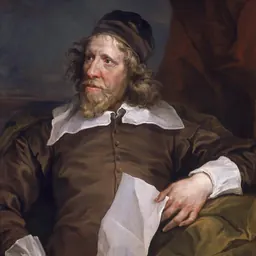
Celtic theories A druid, illustration from Britannia Antiqua Illustrata (1676). While the specific historical theories brought forward by Sammes were discounted by his contemporaries, his book was a contribution to a number of debates of the time, and its effect on iconography was major. The representations of Celtic druids had been developed from beginnings in Conrad Celtes and the Jani Anglorum (1610) of John Selden. Inigo Jones had made a druid stage design (1638) for Lodowick Carlell's The Passionate Lovers, drawing on earlier pageant representations of Ancient Britons, as a Wild Man. Further iconographic sources drawn upon were of the Green Man and hermits. As represented in Britannia Antiqua Illustrata the druid is a composite of "wild" and "holy". John Wood, the Elder was prepared to take Sammes seriously, in theorising about Stonehenge. Representation of a wicker man from Britannia Antiqua Illustrata (1676).
The influence of these representations of druids continued until the 19th century and the Costume of the Original Inhabitants of the British Islands (1815) of Samuel Rush Meyrick and Charles Hamilton Smith.
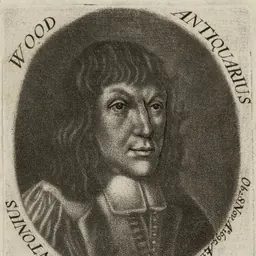
Hostile views William Nicolson accused the author of plagiarism from Samuel Bochart, and Anthony Wood reported a rumour that the work was really written by an uncle of Sammes. These aspersions were rebutted by Myles Davies in his Athenæ Britannicæ, and Sammes's erudition was praised by Henry Oldenburg (see Philosophical Transactions No. 124, p. 596).
Other works Besides the Britannia Antiqua, he is credited by William Thomas Lowndes with Long Livers: a curious history of such persons of both sexes who have lived several ages and grown young again, London, 1722.
Don’t just read it —
keep it.
Full-length biographies made to live with: read them, listen on the way to work, watch them tonight.
- E-book
- Audio
- Video
Instant download · yours to keep · every purchase keeps this site free
Important facts
People in Aylett Sammes's life
Named in this biography and alive at the same time




Related people
Same field, nearest in time


Contemporaries
People whose lives overlapped Aylett Sammes's






Frequently asked questions
Who was Aylett Sammes?
English antiquarian
When was Aylett Sammes born?
Aylett Sammes was born in 1636 in Kelvedon.
When did Aylett Sammes die?
Aylett Sammes died in 1679.
What was Aylett Sammes's occupation?
Aylett Sammes was a jurist.
What nationality was Aylett Sammes?
Aylett Sammes was English.
Sources & further reading
Cite this page
APA: Biography.guide. (2026). Aylett Sammes. https://biography.guide/aylett-sammes/
MLA: "Aylett Sammes." Biography.guide, https://biography.guide/aylett-sammes/.
Chicago: "Aylett Sammes." Biography.guide. https://biography.guide/aylett-sammes/.
Data last updated: 2026-09-20 · Spot an error? Report a correction.
Page generated 2026-09-27 05:02 UTC