
About Samuel von Pufendorf
Lived 1632 – 1694 (aged 62). Samuel von Pufendorf was a German and Swedish jurist, philosopher, historian, university teacher, economist and writer.
Samuel von Pufendorf (; ; 8 January 1632 – 26 October 1694) was a German jurist, political philosopher, economist and historian. He was born Samuel Pufendorf and ennobled in 1694; he was made a baron by Charles XI of Sweden a few months before his death at age 62. Among his achievements are his commentaries and revisions of the natural law theories of Thomas Hobbes and Hugo Grotius.
His political concepts are part of the cultural background of the American Revolution. Pufendorf is seen as an important precursor of the German Enlightenment. He was involved in constant quarrels with clerical circles and frequently had to defend himself against accusations of heresy, despite holding largely traditional Christian views on matters of dogma and doctrine. In De habitu religionis christianae ad vitam civilem he traces the limits between ecclesiastical and civil power. This work propounded for the first time the so-called "collegial" theory of church government (Kollegialsystem), which, developed later by the learned Lutheran theologian , formed the basis of the relations of church and state in Germany and more especially in Prussia.
This theory makes a fundamental distinction between the supreme jurisdiction in ecclesiastical matters (Kirchenhoheit or jus circa sacra), which it conceives as inherent in the power of the state in respect of every religious communion, and the ecclesiastical power (Kirchengewalt or jus in sacra) inherent in the church, but in some cases vested in the state by tacit or expressed consent of the ecclesiastical body. The theory was of importance because, by distinguishing church from state while preserving the essential supremacy of the latter, it prepared the way for the principle of toleration. It was put into practice to a certain extent in Prussia in the 18th century; but it was not till the political changes of the 19th century led to a great mixture of confessions under the various state governments that it found universal acceptance in Germany. The theory initially found no acceptance in the Roman Catholic Episcopate, but it nonetheless made it possible for the Protestant governments to make a working compromise with Rome in respect of the Roman Catholic Church established in their states.
In 1688 Pufendorf was called into the service of Frederick William, Elector of Brandenburg. He accepted the call, but he had no sooner arrived than the elector died. His son Frederick III fulfilled the promises of his father; and Pufendorf, historiographer and privy councillor, was instructed to write a history of the Elector Frederick William (De rebus gestis Frederici Wilhelmi Magni).
The King of Sweden continued to testify his goodwill towards Pufendorf, and in 1694 created him a baron. In the same year while still in Sweden, Pufendorf suffered a stroke, and died on 26 October 1694 in Berlin. He was buried in the church of St Nicholas, where an inscription to his memory is still to be seen. He was succeeded as historiographer in Berlin by Charles Ancillon.
De iure naturae et gentium In 1672 appeared De iure naturae et gentium. This work took largely the theories of Grotius and many ideas from Hobbes, adding to them Pufendorf's own ideas to develop the law of nations. Pufendorf argues that natural law does not extend beyond the limits of this life and merely regulates only external acts. He also challenges the Hobbesian thesis of a state of nature which is a state of war or conflict. For Pufendorf too there is a state of nature, but it is a state of peace. This natural peace, however, is weak and uncertain. In terms of public law, which recognizes the state (civitas) as a moral person (persona moralis), Pufendorf argues that the will of the state is nevertheless nothing more than the sum of the individual wills that are associated within it; hence the state needs to submit to a discipline essential for human safety. This 'submission', in the sense of obedience and mutual respect, is for Pufendorf the fundamental law of reason, which is the basis of natural law. He adds that international law should not be limited or restricted only to the Christian nations, but must create a common link between all peoples, since all nations are part of humanity.
De Officio Hominis et Civis Juxta Legem Naturalem In De Officio Hominis et Civis Juxta Legem Naturalem ("On the Duty of Man and Citizen"), Pufendorf divides duties into several categories: duties towards God, duties towards oneself, and various forms of duty towards others. Duties towards oneself were classified as "duties of the soul", such as developing skills and talents, and "duties of the body", which involve not doing harm to oneself.
Legacy and reputation Statue of Pufendorf on the Palais Universitaire, Strasbourg, France. John Locke, David Hume, Edward Gibbon, Voltaire, Jean-Jacques Rousseau, and Denis Diderot all recommended Pufendorf's inclusion in law curricula, and he greatly influenced Blackstone and Montesquieu.
Pufendorf's feuds with Leibniz diminished his reputation. Pufendorf and Leibniz shared many theological views, but differed in their philosophical foundation, with Pufendorf leaning toward Biblical fundamentalism.
Works
Craig L. Carr (ed.), The Political Writings of Samuel Pufendorf (Oxford 1994) Elementorum iurisprudentiae universalis (1660)
De rebus gestis Philippi Augustae (1663)
De statu imperii Germanici (Amsterdam 1669)
English translation:
Commentarium de rebus suecicis libri XXVI., ab expeditione Gustavi Adolphi regis in Germaniam ad abdicationem usque Christinae De rebus a Carolo Gustavo Sueciae rege gestis commentariorum (Stockholm 1679)
Don’t just read it —
keep it.
Full-length biographies made to live with: read them, listen on the way to work, watch them tonight.
- E-book
- Audio
- Video
Instant download · yours to keep · every purchase keeps this site free
Important facts
more
Julius Rondinus, baron de Pufendorf, Samuel, Freiherr Von Pufendorf, Samuel à Pufendorf, Samuel Pufendorffius, Samuel Puffendorf, Samuil Puffendorf, Samuel Puffendorfius, Samuel a Pufendorf, S. Freiherr von Pufendorf, S. Pufendorfi, S. PvfendorfiiPeople in Samuel von Pufendorf's life
Named in this biography and alive at the same time
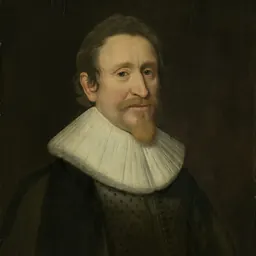


Related people
Same field, nearest in time

Contemporaries
People whose lives overlapped Samuel von Pufendorf's




Frequently asked questions
Who was Samuel von Pufendorf?
German philosopher (1632–1694)
When was Samuel von Pufendorf born?
Samuel von Pufendorf was born on 8 January 1632 in Dorfchemnitz.
When did Samuel von Pufendorf die?
Samuel von Pufendorf died on 26 October 1694 in Berlin.
What was Samuel von Pufendorf's occupation?
Samuel von Pufendorf was a jurist, philosopher, historian, university teacher, economist and writer.
What nationality was Samuel von Pufendorf?
Samuel von Pufendorf was German and Swedish.
Sources & further reading
· Wikipedia: Samuel von Pufendorf
· DBpedia: Samuel von Pufendorf
Cite this page
APA: Biography.guide. (2026). Samuel von Pufendorf. https://biography.guide/samuel-von-pufendorf/
MLA: "Samuel von Pufendorf." Biography.guide, https://biography.guide/samuel-von-pufendorf/.
Chicago: "Samuel von Pufendorf." Biography.guide. https://biography.guide/samuel-von-pufendorf/.
Data last updated: 2026-09-20 · Spot an error? Report a correction.
Page generated 2026-09-27 05:31 UTC