
About Johannes Voet
Lived 1647 – 1713 (aged 65). Johannes Voet was a Dutch jurist and university teacher.
Johannes Voet , also known as John Voet (3 October 1647 – 11 September 1713), was a Dutch jurist whose work remains highly influential in modern Roman-Dutch law.
Voet is one of the so-called "old authorities" of Roman-Dutch law, along with Hugo Grotius, Simon van Leeuwen (nl), Joan Cos, Gerhard Noodt, Zacharias Huber, Cornelius van Bynkershoek, Hobins van der Vorm, Gerloff Scheltinga (de), Willem Schorer (nl), Franciscus Lievens Kersteman, J. Munniks, Hendrik Jan Arntzenius (fr), Arent Lybrechts, Johan Jacob van Hasselet, Gerard de Haas, Cornelis Willem Decker, Didericus Lulius, Renier van Spaan, Dionysius Godefridus van der Keessel, and Johan van der Linden.
Life Voet was born in Utrecht, the son of Paulus Voet, who was the son of the famous theologian Gisbertus Voetius. He probably studied in Utrecht, after which he became a professor in Herborn. In 1673 he was made professor of law at Utrecht University. From 1680 to his death he was a professor and the chair of law at Leiden, being twice elected as rector.
Work Voet's most famous work is his Commentarius ad Pandectas (i.e. Commentary on the Digest) (1698). Unlike other jurists of his day, Voet's Commentary on the Digest was not a mere academic treatise but also an attempt to show how that law applied day-to-day in practice. While the Commentary shows signs of legal humanism, it may also be considered a Dutch form of Usus modernus Pandectarum.
Unlike the work of Hugo Grotius and Simon van Leeuwen with which Voet's Commentary has been compared, Voet, as a teacher of law, wrote in Latin and not Dutch, as Latin at the time was the teaching language. Like Grotius, Voet relied upon the theory of natural law as the basis for his systematization of the law.
His other works include: De Usufructu (1704) Elementa juris secundum ordinem Inst. Justiniani (translated into Dutch as De Beginzels des Rechts, that is, The Principles of the Law) – a commentary on the Institutes of Justinian. De familia erciscunda De jure Militari De Tutoribus
Don’t just read it —
keep it.
Full-length biographies made to live with: read them, listen on the way to work, watch them tonight.
- E-book
- Audio
- Video
Instant download · yours to keep · every purchase keeps this site free
Important facts
People in Johannes Voet's life
Named in this biography and alive at the same time

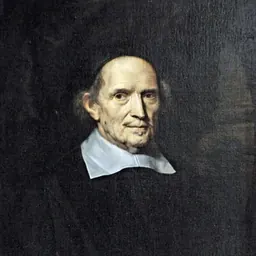
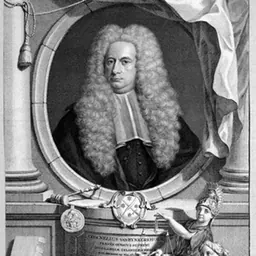
Related people
Same field, nearest in time

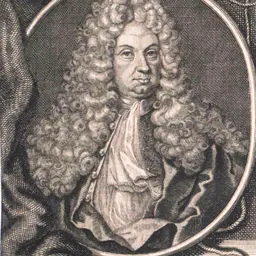
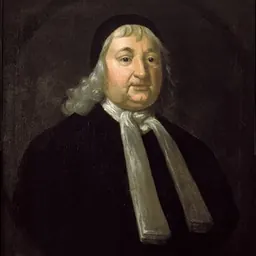

Contemporaries
People whose lives overlapped Johannes Voet's




Frequently asked questions
Who was Johannes Voet?
Dutch legal scholar
When was Johannes Voet born?
Johannes Voet was born on 3 October 1647 in Utrecht.
When did Johannes Voet die?
Johannes Voet died on 9 September 1713 in Utrecht, Utrecht.
What was Johannes Voet's occupation?
Johannes Voet was a jurist and university teacher.
What nationality was Johannes Voet?
Johannes Voet was Dutch.
Sources & further reading
Cite this page
APA: Biography.guide. (2026). Johannes Voet. https://biography.guide/johannes-voet/
MLA: "Johannes Voet." Biography.guide, https://biography.guide/johannes-voet/.
Chicago: "Johannes Voet." Biography.guide. https://biography.guide/johannes-voet/.
Data last updated: 2026-09-25 · Spot an error? Report a correction.
Page generated 2026-09-27 05:12 UTC