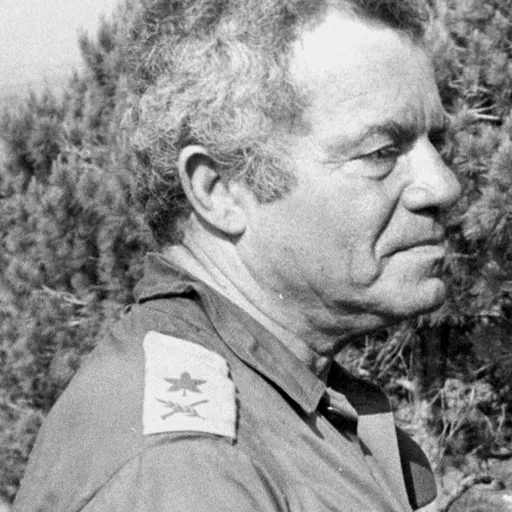
About Avraham Tamir
Lived 1922 – 2010 (aged 88). Avraham Tamir was an Israeli military officer.
Avraham Tamir (; 9 November 192420 December 2010), also known as Abrasha or Avrasha Tamir, was an Israeli soldier and statesman. Born in the Mandate of Palestine, Tamir joined the British Army as part of the Jewish Brigade, serving in World War II, and became a commanding officer in the Haganah. This gave him a command in the Israel-Palestine war, where he defended the Etzion bloc during the Kfar Etzion massacre, ultimately being captured wounded.
When Israel was founded, he joined the Israel Defense Forces, rising to the rank of major general (Aluf). During his time with the IDF he served in the Yom Kippur War and 1982 Lebanon War as well as several Cold War conflicts in the Middle East.
Specialising in national security and military strategy, after his military career he became an advisor to leading Israeli politicians, and contributed to the Camp David Accords.
Early and personal life Avraham Tamir was born on 9 November 1924 in Tel Aviv, Mandatory Palestine, as Avraham Treinin (, , Avraam Trainin).
He was married to Varda Agron(sky), daughter of Gershon Agron, and they had three children: daughters Michal and and son Gideon. All three became scholars: Michal (Shany, b. 1950) in special education at the University of Haifa, Daphna (Efrat, b. 1955) in Islamic studies at the Open University of Israel, and Gideon as principal of the Talmud Torah school in Beit She'an. Gideon had started following Breslov and studied at a kollel in Safed. Daphna married musician ; their son is the actor and translator Daniel Efrat.
Tamir later married (b. 1950), and a top 15 finisher of Miss World. They had two children, Roi (b. 1987) and Neta. Actor and illustrator Chaim Topol, whom Tamir had recruited to work for the IDF planning branch, was the best man at their wedding.
Military career British Army and Haganah In the British Mandate of Palestine, Tamir was a senior member of the Haganah and also served with the British Army during World War II as a member of the Jewish Brigade. He joined the IDF upon its founding, serving in the 1948 Israel-Palestine war (also known as the Israel War of Independence).
At the time of the Gush Etzion Convoys in 1947, Tamir was stationed in Gush Etzion as part of a squad leaders course. He held his first command there, in charge of a reprisal attack on Arabs following the Convoy of Ten. The attack was unsuccessful, and Tamir had predicted this, later saying: "There was no chance of doing real damage because we hadn't set up a roadblock and were too far away. Those were our orders." He was held as a prisoner of war In 1950, under a Ben-Gurion policy to prevent Arab refugees in Jordan from returning, Tamir commanded an attack demolishing all abandoned villages that had not yet been settled by Israelis.
While recovering from his capture and injuries, Tamir wrote a book about his experiences at Etzion, Witness to Battle, which was published in 1949.
Israel Defense Forces
Tamir was given command of an infantry battalion following the foundation of Israel.
In the Six-Day War, Tamir was commander of the 99th "Negev" Brigade. He and Amos Horev accompanied Shlomo Goren to Bethlehem to search for the Tomb of Rachel on his mission to capture holy sites. Goren found Rachel's tomb after Tamir and Horev travelled on to Gush Etzion and Hebron. Reuniting in Hebron, the pair then helped Goren to break the gates at the Cave of the Patriarchs; inside the temple the three were told that the mayor wished to surrender, and left for the town hall.
Tamir served abroad to advise Israeli allies in his role as an IDF general. In 1971 he visited the 3rd Division of the Ethiopian Imperial Army and its commanding officers, which were stationed in the Ogaden to conduct counterinsurgency and deter the military of neighboring Somalia.
Prior to the Yom Kippur War, a surprise attack on Israel (which assumed that after the Six-Day War their neighbors would not invade), Tamir and the planning branch of the IDF he led had warned that the Arabs had significant antitank missiles. Despite this, tank-based counterattacks were launched in the early days of the war, leading to incidents like the Valley of Tears. Following the Yom Kippur War, "he became involved in making peace".
In December 1973, Tamir was promoted from brigadier general to major general (Aluf) to head up the new planning division, which would assess and create strategy and doctrine. Though the IDF had agreed to form the department for some time, it came as a result of the Yom Kippur War.
National security and military strategy appointments
When he was a colonel, in 1966, Tamir was approached by prime minister Levi Eshkol to help develop Israeli doctrine on nuclear weapons, which Eshkol himself dubbed the Samson Option. Tamir said that two incentives for a nuclear program arose in these early discussions: "national insurance policy" (to encourage the United States to continue arming Israel so that, though they had it, they would not have to use nuclear) and "national safety valve" (last resort contingency). Historian Shlomo Aronson described Israeli nuclear policy as "the Tamir school", based on Tamir's influence; Israeli leaders had been worried of Muslim nuclear development since the 1950s, but these fears intensified under Tamir, creating "the need to reach an accord on the territories before a Muslim state develops a nuclear capability."
In the 1970s, Tamir became a commander of the IDF's planning division and of national security.
Peres, Weizman, and Tamir worked together in Arab affairs. In January 1985, Tamir created and led a committee on Arab Israeli affairs. His efficiency in administration gave Weizman a reason to fire a political rival by abolishing the previous Arab affairs advisor role, though this created tensions with the Arab population. Weizman gave the responsibilities back to a larger advisor role, placing Joseph Ginat in it; Ginat, Yitzhak Reiter, and Tamir drafted a policy that would reach a compromise on loyalty and identity for Arab Israelis, particularly making military service voluntary.
In his Foreign Ministry role, Tamir held talks in 1987 with Alexander Belonogov, the USSR's ambassador to the UN, regarding improving relations between the two nations, particularly on the matter of Russian Jews being allowed to emigrate to Israel. In 1993, he was named special assistant to president Weizman.
Decorations
On 5 September 1978, while at Camp David with Jimmy Carter and the Israeli delegation, Tamir wore military decorations in a similar layout; the Aluf rank was worn on his epaulet, and the Decoration of State Warriors clasp was mounted on his War of Independence Ribbon.
Death and legacy
He died on 20 December 2010 in Tel Aviv. He had a military funeral the next day at Kiryat Shaul Cemetery, with an honor guard of six major generals.
The Center for Israel Education described Tamir as "a military strategic mastermind". A review for his autobiographical military strategy book, A Soldier in Search of Peace, published in International Affairs, said:
Don’t just read it —
keep it.
Full-length biographies made to live with: read them, listen on the way to work, watch them tonight.
- E-book
- Audio
- Video
Instant download · yours to keep · every purchase keeps this site free
Important facts
Family & relationships
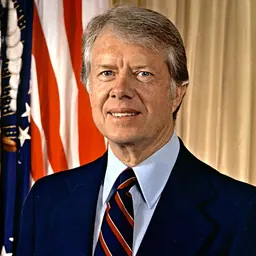
People in Avraham Tamir's life
Named in this biography and alive at the same time


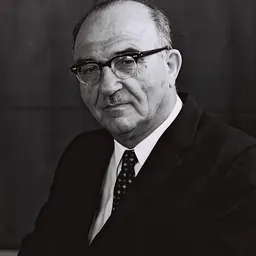

Related people
Same field, nearest in time

Contemporaries
People whose lives overlapped Avraham Tamir's




Frequently asked questions
Who was Avraham Tamir?
Israeli soldier and political advisor
When was Avraham Tamir born?
Avraham Tamir was born on 16 September 1922 in Neve Tzedek.
When did Avraham Tamir die?
Avraham Tamir died on 20 December 2010 in Israel, Tel Aviv.
What was Avraham Tamir's occupation?
Avraham Tamir was a military officer.
What nationality was Avraham Tamir?
Avraham Tamir was Israeli.
Sources & further reading
Cite this page
APA: Biography.guide. (2026). Avraham Tamir. https://biography.guide/avraham-tamir/
MLA: "Avraham Tamir." Biography.guide, https://biography.guide/avraham-tamir/.
Chicago: "Avraham Tamir." Biography.guide. https://biography.guide/avraham-tamir/.
Data last updated: 2026-09-22 · Spot an error? Report a correction.
Portrait: Wikimedia Commons · author & licence
Page generated 2026-09-27 05:03 UTC