
About Avni Rustemi
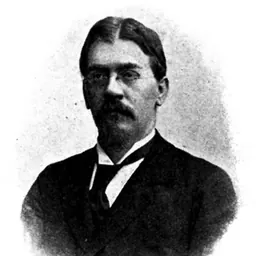
Lived 1895 – 1924 (aged 28). Avni Rustemi was an Albanian and Turkish politician, journalist, pedagogue, member of Parliament and writer.
Avni Rustemi (26 September 1895 – 22 April 1924) was an Albanian patriot, revolutionary, teacher, activist and member of the Albanian parliament. Rustemi was the leader of numerous patriotic societies and associations and also a member of the democratic opposition in the Albanian National Assembly preceding the Revolution of June 1924. He is most well-known and celebrated for having assassinated Essad Pasha Toptani - an Albanian politician who is remembered amongst Albanians as a symbol of treason and as one of the most negative historical figures of the 20th century - and his founding and leadership of the Bashkimi association, which played an important role in Albanian politics during the June Revolution.
Biography Early life Avni Rustemi was born into an Muslim family in Libohovë on 26 September 1895. Essad Pasha was an unscrupulous opportunist and a close collaborator of the Serbians and Montenegrins, who he aided in partitioning Albanian territories during the Balkan Wars. Rustemi was also one of the leaders of the Committee for the National Defence of Kosovo, which supported the Kachak Movement and campaigned for the unification of Albania and Kosovo and for the protection of the rights of Kosovo Albanians.
Funding was soon suspended for the Atdheu society a few months after its establishment, and civil servants were prohibited from becoming members. By August 1922, the Atdheu society was forced to cease its activities by the government, which at this time was dominated by Essad Pasha Toptani's nephew Ahmet Zogu and his feudal landowning supporters, who ordered the police to close all of Atdheu's branches. Rustemi then co-founded the Western-leaning Bashkimi ('Union') society in Tirana, initially with the goal of mobilizing the youth. The Bashkimi society, whose motto was "First, correct oneself", promoted a military-like discipline whilst remaining civilian in nature. The association was reinforced by figures such as Kol Tromara, Bedri Pejani and Seit Qemali, who were part of the earlier Krahu Kombëtar movement of 1908, although most of its members were younger and largely educated at the secondary level. Its members mainly came from the former Vilayet of Ioannina, particularly the regions of Vlorë and Gjirokastër, which were not predominantly integrated into the new central state administration of independent Albania. The Bashkimi society emphasised ideals of patriotism, sacrifice, discipline and self-improvement, encouraging youth to develop folklore, history, morality, physical fitness, agriculture and industry through non-violent means. However, with the growing tensions on the Albanian political scene from 1923 onwards, Rustemi and the Bashkimi association were thrust into increasingly violent political developments. Most scholars agree that Ahmet Zogu ordered Rustemi's assassination. After his acquittal for the murder of Essad Pasha, Rustemi played a central role in mobilizing civil society in the new Albanian state. He was also known for his strong participation in cultural societies, believing that associations should serve the cause of democracy and patriotism.
Rustemi's assassination provided the Bashkimi association with a martyr-like figure. Entry into Bashkimi required taking an oath, in which prospective members would swear on their honour and the spirit of Rustemi. Bashkimi's commemorative days also included the anniversary of its founding and the date of Rustemi’s death. Bashkimi, however, cannot be classified as a communist organisation in spite of the efforts of Communist-era Albanian historiography to depict it as such and despite the fact that some of its exiled members would eventually pass through the USSR.
Film Rustemi has also been the subject of numerous feature films, in most of which he appears as a national hero who killed the traitor of the nation. Two shots in Paris (:sq:Dy krisma në Paris) is a drama by Sheri Mita, Pëllumb Kulla with the subject of Essad Pasha Toptani's murder in Paris and Rustemi's trial.
Don’t just read it —
keep it.
Full-length biographies made to live with: read them, listen on the way to work, watch them tonight.
- E-book
- Audio
- Video
Instant download · yours to keep · every purchase keeps this site free
Important facts
People in Avni Rustemi's life
Named in this biography and alive at the same time
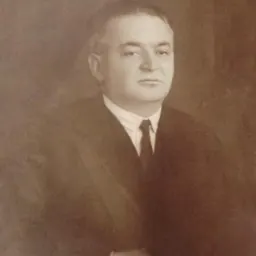
Related people
Same field, nearest in time





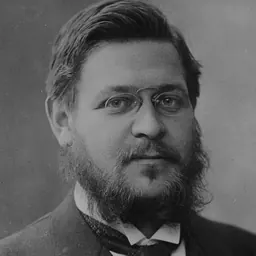
Contemporaries
People whose lives overlapped Avni Rustemi's
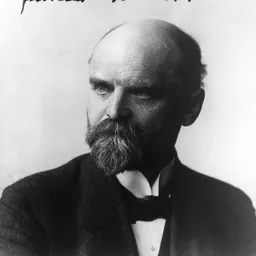
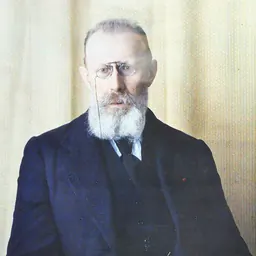

Frequently asked questions
Who was Avni Rustemi?
Albanian politician (1895-1924)
When was Avni Rustemi born?
Avni Rustemi was born on 22 September 1895 in Libohovë.
When did Avni Rustemi die?
Avni Rustemi died on 22 April 1924 in Tirana.
What was Avni Rustemi's occupation?
Avni Rustemi was a politician, journalist, pedagogue, member of Parliament and writer.
What nationality was Avni Rustemi?
Avni Rustemi was Albanian and Turkish.
Sources & further reading
Cite this page
APA: Biography.guide. (2026). Avni Rustemi. https://biography.guide/avni-rustemi/
MLA: "Avni Rustemi." Biography.guide, https://biography.guide/avni-rustemi/.
Chicago: "Avni Rustemi." Biography.guide. https://biography.guide/avni-rustemi/.
Data last updated: 2026-09-22 · Spot an error? Report a correction.
Page generated 2026-09-27 05:19 UTC