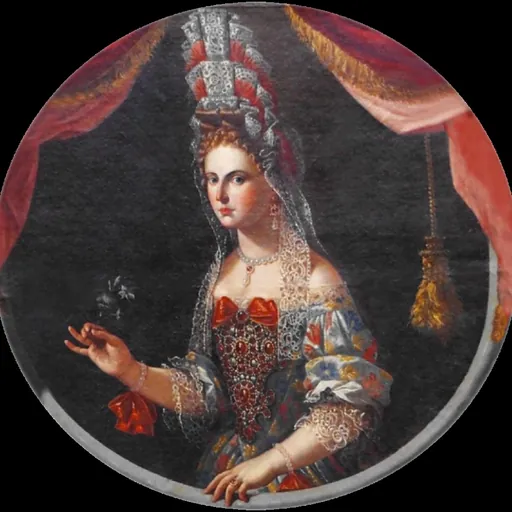
About Aurora Sanseverino
Lived 1669 – 1726 (aged 57). Aurora Sanseverino was a poet, actor, salonnière, stage actor, writer and patron of the arts.
Aurora Sanseverino (28 April 1669 – 2 July 1726) was an Italian noblewoman, salon-holder, patron and poet. One of the most celebrated women in the highest rank of the Neapolitan aristocracy, she was known for her great cultural activity as a patron and mecenat of art and for her famous cultural salon in Naples, and correspondent of several contemporary culture personalities that made her a central figure in baroque Italy.
She also contributed much to giving women a dignified place in the cultural circles of Neapolitan society of the time.
Biography Born in Saponara (the actual Grumento Nova, province of Potenza), she was the daughter of Carlo Maria Sanseverino, Prince of Bisignano and Count of Saponara, and Maria Fardella, Countess of Paceco. At the age of 11, she married Girolamo Acquaviva, Count of Conversano, but she was widowed after few years and later remarried Nicola Gaetani dell'Aquila d'Aragona, Count of Alife, Duke of Laurenzana and Prince of Piedimonte, who would become his lifelong companion.
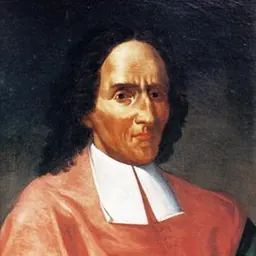
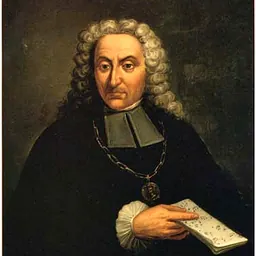
She moved with her husband to Naples, opening an important salon. Her circle included some of the kingdom's most prominent scholars and thinkers, most notably Giambattista Vico, Gian Vincenzo Gravina and Giuseppe Valletta. In 1691 she joined the Accademia degli Arcadi in Rome, under the name of Lucinda Coritesia, being one of the first women to be accepted to the academy. She was one of the first members of the Colonia Sebezia in Naples and also belonged to the Accademia degli Spensierati in Rossano. Most of her production has been lost and only a few sonnets survived.
Many artists worked under her tutelage including painters Francesco Solimena, Paolo de Matteis, Bernardo de' Dominici, Giovanni Battista Ruoppolo, Giacinto and Domenico Brandi, Teresa del Pò, Giacomo Nani, Nicola Maria Rossi, Michele Pagano (whose son Nicola played double bass in her musical performances) and composers Nicola Fago, Nicola Porpora, Giacomo Antonio Perti, Francesco Mancini, Domenico Sarro.
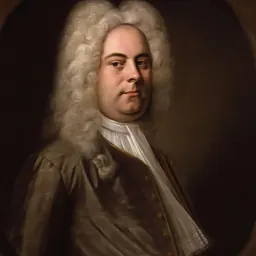
She is best known for her collaboration with George Frideric Handel, commissioning the serenata Aci, Galatea e Polifemo for the wedding of her niece Princess Beatrice di Montemiletto and Tolomeo Saverio Gallo, Duke of Alvito, which took place in Naples on 19 July 1708.
Her later life was marked by sadness for the loss her children Pasquale and Cecilia. Cecilia, who died in 1710, had recently given birth to Raimondo di Sangro, future inventor and alchemist.
Aurora died in Piedimonte d'Alife (today known as Piedimonte Matese, province of Caserta), aged 57.
Don’t just read it —
keep it.
Full-length biographies made to live with: read them, listen on the way to work, watch them tonight.
- E-book
- Audio
- Video
Instant download · yours to keep · every purchase keeps this site free
Important facts
People in Aurora Sanseverino's life
Named in this biography and alive at the same time



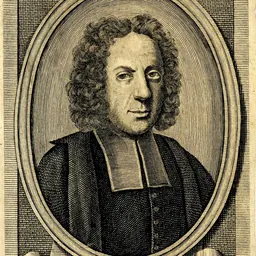
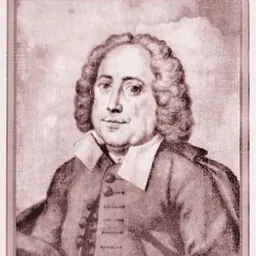
Related people
Same field, nearest in time
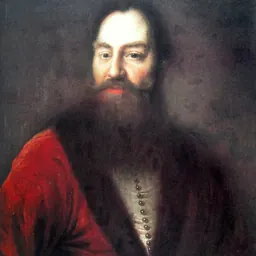


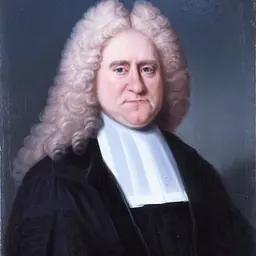

Contemporaries
People whose lives overlapped Aurora Sanseverino's




Frequently asked questions
Who was Aurora Sanseverino?
Italian noblewoman, poet, actress, patron
When was Aurora Sanseverino born?
Aurora Sanseverino was born on 28 April 1669 in Grumento Nova.
When did Aurora Sanseverino die?
Aurora Sanseverino died on 2 July 1726 in Piedimonte Matese.
What was Aurora Sanseverino's occupation?
Aurora Sanseverino was a poet, actor, salonnière, stage actor, writer and patron of the arts.
Sources & further reading
· Wikipedia: Aurora Sanseverino
Cite this page
APA: Biography.guide. (2026). Aurora Sanseverino. https://biography.guide/aurora-sanseverino/
MLA: "Aurora Sanseverino." Biography.guide, https://biography.guide/aurora-sanseverino/.
Chicago: "Aurora Sanseverino." Biography.guide. https://biography.guide/aurora-sanseverino/.
Data last updated: 2026-09-22 · Spot an error? Report a correction.
Portrait: Wikimedia Commons · author & licence
Page generated 2026-09-27 05:03 UTC