
About Augusto d'Halmar
Lived 1880 – 1950 (aged 69–70). Augusto d'Halmar was a Chilean poet, diplomat, writer and journalist.
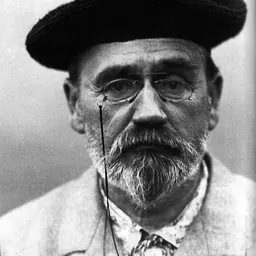
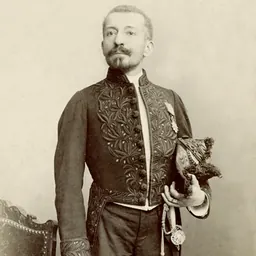
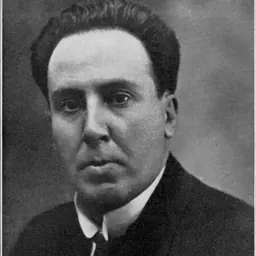
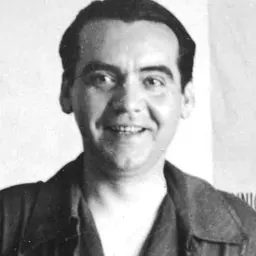
Augusto Goemine Thomson (23 April 1882 – 27 January 1950), known by the pen name Augusto d'Halmar (also rendered Augusto Jorge Goeminne Thomson in some sources), was a Chilean writer, art critic and diplomat. Regarded as a leading exponent of Chilean naturalism and one of the country's foremost poets of his generation, he is considered among the earliest Chilean intellectuals to have openly acknowledged his homosexuality. In 1942, d'Halmar was awarded the Chilean National Prize for Literature, the prize's inaugural year. A few days after his birth, his mother took him to Valparaíso. He revisited the theme under the same title in 1948, publishing a volume of twenty-one critical-biographical essays on nineteenth-century writers, including Hans Christian Andersen, Victor Hugo, Leo Tolstoy, Henrik Ibsen, Edgar Allan Poe, Charles Dickens, Bret Harte, Émile Zola, Alphonse Daudet, Edmondo De Amicis, Guy de Maupassant, Oscar Wilde, Eça de Queirós, Pierre Loti, Rudyard Kipling, Maxim Gorky, Carlos Pezoa Véliz, Oscar Milosz, Federico García Lorca, Antonio Machado, and Joseph Conrad.
In 1902 he published La Lucero (Los Vicios de Chile), later retitled Juana Lucero, a portrait of turn-of-the-century Santiago—particularly of life in the Yungay neighborhood—written in the naturalist style associated with Émile Zola.
In 1904, together with Fernando Santiván and Julio Ortiz de Zárate, he founded the Colonia Tolstoyana (Tolstoyan Colony), a rural commune that attracted Chilean painters, writers, and sculptors. With the founding of the magazine Zig-Zag in 1905, he published numerous short stories, some of which he later collected in Cristián y yo. He also worked as a writer for El Mercurio and served as secretary to Foreign Minister Federico Puga, who in 1907 appointed him consul-general in India, launching his diplomatic career.
Diplomatic career and years abroad In 1909 d'Halmar was named consul in Puerto Eten, Peru, a post he held until 1915. Separated from the diplomatic service for reasons that remain unclear, he returned briefly to Chile, where he delivered a series of lectures at the Salón de Honor of the University of Chile, organized by the Ateneo de Santiago. During these lectures he presented the manuscript of Gatita, a collection of twenty-seven short stories inspired by a young Peruvian woman and marked by deep melancholy; several stories first appeared in the magazine of the Los Diez group before being published in full in 1917 and expanded with additional stories in a 1935 reprint.
He subsequently departed for France, resolving not to return to Chile. There he accepted an appointment as a war correspondent for the Buenos Aires newspaper La Nación and the Santiago newspaper La Unión, settling in Paris. He was wounded and remained seriously ill for several months; in recognition, the French government awarded him a decoration.
In 1917 he traveled to Buenos Aires, and after the war ended in 1919 he moved to Spain, where he remained until 1934, working as a translator, journalist, and lecturer. During this period he published Nirvana (Viajes al extremo Oriente) (1918) and Mi otro yo (1920–1924), travel narratives centered on Zahír, an Egyptian youth he met while visiting the pyramids and who accompanied him—as, in the author's own words, "guide, nurse, pickpocket, and conjurer"—on a voyage across the Red Sea and Indian Ocean alongside the painter Rafael Valdés, and who later nursed him through a severe illness in Calcutta. Zahír later traveled with him to Turkey, Greece, Italy, and France.
While in Spain, d'Halmar also published La sombra del humo en el espejo and Pasión y muerte del cura Deusto (1924), a novel in three parts—"Albus," "Rubrus," and "Violaceus" (white, red, and indigo)—that sought both to depict a world of hidden, unacknowledged passions and to portray the Seville of its era as a setting of universal resonance. Written in Spain in 1920, it is generally considered d'Halmar's best-received work and has been described as a psychological novel for its carefully constructed characters and tightly organized structure.
Return to Chile and later life After a long silence, d'Halmar published Capitanes sin barco in 1934, the same year he returned permanently to Chile, settling in Valparaíso. Between 1940 and 1941 he helped establish the Museo Municipal de Bellas Artes de Valparaíso (Valparaíso Municipal Museum of Fine Arts), which he directed until 1945, when he moved to Santiago to work at the National Library of Chile. His return to Chile was marked by numerous tributes from the country's intellectual community, and in 1942 he received the newly created National Prize for Literature. His last books, Mar and Palabras para canciones, are often read as prose poetry.
d'Halmar died of throat cancer on 27 January 1950 at the home of his longtime friend, the actress Sylvia Thayer. His self-composed epitaph reads: "I saw nothing but the world; nothing happened to me but life."
Legacy d'Halmar is considered one of the originators of imaginismo (Chilean imagism), a literary tendency that arose as an alternative to the criollismo favored by most writers of his era. The critic Alone regarded him as one of the most significant figures in Chilean literature, and his reputation extended into European intellectual circles. Although his collected works (Obras completas), published between 1934 and 1935, do not encompass his full output, a substantial body of uncollected articles, chronicles, and stories—published in Chile, Spain, and Argentina between 1899 and his death in 1950—addresses subjects ranging from Chilean domestic politics and the Spanish Civil War to Chilean society, book reviews, and theater criticism. His political views ranged from sympathy for communism to an aristocratic self-fashioning as a descendant of Swedish nobility, alongside a recurring interest in esotericism that shaped the symbolic dimensions of his fiction.
Several places in Chile bear his name, including a secondary school and a plaza in the commune of Ñuñoa, the Colegio Augusto d'Halmar in Peñaflor, and a street in Antofagasta.
Literary works
Juana Lucero, novel (1902); republished in 1934 as La Lucero Vía crucis (1906) Al caer la tarde, play (1907) La lámpara en el molino, novel (1914) Los Alucinados, novel (1917) La Gatita, novella (1917) La sombra del humo en el espejo, novel (1918) Nirvana, travel narrative (1918) Mi otro yo, travel narrative (1920–1924) Cuatro evangélicos en uno, deluxe edition (1922) Vía Crucis, illustrated edition (1923) Pasión y muerte del cura Deusto (1924) La Mancha de Don Quijote (1934) Capitanes sin barco, tres novelas, novel (1934) Catita y otras narraciones, cuentos (1935) Amor, cara y cruz, novela y cuentos (1935) Lo que no se ha dicho sobre la actual revolución española, poetry (1936) Rubén Darío y los americanos en París, essay (1941) Palabras para canciones, poetry (1942) Mar, novela poemática (1945) Carlos V en Yuste y Castilla (1945) Cristián y yo, cuentos (1946) Los 21, essay collection (1948) Cursos de oratoria (1949) Recuerdos olvidados, poetry, published posthumously (1975)
Don’t just read it —
keep it.
Full-length biographies made to live with: read them, listen on the way to work, watch them tonight.
- E-book
- Audio
- Video
Instant download · yours to keep · every purchase keeps this site free
Important facts
People in Augusto d'Halmar's life
Named in this biography and alive at the same time

Related people
Same field, nearest in time

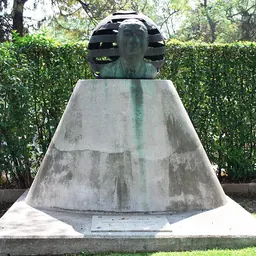
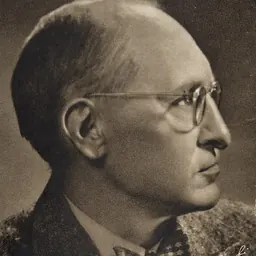
Contemporaries
People whose lives overlapped Augusto d'Halmar's

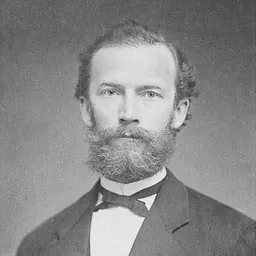

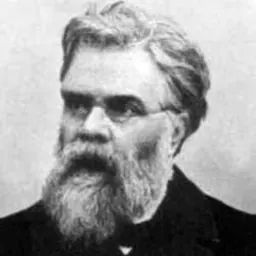


Frequently asked questions
Who was Augusto d'Halmar?
Chilean writer (1880–1950)
When was Augusto d'Halmar born?
Augusto d'Halmar was born in 1880 in Santiago.
When did Augusto d'Halmar die?
Augusto d'Halmar died on 27 January 1950 in Putaendo.
What was Augusto d'Halmar's occupation?
Augusto d'Halmar was a poet, diplomat, writer and journalist.
What nationality was Augusto d'Halmar?
Augusto d'Halmar was Chilean.
Sources & further reading
Cite this page
APA: Biography.guide. (2026). Augusto d'Halmar. https://biography.guide/augusto-d-halmar/
MLA: "Augusto d'Halmar." Biography.guide, https://biography.guide/augusto-d-halmar/.
Chicago: "Augusto d'Halmar." Biography.guide. https://biography.guide/augusto-d-halmar/.
Data last updated: 2026-09-25 · Spot an error? Report a correction.
Page generated 2026-09-27 05:12 UTC