
About Auguste-Xavier Leprince
Lived 1799 – 1826 (aged 27). Auguste-Xavier Leprince was a French painter and lithographer.
Auguste-Xavier Leprince (August 28, 1799 – December 26, 1826) was a French artist and painter who attained celebrity at the age of seventeen. His patrons included the Duchesse de Berry, Charles X, and Alexandre du Sommerard. He was also a teacher; in his twenties he established his own atelier in Paris, with pupils including his two younger brothers, Robert-Léopold and Pierre-Gustave, as well as Eugène Lepoittevin and Nicolas Alexandre Barbier. His meteoric career came to an abrupt end and his "brilliant promise was cut short by his premature death at the age of twenty-seven."
Early success with pastoral subjects La moisson (The Harvest), private collection, 1822. First owned by the Duchesse de Berry, the painting set a record for a work by Leprince when it was actioned for €60,000 at Christie's in Paris in 2007. Xavier Leprince was born in Paris, the son of Anne-Pierre Leprince (said to be a painter and lithographer, but about whom little is known ) and Marie-Adélaïde-Florentine Datir. Alexandre du Sommerard, who became one of his patrons, indicates that Xavier was essentially a self-taught artist, saying his early paintings were created "almost without any other guide than nature."
His earliest known works, dating from 1816 to 1819, mostly depict livestock and their keepers in pastoral settings. These precocious works gained for the teenaged Leprince "a celebrity confirmed by the exorbitant prices set, by the merchants themselves, for his first productions." and the French landscape artist Jean-Louis de Marne.
Leprince made his salon debut at age nineteen, exhibiting six paintings, all landscapes or rural subjects, at the Paris Salon of 1819, where he was awarded a medal. She may also have commissioned from Leprince a painting depicting guests listening to music in her grove at the Hermitage of Enghien at Montmorency, known from a lithograph.
Leprince's 1823 painting, Embarquement des bestiaux sur le Passager dans le port de Honfleur (Embarkation of Cattle on the Passager at the Port of Honfleur), emblematic of the cattle paintings of the era, was of singular importance to his career. Féréol Bonnemaison wrote that it "placed M. Leprince among our best genre painters. His career is now gloriously open before him." The painting was purchased by Charles X for 3,000 francs, and is now in the Louvre.
Other genres Moving beyond pastoral subjects, Leprince also painted marine art, scenes of Parisian life, works in the troubadour style, portraits, and the Forest of Fontainebleau, which had just begun to attract a new generation of French artists.
He also specialized in painting the human figures for a number of landscape painters, including Nicolas Alexandre Barbier, Étienne Bouhot, Alexandre-Hyacinthe Dunouy, André Giroux, Charles-Caïus Renoux, and . This practice of being a "general contractor" to artists "who do not have the courage to study the figures of men or animals to adorn their works" was criticized by one writer, who argued that it would surely "detach many jewels from his crown in public esteem." The critic nonetheless praised Leprince's "wit, verve, originality, finesse, and great facility in composition and execution."
Leprince's skill at figure painting was appreciated by Corot, and speculates that Corot was influenced by Leprince.
Works such as the watercolor A Ceremony on the Capitoline Hill in Rome, dated 1821, provide evidence of travel to Italy.
In 1822, from the Société des Amis des Arts, Leprince received a commission to commemorate the valiant efforts of French doctors and nuns who had traveled to Barcelona in response to an epidemic of yellow fever, which killed an estimated 20,000 inhabitants. The resulting painting was an ambitious panorama with more than forty figures, variously called Peste de Barcelone or Les Médecins français et les Sœurs de Saint-Camille à Barcelone. La Nouveauté called it a "very remarkable" work "which announced a very distinguished talent." The painting was praised and minutely described by Charles Paul Landon in a volume of his Annales du Musée et de l'École moderne des beaux-arts, which included a fold-out reproduction, currently the only known image of Leprince's painting.
In 1824, inspired to paint the coast of Normandy, Leprince began sharing a studio with Eugène Isabey at Honfleur.
Patronage of du Sommerard By 1822, the year Leprince turned 23, his talents as a painter had attracted the patronage of the antiquarian Alexandre du Sommerard, whose collection of medieval art and artifacts would become the Musée de Cluny. Du Sommerard included lithographs of four works by Leprince in his highly influential Vues de Provins, which also included four works by Xavier's younger brother, Léopold Leprince. The book, an illustrated tour of medieval churches and abbeys, many of them reduced to ruins in the violence of the French Revolution, was part of an artistic and literary movement, the troubadour style, that romanticized the Middle Ages in France. About Leprince's Vue de la partie des fortifications dite le Trou du Chat, the art historian Pierre Bénard writes, "Is there not something Virgilian in the peaceful herd immortalized by Xavier Leprince at the foot of a tower of the ramparts?"
At the Paris Salon of 1824, Leprince exhibited a full-length portrait of his patron, listed in the catalogue as Portrait en pied de M. du S… dans son cabinet. Its location is unknown.
At the time of his death, Leprince left unfinished two paintings commissioned by du Sommerard. One was The Artist's Studio. The other depicted an elderly collector conferring with a Jewish antiques dealer and surrounded by prized artifacts from his collection, entitled L’Antiquaire (The Antiquarian). To complete this painting, du Sommerard commissioned another of his protégés, Charles-Caïus Renoux, who did so "with rare talent." It was displayed in the Paris Salon of 1827. A contemporary reviewer noted that "at the time of Xavier Leprince's death, the two figures alone were made, and the rest was hardly sketched out. It is M. Renoux who was commissioned to complete this interior," consisting of furniture, armor, and numerous objets d'art from the Middle Ages; "finally everything comes together to make this painting a precious piece." The contemporary critic Auguste Jal declared the painting "a perfect work." L’Antiquaire has been cited by modern scholars researching the history of antiquarianism and the invention of the modern museum.
The Artist's Studio and artists en plein air The Artist's Studio (completed by Eugène Lepoittevin), 1827, Chazen Museum of Art.At an unusually early age, especially if he was in fact a self-taught painter, Leprince opened an atelier and accepted pupils. In the last year of his life he began work on a highly detailed painting depicting himself and his circle of artists, students, and patrons, following in the tradition of atelier paintings such as Louis-Léopold Boilly's Gathering of Artists in the Studio of Isabey (1798).The highly detailed canvas shows how artists worked, what tools were used, and how brushes were held. Plaster casts of well-known classical sculptures, including the Laocöon and the Venus de Milo, are displayed around the room. Two classical busts, perched high on a shelf at right, appear to look down like spectators on the informal assembly of students, patrons, and critics. Leprince is the figure seen from the back in profile seated before the large painting to the right of center. The canvas he is working on is Loading of Livestock at Honfleur, which he exhibited in the Paris Salon of 1824 and was purchased two years later by King Charles X of France. The inscription on the stretcher notes that this painting was commissioned by M. du Sommerard, Leprince's chief patron. In 1869 it was purchased by Octave de Labastie, the figure seated before an easel, fifth from the left.
Leprince's painting includes no fewer than seven easels and nine painters with spectators. The focus is not on a single artist, in other words, but on several different ones. The studio was in a property called “la Childebert”, after its address at 9, , close to what is now the boulevard Saint-Germain-des-Prés in the sixth arrondissement of Paris. Here Auguste-Xavier Leprince shared a studio with his brothers, Robert-Léopold (1800–1847) and Gustave Leprince (1810–1837)…Preliminary studies are preserved in the Musée Magnin in Dijon, including for the group of figures to the left and for another in the background…A distinguishing feature of both the studies and the finished painting is the individual character of the people represented, showing that they were intended to be identifiable. They presumably included not just some of the main artists of the neighbourhood, but also no doubt prominent officials and collectors…The ambitious studio interior with some thirty figures which Leprince painted the year he died was a commemorative portrait of the three brothers and their immediate circle designed to impress, but also with an element of humour. The painting was unfinished at the time of Leprince's death. To finish it, Du Sommerard commissioned one of Leprince's pupils, Eugène Lepoittevin. When it was exhibited at the Paris Salon of 1827, the catalogue noted: "Of the thirty figure-portraits included in the composition, nineteen had been completed by Mr. Xavier Leprince before his premature death; the eleven others and various details are by the hand of Mr. Eugène Potdevin [sic]." The second figure from left, seated at an easel, is thought to be a portrait of Lepoittevin, either by his own hand or by that of Leprince. Another artist known to appear in the painting is Augustin Enfantin (1793-1827), "It is quite common for artists to represent themselves at work. But the originality of Leprince's work is to show them discovering the splendor of the landscape of Fontainebleau. Leprince places the painters in the center of the foreground of the composition and draws them very small. They are thus the scale marker of this landscape which becomes, through this artifice, monumental in the eyes of the spectator."
Illustrations and lithographs For popular consumption, Leprince also created book illustrations and works for reproduction as lithographs. In the estate sale that followed his death, one lot was described as "fifty lithographed pieces, comprising the complete work of everything M. X. Leprince has executed in lithography."
Not too far from boyhood himself, he provided illustrations for Les Jeux des jeunes garçons (The Games of Young Boys), published in 1822. The book was a popular success (the entry at worldcat.org notes a fifth edition), and was followed a year later by the fanciful Jeux des jeunes filles de tous les pays (Games of Young Girls of All Countries).
In 1819, Leprince created a series of at least three small paintings depicting travel by stagecoach (in French, diligence). A touch of ribaldry at once realistic and fanciful can be seen in Le depart de la Diligence; off to one side, a male passenger renders the artist's signature and the date by urinating against a wall. This link between stagecoach travel and a certain raucous sense of humor was given free rein in Leprince's Inconvéniens d'un Voyage en Diligence, an album of hand-colored satirical lithographs depicting the perils and humiliations of travel by stagecoach, published in 1826. The "suite of twelve highly amusing plates" are to be found today only as "an extremely rare color-plate book. Plate No. 5 presents an amusing, if cautionary, piece de l'emesis vue de la nausée as a coach speeds along, causing the damsel riding atop it to hurl her cookies, which carom off a passenger's head and into a roadside beggar's chapeau."
The series won high praise. Jacques Arago wrote, "Shall we not put, next to our most caustic creators, Henry Monnier and Xavier Leprince, to whom caricature owes its most biting productions?"
"Everyone knows the charming lithographs where Mr. Xavier Leprince captured…all the disagreeableness reserved for poor travelers taking the stagecoach," begins a review of a play based on the lithographs. The comedy Inconvéniens d'un Voyage en Diligence premiered at the Théâtre des Variétés in Paris on Saturday, 11 November 1826, six weeks before Leprince's death.
The Musée Carnavalet in Paris and the British Museum in London both hold incomplete sets of Inconvéniens, but between the two, all the images can be seen.
Since at least the 1920s, another album of hand-colored lithographs has been attributed to Leprince. Métamorphoses d'Arlequin, Parades: Jouées sur le Théâtre Français, a set of twelve images published in Brussels in 1826, is "a fascinating and intriguing album that appears to be a political allegory with the theater as backdrop and Harlequin as character in the political events in France 1791-1826. The fact that the album was published, without publisher or artist attribution, in Belgium rather than France strongly suggests fear of running afoul of French press censorship laws of the era." Authorship has also been attributed to , "but that cannot be so," according to rare book dealer David Brass. "Close comparison with caricatures signed by Leprince and Fontallard conclusively demonstrate that the style here is dramatically different than Fontallard's but extremely close to Leprince's, particularly in the faces of the figures depicted." The Metropolitan Museum, which acquired a copy in 1966, lists attribution to J.J. Grandville. Métamorphoses d'Arlequin awaits the attention of scholars who may determine its authorship and elucidate its satirical nuances.
Portraits and self-portraits A portrait of Leprince by Victor-René Garson was shown in the Paris Salon of 1822. A miniature portrait of Leprince by Frédéric Millet was shown at the Paris Salon of 1824, and in 1896 at an exposition at the Bishop's Palace in Chartres. The location of these works is unknown.
A black and white photograph of a self-portrait by Leprince is in the Frick Digital Collections; the location and date of the original painting are unknown. Du Sommerard speaks of Paysage de Susten en Suisse (1824, now in the Louvre) as a self-portrait, saying Leprince "pictured himself, from memory, with his pupils, braving the harshness of the frost to study nature in all its effects"; if Leprince is the seated figure with a sketchbook, his head is down and his face is not visible. Similarly, in his self-portrait in The Artist's Studio, Leprince's face is turned away from the viewer.
Leprince painted and drew family members (including portraits of his father and his brother Gustave dated 1824, at the ), and also celebrities, including an early portrait of Franz Liszt.
Paris Embarquement de bestiaux sur le Passager dans le port de , 1823, Louvre Museum. Paysage de Susten en Suisse, 1824, Louvre Museum. Leprince's sketchbooks, with hundreds of drawings, Louvre Museum. L'aqueduc d'Arcueil, 1820, Musée Carnavalet. Concert dans un jardin public, c. 1820, Musée Carnavalet. Portrait of François-Joseph Talma (attributed), before 1827, Musée Carnavalet. Carnaval au Boulevard du Temple and La fête des Loges, photographs c. 1900 by Albert Brichaut of two otherwise unknown paintings by Leprince, Musée Carnavalet. Le port d'Honfleur, l'embarquement des bestiaux, c. 1823, Petit Palais.
Dijon L'Aveugle et les enfants, watercolor, 1822, Musée Magnin, Dijon. Pêcheur ficelant une bourriche de poissons, c. 1826, Musée Magnin, Dijon. Intérieur d'atelier (attributed), c. 1826, Musée Magnin, Dijon. Le Peintre dans son atelier (attributed), c. 1826, Musée Magnin, Dijon. Marché aux chevaux dans un bourg normand, Musée Magnin, Dijon.
Elsewhere in France Paysage et berger, 1820, Musée des Beaux-Arts et d'Archéologie de Châlons-en-Champagne. Simon Chénard in the play "Félix ou l'Enfant trouvé", 1821, Musée d'art et d'histoire Saint-Germain, Auxerre. Halte des peintres à Fontainebleau, c. 1824, Musée départemental de l'Oise, Beauvais. Paysage, bergere sur un ane, 1817, Musée des Beaux-Arts de Bordeaux. Paysage, chemin montagneux, 1817, Musée des Beaux-Arts de Bordeaux. Paysage avec une charette (attributed), Musée des beaux-arts, Chambéry. Paysage (attributed), Musée des beaux-arts, Chambéry. Portrait of Anne-Pierre Leprince and Portrait of Gustave Leprince, 1824. Vue d'une prairie by Alexandre Hyacinthe Dunouy, with figures by Leprince, Musée Thomas-Henry, Cherbourg-Octeville. Le marchand de chansons, 1825, Museum of European and Mediterranean Civilisations, Marseille Vieillard enchaîné dans un cachot. Henri IV faisant entrer des vivres dans Paris qu'il assiège, gouache, 1821, Musée national du château de Pau. Un chasseur a l'affut (attributed), Musée Crozatier, Le Puy-en-Velay Paysage, étude, 181?, Musée des beaux-arts de Rouen.
United States A Shepherd and a Rider on a Country Lane, c. 1823, Metropolitan Museum of Art, New York. Man in Oriental Costume in the Artist's Studio, c. 1823-1826, Metropolitan Museum of Art, New York. The Artist's Studio, completed by Eugène Lepoittevin, 1827, Chazen Museum of Art, University of Wisconsin–Madison
Sweden Eight works by Leprince, all acquired since 2016, including the oil on paper sketch Studio Interior with Artists Working, 1820, Nationalmuseum, Stockholm.
Leprince at auction
A record price for a painting by Leprince was set by La Moisson (1822), auctioned for €60,000 at Christie's in Paris in 2007. Other notable results include €52,875 for Les Patineurs (1823), Christie's Paris, 2003; $28,200 for A view of the coast at Le Havre by La Hève (1825), Christie's New York, 2000; and $24,000 for Landscape with a Farmhouse and Bridge (undated), Sotheby's New York, 2007.
Historical prices for works by Leprince include the 1859 auction of Une Fête de village for 700 francs and the 1907 auction in Paris of two small paintings dated 1819, Le Départ de la diligence and L’Arrivée de la diligence, which sold for $4,500, equivalent to $128,870 in 2021.
Don’t just read it —
keep it.
Full-length biographies made to live with: read them, listen on the way to work, watch them tonight.
- E-book
- Audio
- Video
Instant download · yours to keep · every purchase keeps this site free
Important facts
more
Leprince, M. Xavier Leprince, X. Leprince, M. Leprince, M.X. Leprince, M^Tr^R X. LeprincePeople in Auguste-Xavier Leprince's life
Named in this biography and alive at the same time


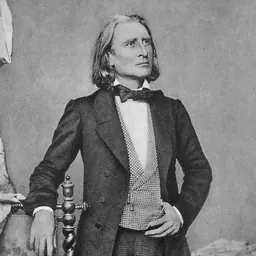


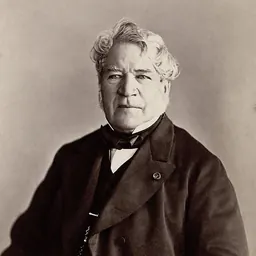
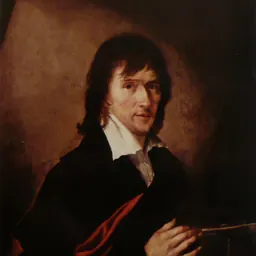

Related people
Same field, nearest in time

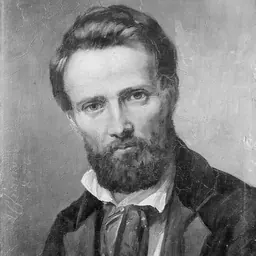
Contemporaries
People whose lives overlapped Auguste-Xavier Leprince's





Frequently asked questions
Who was Auguste-Xavier Leprince?
French painter (1799-1826)
When was Auguste-Xavier Leprince born?
Auguste-Xavier Leprince was born on 28 August 1799 in Paris.
When did Auguste-Xavier Leprince die?
Auguste-Xavier Leprince died on 24 December 1826 in Nice.
What was Auguste-Xavier Leprince's occupation?
Auguste-Xavier Leprince was a painter and lithographer.
What nationality was Auguste-Xavier Leprince?
Auguste-Xavier Leprince was French.
Sources & further reading
· Wikipedia: Auguste-Xavier Leprince
Cite this page
APA: Biography.guide. (2026). Auguste-Xavier Leprince. https://biography.guide/auguste-xavier-leprince/
MLA: "Auguste-Xavier Leprince." Biography.guide, https://biography.guide/auguste-xavier-leprince/.
Chicago: "Auguste-Xavier Leprince." Biography.guide. https://biography.guide/auguste-xavier-leprince/.
Data last updated: 2026-09-20 · Spot an error? Report a correction.
Page generated 2026-09-27 05:21 UTC