
Auguste Le Guennant
French composer, organist and music educator
About Auguste Le Guennant
Lived 1881 – 1972 (aged 91). Auguste Le Guennant was a French composer, organist and music educator.
Auguste Joseph-Marie François Le Guennant (10 January 1881 – 17 May 1972) was a French organist, church musician and composer. He was, after positions as organist and head of the chapel in Paris and Nantes, the director and teacher at the Gregorian Institute of Paris, as a specialist of Gregorian chant.
Biography Born in 1881 in Auray (Morbihan), Auguste Le Guennant was the son of Auguste Marie Le Guennant and his wife Valentine Joséphine Françoise le Duff. Le Guennant studied at the Schola Cantorum de Paris – the organ with Alexandre Guilmant and composition with Vincent d'Indy. He held for some time the position of organist at the grand organ of Notre-Dame de Clignancourt, and left Paris in 1905 to become head of the chapel at Notre-Dame-de-Bon-Port in Les Sables-d'Olonne, and from 1908 at the Basilica of Saint-Nicolas in Nantes. He founded the mixed group A Capella in this city, in collaboration with A. Mahot.
The Mutual Edition of the Schola Cantorum published his Adagietto for organ, and an O Salutaris for four mixed voices. Biton published an accompanying book on Gregorian chant.
In 1925, Le Guennant arrived at the Gregorian Institute of Paris as director and teacher of Gregorian chant, succeeding Dom Joseph Gajard of the Solesmes Abbey. After World War II, he organized many Gregorian sessions, not only in France but also in Fátima, and even Rio de Janeiro. Still teaching at the Gregorian Institute in Paris, Le Guennant considerably boosted the teaching of Gregorian chant by creating centres of study in several countries. When Maurice Duruflé thought about basing his Requiem on Gregorian chant, he asked Le Guennant for advice, and gratefully acknowledged his understanding. In 1960, Duruflé dedicated a composition to Le Guennant, his Quatre Motets sur des thèmes grégoriens which were also based on chant.
In 1953, Le Guennant was awarded the honorary doctorate of the Pontifical Institute of Sacred Music in Rome.
Writings 1947: Notes pour servir à la direction d’une Schola Grégorienne. 1948: Précis de rythmique grégorienne. 1988: Vade Mecum Paroissial de l'Accompagnateur Grégorien (posthumous)
Don’t just read it —
keep it.
Full-length biographies made to live with: read them, listen on the way to work, watch them tonight.
- E-book
- Audio
- Video
Instant download · yours to keep · every purchase keeps this site free
Important facts
People in Auguste Le Guennant's life
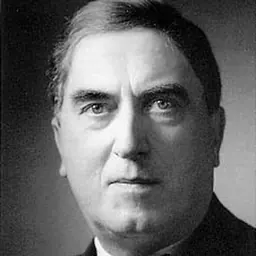
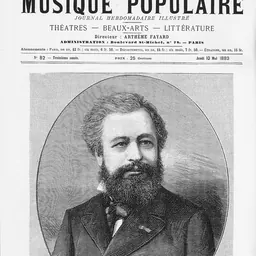
Named in this biography and alive at the same time
Related people
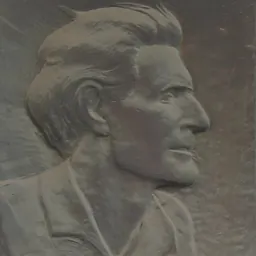
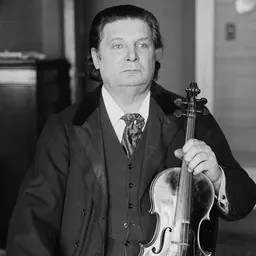
Same field, nearest in time




Contemporaries
People whose lives overlapped Auguste Le Guennant's



Frequently asked questions
Who was Auguste Le Guennant?
French composer, organist and music educator (1881-1972)
When was Auguste Le Guennant born?
Auguste Le Guennant was born on 10 January 1881 in Auray.
When did Auguste Le Guennant die?
Auguste Le Guennant died on 17 May 1972 in 14th arrondissement of Paris.
What was Auguste Le Guennant's occupation?
Auguste Le Guennant was a composer, organist and music educator.
What nationality was Auguste Le Guennant?
Auguste Le Guennant was French.
Sources & further reading
· Wikipedia: Auguste Le Guennant
· DBpedia: Auguste Le Guennant
Cite this page
APA: Biography.guide. (2026). Auguste Le Guennant. https://biography.guide/auguste-le-guennant/
MLA: "Auguste Le Guennant." Biography.guide, https://biography.guide/auguste-le-guennant/.
Chicago: "Auguste Le Guennant." Biography.guide. https://biography.guide/auguste-le-guennant/.
Data last updated: 2026-09-22 · Spot an error? Report a correction.
Page generated 2026-09-27 04:58 UTC