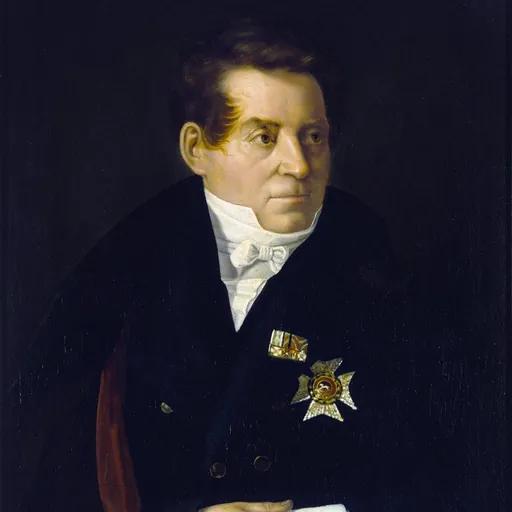
August Wilhelm von Schlegel
German poet, translator, critic, and writer
About August Wilhelm von Schlegel
Lived 1767 – 1845 (aged 77). August Wilhelm von Schlegel was a linguist, translator, sanskrit scholar, philosopher, poet and literary critic.
August Wilhelm von Schlegel (Schlegel until 1812; ; ; 8 September 176712 May 1845) was a German scholar, critic, Orientalist, Indologist, translator and poet. With his brother Friedrich Schlegel, he was a leading influence within Jena Romanticism. His translations of Shakespeare turned the English dramatist's works into German classics.
Schlegel was also the professor of Sanskrit in Continental Europe and produced a translation of the Bhagavad Gita.
Career In 1796, soon after his return to Germany, Schlegel settled in Jena, following an invitation from Friedrich Schiller. That year he married Caroline Schelling, the widow of the physician Böhmer. She assisted Schlegel in some of his literary productions, and the publication of her correspondence in 1871 established for her a posthumous reputation as a German letter writer. She separated from Schlegel in 1801 and became the wife of the philosopher Friedrich von Schelling soon after.
In Jena, Schlegel made critical contributions to Schiller's Horen and that author's Musen-Almanach, and wrote around 300 articles for the Jenaer Allgemeine Litteratur-Zeitung. He also did translations from Dante and Shakespeare. This work established his literary reputation and gained for him in 1798 an extraordinary professorship at the University of Jena. His house became the intellectual headquarters of the "romanticists", and was visited at various times between 1796 and 1801 by Johann Gottlieb Fichte, whose Foundations of the Science of Knowledge was studied intensively, by his brother Friedrich, who moved in with his wife Dorothea Schlegel, by Friedrich Wilhelm Joseph Schelling, by Ludwig Tieck, by Novalis and others.
Schlegel argues that, from a philosophical point of view, everything participates in an ongoing process of creation, whereas, from an empirical point of view, natural things are conceived as if they were dead, fixed and independent from the whole. He also published a volume of poems and carried on a controversy with Kotzebue. At this time the two brothers were remarkable for the vigour and freshness of their ideas and commanded respect as the leaders of the new Romantic criticism. A volume of their joint essays appeared in 1801 under the title Charakteristiken und Kritiken. His play Ion, performed in Weimar in January 1802, was supported by Goethe, but became a failure.
When the work of art appears as if all its elements had been consciously chosen by a power above the artist, it has style; when the artist has not transcended his/her individuality, then s/he is categorized as a mannerist artist (SW III, 309–312). In 1807 he attracted much attention in France by an essay in the French, Comparaison entre la Phèdre de Racine et celle d'Euripide, in which he attacked French classicism from the standpoint of the Romantic school. His famous lectures on dramatic art and literature (Über dramatische Kunst und Literatur, 1809–1811), which have been translated into most European languages, were delivered at Vienna in 1808. He was accompanied by De Staël and her children. In 1810 Schlegel was ordered to leave the Swiss Confederation as an enemy of the French literature.
For Schlegel, the magic of a work of art is that it brings us into a different world, with all its own internal coherence, and this is why it needs to become organic and complete unto itself. Therefore, its purpose should not be to reflect the real world with naturalism, but rather to create its own world, which could never be a question of applying a set of rules and principles to a particular matter (paintings, words, marble), such as classicist principles seemed to do. He was financially independent and could travel at his own expense. Schlegel's Vienna Lectures had been published and were read across Europe and in Saint Petersburg. Therefore, he could cultivate friendships with the educated elite. He continued to lecture on art and literature, publishing in 1827 On the Theory and History of the Plastic Arts, and in 1828 two volumes of critical writings (Kritische Schriften). From 1823 til 1830 he published the journal Indische Bibliothek. In 1823 edited the Bhagavad Gita, with a Latin translation, and in 1829, the Ramayana. This was followed by his 1832 work Reflections on the Study of the Asiatic Languages. Schlegel published on this matter, attesting Indians, Egyptians, Greeks, and Aztecs the benefit of progress. He was impressed with their architecture, their mathematics, and their technology. In 1837 he wrote the preface to the German translation of James Cowles Prichard's book An Analysis of the Egyptian Mythology which originally had been published in 1819.
In 1835, Schlegel became head of the committee organising a monument in memory of Ludwig van Beethoven in Bonn, the composer's birthplace. Schlegel died in Bonn in 1845, three months before its official unveiling.
Historic evaluations According to the 1910-1911 Encyclopædia Britannica Eleventh Edition:
An article for the 1920 Encyclopedia Americana provided the following thoughts:
The 1905 New International Encyclopedia in its article on Schlegel, gives the following opinions:
Honors Elected a member of the American Antiquarian Society in 1836.
Portraits Portrait of A. W. Schlegel by Albert Gregorius (1774–1853), 1817, in Coppet Castle (Switzerland)
Published works by Schlegel Ion (1803) Rom Elegie (1805) Schlegel's Berlin lectures of 1801/1804 reprinted from manuscript notes by Jakob Minor (1884) Poetische Werke (1811) Observations sur la langue et la littératures provençale (1818) Bhagavad Gita (1823, Latin translation) Kritische Schriften (1828, critical works) Ramayana (1838, Latin translation, incomplete) Sämtliche Werke (1846–1848) (Collected Works) issued in twelve volumes by Eduard Böcking Œuvres écrites en français (3 vols., 1846) Opuscula Latine scripta (1848)
A selection of the writings of both August Wilhelm and Friedrich Schlegel, edited by Oskar Walzel, will be found in Kürschner's Deutsche Nationalliteratur, 143 (1892).
Translations by Schlegel Schlegel's Shakespeare translations have been often reprinted. The edition of 1871–72 was revised with Schlegel's manuscripts by Michael Bernays. See Bernays's Zur Entstehungsgeschichte des Schlegelschen Shakespeare (1872); Rudolph Genée, Schlegel und Shakespeare (1903). Schlegel also translated plays by Pedro Calderón de la Barca, such as La banda y flor, which became the basis for E. T. A. Hoffmann's 1807 singspiel Liebe und Eifersucht.
Letters of the Schlegel brothers Ludwig Tieck und die Brüder Schlegel. Briefe ed. by Edgar Lohner (München 1972)
Don’t just read it —
keep it.
Full-length biographies made to live with: read them, listen on the way to work, watch them tonight.
- E-book
- Audio
- Video
Instant download · yours to keep · every purchase keeps this site free
Important facts
People in August Wilhelm von Schlegel's life
Named in this biography and alive at the same time

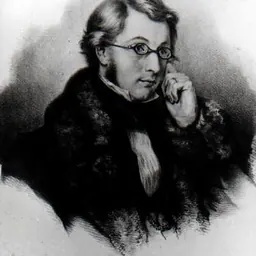
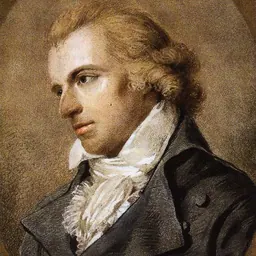

Related people
Same field, nearest in time

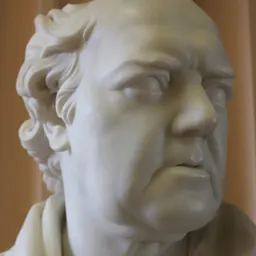

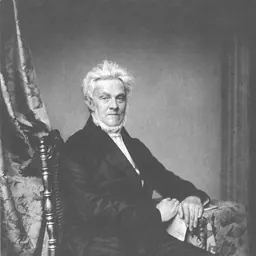
Contemporaries
People whose lives overlapped August Wilhelm von Schlegel's





Frequently asked questions
Who was August Wilhelm von Schlegel?
German poet, translator, critic, and writer (1767–1845)
When was August Wilhelm von Schlegel born?
August Wilhelm von Schlegel was born on 8 September 1767 in Hanover.
When did August Wilhelm von Schlegel die?
August Wilhelm von Schlegel died on 12 May 1845 in Bonn.
What was August Wilhelm von Schlegel's occupation?
August Wilhelm von Schlegel was a linguist, translator, sanskrit scholar, philosopher, poet and literary critic.
What nationality was August Wilhelm von Schlegel?
August Wilhelm von Schlegel's recorded nationality: Kingdom of Hanover.
Sources & further reading
· Wikipedia: August Wilhelm von Schlegel
· DBpedia: August Wilhelm Schlegel
Cite this page
APA: Biography.guide. (2026). August Wilhelm von Schlegel. https://biography.guide/august-wilhelm-von-schlegel/
MLA: "August Wilhelm von Schlegel." Biography.guide, https://biography.guide/august-wilhelm-von-schlegel/.
Chicago: "August Wilhelm von Schlegel." Biography.guide. https://biography.guide/august-wilhelm-von-schlegel/.
Data last updated: 2026-09-21 · Spot an error? Report a correction.
Portrait: Wikimedia Commons · author & licence
Page generated 2026-09-27 04:59 UTC