
About Friedrich Schlegel
Lived 1772 – 1829 (aged 56). Friedrich Schlegel was a philosopher, translator, writer, novelist, literary critic and university teacher.
Karl Wilhelm Friedrich (after 1814: von) Schlegel ( ; ; 10 March 1772 – 12 January 1829) was a German literary critic, philosopher, and Indologist. With his older brother, August Wilhelm Schlegel, he was one of the main figures of Jena Romanticism.
Born into a fervently Protestant family, Schlegel rejected religion as a young man in favor of atheism and individualism. He entered university to study law but instead focused on classical literature. He began a career as a writer and lecturer, and founded journals such as Athenaeum. In 1808, Schlegel returned to Christianity as a married man with both him and his wife being baptized into the Catholic Church. This conversion ultimately led to his estrangement from family and old friends. He moved to Austria in 1809, where he became a diplomat and journalist in service of Klemens von Metternich, the Foreign Minister of the Austrian Empire. Schlegel died in 1829, at the age of 56.
Schlegel was a promoter of the Romantic movement and inspired Samuel Taylor Coleridge, Adam Mickiewicz and Kazimierz Brodziński. The first to notice what became known as Grimm's law, Schlegel was a pioneer in Indo-European studies, comparative linguistics, and morphological typology, publishing in 1819 the first theory linking the Indo-Iranian and German languages under the Aryan group. Some of his works were set to music by Schubert, Mendelssohn and Schumann.
Life and work
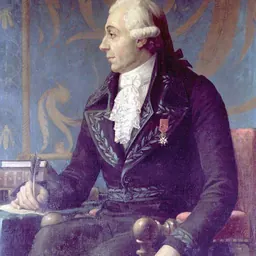
Oil painting after Domenico Quaglio (1832)
Karl Friedrich von Schlegel was born on 10 March 1772 at Hanover, where his father, Johann Adolf Schlegel, was the pastor at the Lutheran Market Church. For two years, he studied law at Göttingen and Leipzig, and he met with Friedrich Schiller. In 1793, he devoted himself entirely to literary work. In 1796, he moved to Jena, where his brother August Wilhelm lived, and here he collaborated with Novalis, Ludwig Tieck, Fichte, and Caroline Schelling, who married August Wilhelm. In 1797, he quarreled with Schiller, who did not like his polemic work.
Schlegel published Die Griechen und Römer (The Greeks and Romans), which was followed by Geschichte der Poesie der Griechen und Römer (History of the Poetry of the Greeks and Romans) (1798). Then he turned to Dante, Goethe, and Shakespeare. In Jena, he and his brother founded the journal Athenaeum, contributing fragments, aphorisms, and essays in which the principles of the Romantic school are most definitely stated. They are now generally recognized as the deepest and most significant expressions of the subjective idealism of the early Romanticists.
After a controversy, Friedrich decided to move to Berlin. There he lived with Friedrich Schleiermacher and met Henriette Herz, Rahel Varnhagen, and his future wife, Dorothea Veit, a daughter of Moses Mendelssohn. Lucinde, which extolled the union of sensual and spiritual love as an allegory of the divine cosmic Eros, contributed to the failure of his academic career in Jena
Following the Congress of Vienna (1815), he was councilor of legation in the Austrian embassy at the Frankfurt Diet, but in 1818 he returned to Vienna. In 1819 he and Clemens Brentano made a trip to Rome, in the company of Metternich and Gentz. There he met with his wife and her sons. In 1820 he started a conservative Catholic magazine, Concordia (1820–1823), but was criticized by Metternich and by his brother August Wilhelm, then professor of Indology in Bonn and busy publishing the Bhagavad Gita. Schlegel began the issue of his Sämtliche Werke (Collected Works). He also delivered lectures, which were republished in his Philosophie des Lebens (Philosophy of Life) (1828) and in his Philosophie der Geschichte (Philosophy of History) (1829). He died on 12 January 1829 at Dresden, while preparing a series of lectures.
Dorothea Schlegel Friedrich Schlegel's wife, Dorothea von Schlegel, authored an unfinished romance, Florentin (1802), a Sammlung romantischer Dichtungen des Mittelalters (Collection of Romantic Poems of the Middle Ages) (2 volumes, 1804), a version of Lother und Maller (1805), and a translation of Madame de Staël's Corinne (1807–1808) — all of which were issued under her husband's name. By her first marriage she had two sons, Johannes and Philipp Veit, who became eminent Catholic painters. She was the eldest daughter of Moses Mendelssohn, which made the prodigious composers Felix and Fanny her niece and nephew.
Selected works
Vom ästhetischen Werte der griechischen Komödie (1794) Über die Diotima (1795) Versuch über den Begriff des Republikanismus (1796) Georg Forster (1797) Über das Studium der griechischen Poesie (1797) Über Lessing (1797) Kritische Fragmente („Lyceums"-Fragmente) (1797) Fragmente („Athenaeums"-Fragmente) (1797–1798) Lucinde (1799) Über die Philosophie. An Dorothea (1799) Gespräch über die Poesie (1800) Über die Unverständlichkeit (1800) Ideen (1800) Charakteristiken und Kritiken (1801) Transcendentalphilosophie (1801) Alarkos (1802) Reise nach Frankreich (1803) Geschichte der europäischen Literatur (1803/1804) Grundzüge der gotischen Baukunst (1804/1805) Über die Sprache und Weisheit der Indier (1808) Deutsches Museum (as ed.), 4 Volumes Vienna (1812–1813) Geschichte der alten und neueren Literatur (lectures) (1815)
Letters Ludwig Tieck und die Brüder Schlegel. Briefe ed. by Edgar Lohner (München 1972)
Friedrich Schlegel's Sämtliche Werke appeared in 10 volumes (1822–1825); a second edition (1846) in 55 volumes His Prosaische Jugendschriften (1794–1802) have been edited by J. Minor (1882, 2nd edition 1906); there are also reprints of Lucinde, and F. Schleiermacher's Vertraute Briefe über Lucinde, 1800 (1907). See R. Haym, Die romantische Schule (1870); I. Rouge, F. Schlegel et la genie du romantisme allemand (1904); by the same, Erläuterungen zu F. Schlegels „Lucinde" (1905); M. Joachimi, Die Weltanschauung der Romantik (1905); W. Glawe, Die Religion F. Schlegels (1906); E. Kircher, Philosophie der Romantik (1906); M. Frank "Unendliche Annäherung". Die Anfänge der philosophischen Frühromantik (1997); Andrew Bowie, From Romanticism to Critical Theory: The Philosophy of German Literary Theory (1997).
Don’t just read it —
keep it.
Full-length biographies made to live with: read them, listen on the way to work, watch them tonight.
- E-book
- Audio
- Video
Instant download · yours to keep · every purchase keeps this site free
Important facts
People in Friedrich Schlegel's life
Named in this biography and alive at the same time
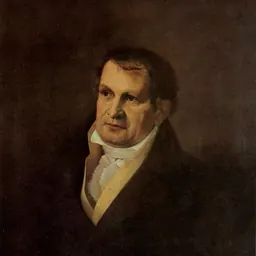
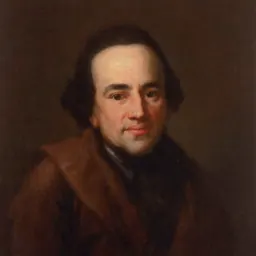


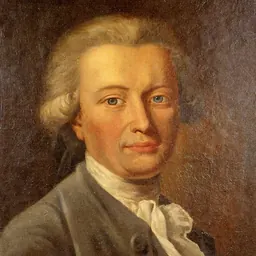
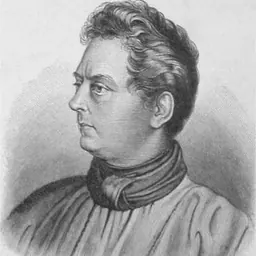
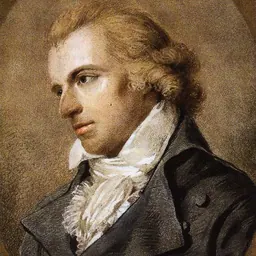
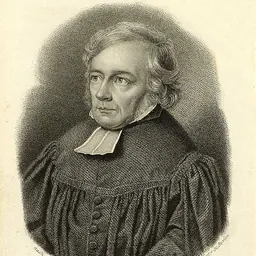
Related people
Same field, nearest in time


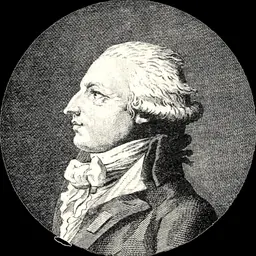


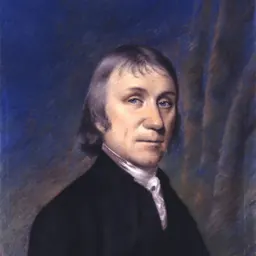
Contemporaries
People whose lives overlapped Friedrich Schlegel's


Frequently asked questions
Who was Friedrich Schlegel?
German poet, critic and scholar, editor
When was Friedrich Schlegel born?
Friedrich Schlegel was born on 10 March 1772 in Hanover.
When did Friedrich Schlegel die?
Friedrich Schlegel died on 12 January 1829 in Dresden.
What was Friedrich Schlegel's occupation?
Friedrich Schlegel was a philosopher, translator, writer, novelist, literary critic and university teacher.
What nationality was Friedrich Schlegel?
Friedrich Schlegel's recorded nationality: Kingdom of Hanover, Electorate of Hanover.
Sources & further reading
· Wikipedia: Friedrich Schlegel
Cite this page
APA: Biography.guide. (2026). Friedrich Schlegel. https://biography.guide/friedrich-schlegel/
MLA: "Friedrich Schlegel." Biography.guide, https://biography.guide/friedrich-schlegel/.
Chicago: "Friedrich Schlegel." Biography.guide. https://biography.guide/friedrich-schlegel/.
Data last updated: 2026-09-20 · Spot an error? Report a correction.
Page generated 2026-09-27 05:20 UTC