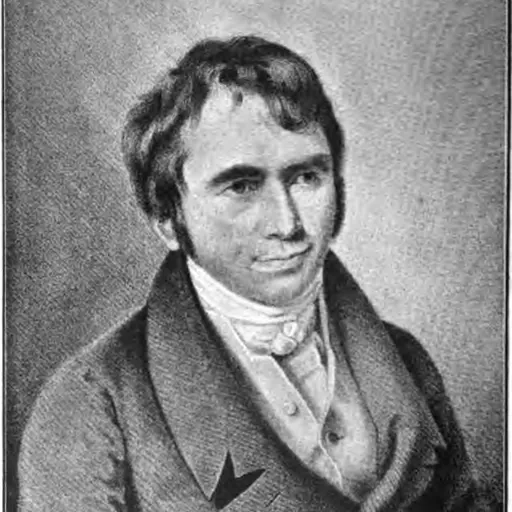
August Neander
German theologian and church historian
About August Neander
Lived 1789 – 1850 (aged 61). August Neander was a German historian, university teacher, biographer, writer, church historian and protestant theologian.
Johann August Wilhelm Neander (17 January 1789 – 14 July 1850) was a German theologian and church historian.
Early life Neander was born in Göttingen as David Mendel. His father, Emmanuel Mendel, was said to have been a Jewish peddler. While very young, his parents separated and he moved with his mother to Hamburg. After completing grammar school (Johanneum), he enrolled in a gymnasium where he discovered Plato. Some of his fellow students included Wilhelm Neumann, writer Karl August Varnhagen von Ense, and poet Adelbert von Chamisso.
Conversion from Judaism to Christianity Neander's conversion from Judaism to Christianity was the largest change in his life and had a heavy impact upon both himself and his writing. Neander, along with his brothers and sisters, followed later by their mother, eventually left the synagogue and embraced Christianity. In his own personal conversion, Neander was influenced by the Apostle John, due to the similarity in the sentiment of John's writings to those of Plato.
Neander's conversion has been likened to the conversion of Saint Paul of Tarsus, due to the impact that his new faith had on his person, his work, his relationship with his students, and his attitude toward church history.
He was baptized on 25 February 1806 at the age of 17 and adopted the name of Neander, or "new man" on becoming a Protestant Christian.
Studies Neander studied divinity at the University of Halle under Friedrich Schleiermacher. Before the end of his first year, the events of the War of the Fourth Coalition forced Neander to move to Göttingen where he continued his studies, specialising in Plato and Plutarch, and studying theology under GJ Planck. At this point Neander decided that the original investigation of Christian history would form the great work of his life.
Neander began his work on Christian history in 1824 and published the first volume of Allgemeine Geschichte der christlichen Religion und Kirche in 1825. The other volumes followed at intervals with the fifth in 1842, focusing on the period of Boniface VIII. A posthumous volume published in 1852, finished with the period of the Council of Basel. However, Neander cherished this period in his life and described it in endearing terms as “men in all ages who… have been indebted to their pious mothers” for planting the seeds of faith in their hearts.
This period in Neander's life had a profound effect on both his personal faith and his attitude towards life in general. Neander was often described as ‘wide-hearted’, ‘truthful’, ‘sincere’, ‘free from all the stuff of vanity’, ‘affectionate’, ‘innocent and pure of heart’.
Neander felt indebted to his teacher and later his friend and colleague Schleiermacher.
Church history Neander's principal work was the General History of the Christian Religion and Church (Allgemeine Geschichte der christlichen Religion und Kirche). Each volume contrasted an era of ecclesiastical history with the church in Neander's own time.
His guiding principle in dealing both with history and with the contemporary condition of the church was "that Christianity has room for the various tendencies of human nature, and aims at permeating and glorifying them all; that according to the divine plan these various tendencies are to occur successively and simultaneously and to counterbalance each other, so that the freedom and variety of the development of the spiritual life ought not to be forced into a single dogmatic form" (Otto Pfleiderer).
Don’t just read it —
keep it.
Full-length biographies made to live with: read them, listen on the way to work, watch them tonight.
- E-book
- Audio
- Video
Instant download · yours to keep · every purchase keeps this site free
Important facts
People in August Neander's life
Named in this biography and alive at the same time
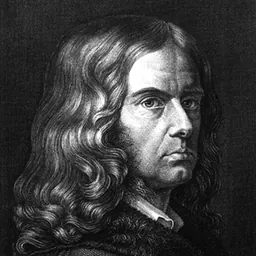

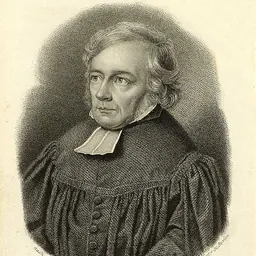
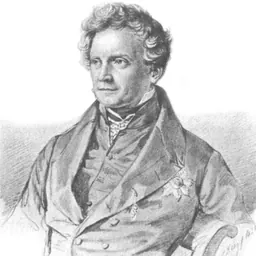

Related people
Same field, nearest in time
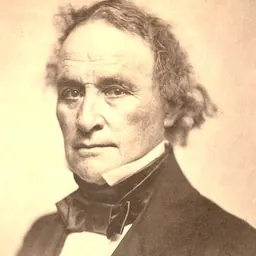


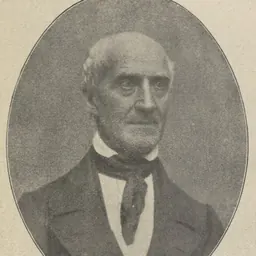


Contemporaries
People whose lives overlapped August Neander's


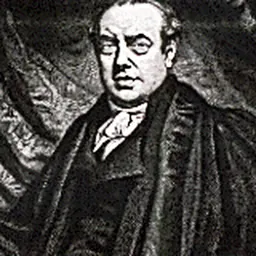


Frequently asked questions
Who was August Neander?
German theologian and church historian (1789-1850)
When was August Neander born?
August Neander was born on 17 January 1789 in Göttingen.
When did August Neander die?
August Neander died on 14 July 1850 in Berlin.
What was August Neander's occupation?
August Neander was a historian, university teacher, biographer, writer, church historian and protestant theologian.
What nationality was August Neander?
August Neander was German.
Sources & further reading
Cite this page
APA: Biography.guide. (2026). August Neander. https://biography.guide/august-neander/
MLA: "August Neander." Biography.guide, https://biography.guide/august-neander/.
Chicago: "August Neander." Biography.guide. https://biography.guide/august-neander/.
Data last updated: 2026-09-21 · Spot an error? Report a correction.
Portrait: Wikimedia Commons · author & licence
Page generated 2026-09-27 05:00 UTC