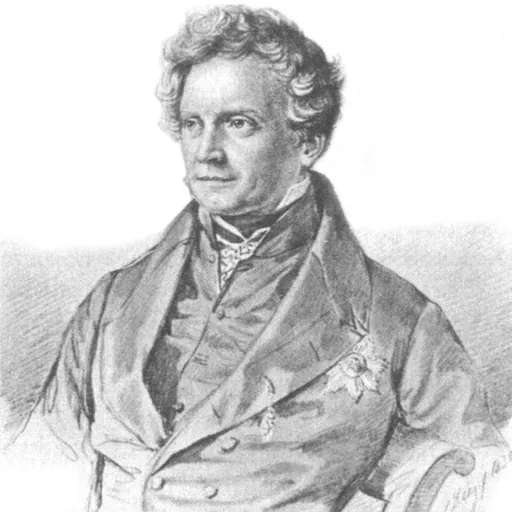
About Karl August Varnhagen von Ense
Lived 1785 – 1858 (aged 73). Karl August Varnhagen von Ense was a German diplomat, chronicler, historian, poet, military personnel and diarist.
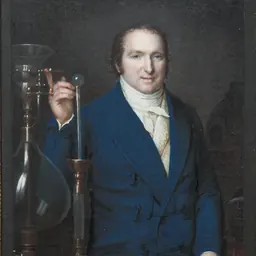
Portrait of Karl August Varnhagen von Ense by Samuel Friedrich Diez. Karl August Varnhagen von Ense (21 February 1785 in Düsseldorf – 10 October 1858 in Berlin) was a German biographer, diplomat and soldier.
Life and career He was born in Düsseldorf, the younger brother of Rosa Maria Varnhagen, a noted poet, writer, and educator. He studied medicine in Berlin, but most of his time was spent examining philosophy and literature, which he later studied more thoroughly at Halle and Tübingen. He began his literary career in 1804 working along with Adelbert von Chamisso on his Berliner Musenalmanach.
In 1809, he joined the main Austrian army under Archduke Charles, serving in IR47 Vogelsang at the Battle of Wagram, where he was wounded on the first day, 5 July. He was then made adjutant to Prince Bentheim, whom he accompanied to Paris, where he continued his studies. In 1812, he entered the Prussian civil service in Berlin but soon left to enter the Russian service as captain. He served in Tettenborn's corps as adjutant to Tettenborn on trips to Hamburg and Paris. He recorded his experiences in Geschichte der Hamburger Ereignisse (History of the events in Hamburg; London, 1813) and Geschichte der Kriegszüge Tettenborns (History of Tettenborn's Campaigns, 1814).
On 10 October 1858, while playing chess with his niece, Karl August Varnhagen von Ense died of unknown causes. His last words, shortly before his death, were, "I lost."
Writings Although he developed a reputation as an imaginative and critical writer, he is most famous as a biographer. He possessed a remarkable ability to group facts together and to bring out their essential significance. His style is distinguished for its strength, grace and purity. Among his principal works are: Goethe in den Zeugnissen der Mitlebenden (1824) Biographische Denkmäler (5 vols., 1824–30; 3rd edition, 1872) Biographies of General von Seydlitz (1834), Field-Marshal Gebhard Leberecht von Blücher, victor over Napoleon at Waterloo, Sophia Charlotte, Queen of Prussia (1837), Field-Marshal Schwerin (1841), Field-Marshal Keith (1844), and General Bülow von Dennewitz (1853) His Denkwürdigkeiten und vermischte Schriften appeared in nine volumes in 1843–59, the last two volumes appearing after his death. His niece, Ludmilla Assing, between 1860 and 1867, edited several volumes of his correspondence with eminent men and his Tagebücher (14 vols., 1861–70). Blätter aus der preussischen Geschichte appeared in five volumes (1868–69); his correspondence with his wife, Rahel, appeared in six volumes in 1874–75; and that with Carlyle in 1892.
His selected writings appeared in 19 volumes in 1871–76.
Family In 1814, he married saloniste Rahel Levin after she converted from Judaism to Christianity. Varnhagen was devotedly attached to her and found in her sympathy and encouragement. She was one of the chief sources of his inspiration as a writer. He never fully recovered from the shock of her death in 1833, but he published memorial volumes containing selections from her papers: Rahel, ein Buch des Andenkens für ihre Freunde (Rahel, a memorial book for her friends, 3 vols., 1834) and Galerie von Bildnissen aus Rahels Umgang (A gallery of portraits from Rahel's circle, 2 vols., 1836).
Don’t just read it —
keep it.
Full-length biographies made to live with: read them, listen on the way to work, watch them tonight.
- E-book
- Audio
- Video
Instant download · yours to keep · every purchase keeps this site free
Important facts
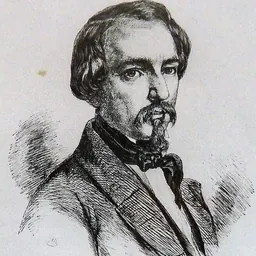
People in Karl August Varnhagen von Ense's life
Named in this biography and alive at the same time

Related people
Same field, nearest in time



Contemporaries
People whose lives overlapped Karl August Varnhagen von Ense's


Frequently asked questions
Who was Karl August Varnhagen von Ense?
German biographer, diplomat and soldier (1785-1858)
When was Karl August Varnhagen von Ense born?
Karl August Varnhagen von Ense was born on 21 February 1785 in Düsseldorf.
When did Karl August Varnhagen von Ense die?
Karl August Varnhagen von Ense died on 10 October 1858 in Berlin.
What was Karl August Varnhagen von Ense's occupation?
Karl August Varnhagen von Ense was a diplomat, chronicler, historian, poet, military personnel and diarist.
What nationality was Karl August Varnhagen von Ense?
Karl August Varnhagen von Ense was German.
Sources & further reading
· Wikipedia: Karl August Varnhagen von Ense
· DBpedia: Karl August Varnhagen von Ense
Cite this page
APA: Biography.guide. (2026). Karl August Varnhagen von Ense. https://biography.guide/karl-august-varnhagen-von-ense/
MLA: "Karl August Varnhagen von Ense." Biography.guide, https://biography.guide/karl-august-varnhagen-von-ense/.
Chicago: "Karl August Varnhagen von Ense." Biography.guide. https://biography.guide/karl-august-varnhagen-von-ense/.
Data last updated: 2026-09-23 · Spot an error? Report a correction.
Portrait: Wikimedia Commons · author & licence
Page generated 2026-09-27 05:06 UTC