
About Atmananda Krishna Menon
Lived 1883 – 1959 (aged 75). Atmananda Krishna Menon was an Indian philosopher, advaita and guru.
Śrĩ Atmananda (8 December 1883 – 14 May 1959), also referred as Sri Atmananda Krishna Menon, was an Indian sage, guru, and philosopher. He has been described by scholars as a "neo-Hindu". His teachings have become a foundation for a spiritual method called the Direct Path.
Biography
Source materials Nitya Tripta (S. Balakrishna Pillai), one of Menon’s disciples, included a detailed life sketch toward the end of a collection of Menon’s teachings. M.P.B. Nair, whose family became disciples when he was a child, included biographical material in his Rays of the Ultimate. Philip Renard included a biography in his “I” is a Door, a summary of the teachings of Ramana Maharshi, Nisargadatta Maharaj and Menon. N. Narayana Pilliai, Ph.D., included a biographical chapter in a book on Menon’s teachings concerning the direct path and “I”-principle.
After studying law, he became a Government Advocate and Inspector and District Superintendent of Police and remained in service until 1939.
Sadhana and realization Meanwhile, his search for a guru led to his day-long meeting with Swami Yogananda (not to be confused with Paramahansa Yogananda) in 1919. In 1923, he assumed the name Sri Atmananda and started teaching Jnana Yoga.
Legacy Menon's teachings have become a foundation for a spiritual method called the Direct Path. His disciple, Nitya Tripta (S. Balakrishna Pillai), compiled his teachings from 1950 to 1959 into a large volume titled Notes on the Spiritual Discourses of Sree Atmananda (of Trivandrum), which appeared in 1963.
Menon’s eldest son K. Padmanadbha Menon (Sri Adwayananda) continued his teachings from his home in Anandawadi, Malakkara, near Chengannur, until his own death in 2001. He authored several books himself, including Atmaswarupam.
Jean Klein, Francis Lucille, Rupert Spira and Stephan Bodian are prominent members of Menon’s spiritual lineage.
Publications Menon published several books during his lifetime. Nitya Tripta (S. Balakrishna Pillai), one of his disciples, included a bibliography and publication history toward the end of a collection of Menon’s teachings.
Radhamadhavam was composed in 1919. A typed, spiral bound, English translation was copyrighted by John Levy in 1958. The title page states, “These verses were composed by the Author some 36 years ago ... . They are for private circulation only, and on no account are they to be published.” Nonetheless, according to Tripta, a corrected and approved version was ultimately published that same year.
Atmaramam was published in 1935. It has been described as “a continuation of Radhamadhavam in the ladder of spiritual progress.” Advaita Publishers issued a corrected edition in 1983 to mark the centenary of Menon’s birth.
After his death, Atmananda Tattwa Samhita, based on tape-recorded talks between Menon and some disciples, was published in 1973. The title page indicates that the book was compiled, edited and Malayalam portions translated by his son, K. Padmanadbha Menon.
M.P.B. Nair noted, “Sri Atmananda composed many verses and hymns in Malayalam, giving spiritual instructions to disciples and expounding the Truth from various angles of vision. Some of these are published, and some exist only in manuscript.” When Campbell eventually found Menon, he engaged him in a discussion about brahman. "Then [Menon] gave me a little meditation: 'Where are you between two thoughts?' That is to say, you are thinking all the time, and you have an image of your-self. Well, where are you between two thoughts? Do you ever have a glimpse beyond your thinking of that which transcends anything you can think about your-self? That’s the source field out of which all of your energies are coming."
Works Atma Darshan (Malayalam and English). Advaita Publishers,1983. Atma Nirvriti (Malayalam and English), Advaita Publishers, 1983. Atmaramam (in Malayalam) Atmananda Tattwa Samhita: The Direct Approach to Truth as Expounded by Sri Atmananda. Advaita Publishers, 1983. . Narayana Pillai, N. Atmananda Krishna Menon: Direct Path to Realization – 'I'-Principle. Trivandrum, India: Centre for South Indian Studies, 2019
Don’t just read it —
keep it.
Full-length biographies made to live with: read them, listen on the way to work, watch them tonight.
- E-book
- Audio
- Video
Instant download · yours to keep · every purchase keeps this site free
Important facts
People in Atmananda Krishna Menon's life
Named in this biography and alive at the same time

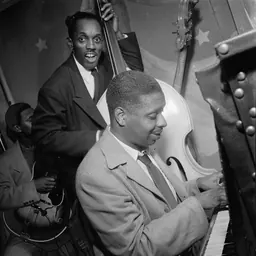
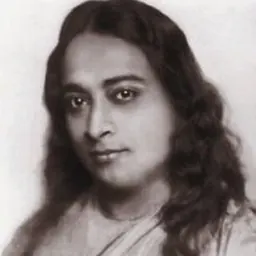


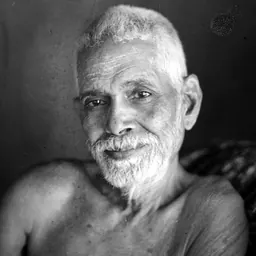

Related people
Same field, nearest in time


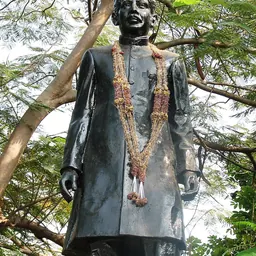


Contemporaries
People whose lives overlapped Atmananda Krishna Menon's



Frequently asked questions
Who was Atmananda Krishna Menon?
Indian philosopher
When was Atmananda Krishna Menon born?
Atmananda Krishna Menon was born on 8 December 1883 in Peringara.
When did Atmananda Krishna Menon die?
Atmananda Krishna Menon died on 14 May 1959 in Thiruvananthapuram.
What was Atmananda Krishna Menon's occupation?
Atmananda Krishna Menon was a philosopher, advaita and guru.
What nationality was Atmananda Krishna Menon?
Atmananda Krishna Menon was Indian.
Sources & further reading
· Wikipedia: Atmananda Krishna Menon
· DBpedia: Atmananda Krishna Menon
Cite this page
APA: Biography.guide. (2026). Atmananda Krishna Menon. https://biography.guide/atmananda-krishna-menon/
MLA: "Atmananda Krishna Menon." Biography.guide, https://biography.guide/atmananda-krishna-menon/.
Chicago: "Atmananda Krishna Menon." Biography.guide. https://biography.guide/atmananda-krishna-menon/.
Data last updated: 2026-09-22 · Spot an error? Report a correction.
Page generated 2026-09-27 05:01 UTC