
Nisargadatta Maharaj
Indian guru
About Nisargadatta Maharaj
Lived 1897 – 1981 (aged 84). Nisargadatta Maharaj was an Indian guru.
Nisargadatta Maharaj (; (born Maruti Shivrampant Kambli; 17 April 1897 – 8 September 1981) was an Indian guru of nonduality, belonging to the Inchagiri Sampradaya, a lineage of teachers from the Navnath Sampradaya.
The publication in 1973 of I Am That, an English translation of his talks in Marathi by Maurice Frydman, brought him worldwide recognition and followers, especially from North America and Europe.
Biography
Early life Nisargadatta was born on 17 April 1897 to Shivrampant Kambli and Parvati bai, in Bombay. The day was also Hanuman Jayanti, the birthday of Hanuman, hence the boy was named 'Maruti', after him. His parents were followers of the Varkari sampradaya, In 1915, after his father died, he moved to Bombay to support his family back home, following his elder brother. Initially he worked as a junior clerk at an office but quickly he opened a small goods store, mainly selling beedis (leaf-rolled cigarettes) and soon owned a string of eight retail shops. In 1924 he married Sumatibai and they had three daughters and a son.
Sadhana Nisargadatta Maharaj met his guru Siddharameshwar Maharaj in 1933. In 1933, he was introduced to his guru, Siddharameshwar Maharaj, the head of the Inchegiri branch of the Navnath Sampradaya, by his friend Yashwantrao Baagkar. His guru told him, "You are not what you take yourself to be...". Siddharameshwar initiated him into the Inchegiri Sampradaya, giving him meditation-instruction and a mantra, which he immediately began to recite.
Following his guru's instructions to concentrate on the feeling "I Am", he used all his spare time looking at himself in silence, and remained in that state for the coming years, practicing meditation and singing devotional Bhajans:
In Consciousness and the Absolute, Nisargadatta Maharaj further explains:
According to Conway, awareness of the Absolute could be regained by
Cathy Boucher notes that the Inchagiri Sampradaya emphasized mantra meditation from its inception in the early 19th century, but that the emphasis shifted toward a form of Self-enquiry with Sri Siddharameshwar. Nevertheless,
Nisargadatta, and other gurus of the Incegeri sampradaya used naam mantras, also called Guru mantras, mantras consisting of the name of a deity, which is chanted repetitiously. The mantra is not to be disclosed to others, lest its effectiveness will diminish. examples are "I am Brahman", "Hari Om," and "Soham-Hamsa" ("That am I").
Scriptures According to Timothy Conway, Nisargadatta often read Marathi scriptures: Nath saint Jnanesvar's Amrutanubhav and Jnanesvari (Gita Commentary); Varkari Sants, namely Eknatha's Bhagavat (Eknathi Bhagavata, a rewrite of the Bhagavad Purana), Ramdas' Dasbodha, and Tukaram's poems; but also the Yoga Vasistha, Adi Shankara's treatises, and some major Upanishads. The practice of this form of Yoga involves meditating on one's sense of "I am", "being" or "consciousness" with the aim of reaching its ultimate source prior to this sense, which Nisargadatta called the "Self".
The second edition of I Am That includes an epilogue titled Nisarga Yoga by Maurice Frydman which includes this passage:
Nisargadatta did not prescribe a specific practice for self-knowledge but advised his disciples, "Don't pretend to be what you are not, don't refuse to be what you are." By means of self-enquiry, he advised, "Why don't you enquire how real are the world and the person?". Nisargadatta frequently spoke about the importance of having the "inner conviction" about one's true nature and without such Self-knowledge one would continue to suffer. Nisargadatta claimed that the names of the Hindu deities Shiva, Rama and Krishna were the names of nature (Nisarga) personified, and that all of life arises from the same non-dual source or Self. Remembrance of this source was the core of Nisargadatta's message:
Lineage
Disciples Among his best known disciples are Maurice Frydman, Sailor Bob Adamson, Stephen Howard Wolinsky (born 31 January 1950), Jean Dunn, Alexander Smit (Sri Parabrahmadatta Maharaj) (1948-1998), Douwe Tiemersma (7 January 1945 – 3 January 2013), Robert Powell, Timothy Conway, Wayne Dyer and Ramesh Balsekar (1917-2009). A less well known disciple is Sri Ramakant Maharaj (born 8 July 1941), who received the naam mantra from Nisargadatta in 1962, spent the next 19 years with the master. and claims to be "the only Indian direct disciple of Shri Nisargadatta Maharaj" who offers initiation into this lineage. Sachin Kshirsagar, who has published a series of books on Nisargadatta in the Marathi language and also re-published Master of Self Realization, says to have received the Naam (Mantra) in a dream from Shree Nisargadatta Maharaj on 17 Oct., 2011.
Successors David Godman gives the following account of an explanation by Nisargadatta of the succession of Gurus in the Inchagiri Sampradaya:
Don’t just read it —
keep it.
Full-length biographies made to live with: read them, listen on the way to work, watch them tonight.
- E-book
- Audio
- Video
Instant download · yours to keep · every purchase keeps this site free
Important facts
People in Nisargadatta Maharaj's life
Named in this biography and alive at the same time


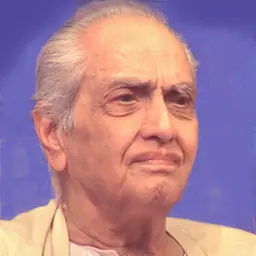
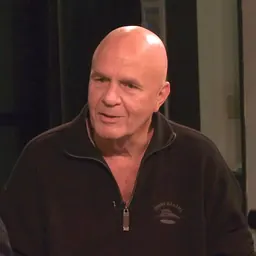


Related people
Same field, nearest in time
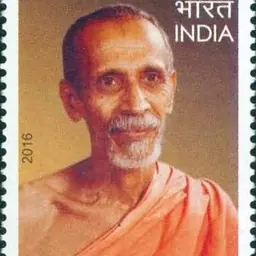

Contemporaries
People whose lives overlapped Nisargadatta Maharaj's



Frequently asked questions
Who was Nisargadatta Maharaj?
Indian guru (1897-1981)
When was Nisargadatta Maharaj born?
Nisargadatta Maharaj was born on 17 April 1897 in Mumbai.
When did Nisargadatta Maharaj die?
Nisargadatta Maharaj died on 8 September 1981 in Mumbai.
What was Nisargadatta Maharaj's occupation?
Nisargadatta Maharaj was a guru.
What nationality was Nisargadatta Maharaj?
Nisargadatta Maharaj was Indian.
Sources & further reading
· Wikipedia: Nisargadatta Maharaj
· DBpedia: Nisargadatta Maharaj
Cite this page
APA: Biography.guide. (2026). Nisargadatta Maharaj. https://biography.guide/nisargadatta-maharaj/
MLA: "Nisargadatta Maharaj." Biography.guide, https://biography.guide/nisargadatta-maharaj/.
Chicago: "Nisargadatta Maharaj." Biography.guide. https://biography.guide/nisargadatta-maharaj/.
Data last updated: 2026-09-20 · Spot an error? Report a correction.
Page generated 2026-09-27 05:24 UTC