
About Arun Kolatkar
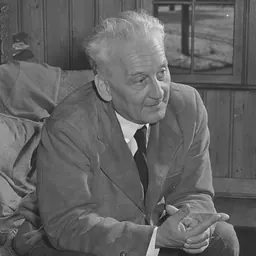
Lived 1932 – 2004 (aged 71). Arun Kolatkar was an Indian linguist, translator, poet and writer.
Arun Balkrishna Kolatkar (1 November 1932 – 25 September 2004) was an Indian poet who wrote in both Marathi and English. His poems are known for expressing the humour in everyday life. Kolatkar is the only Indian poet, other than Kabir, to be featured on the World Classics titles of New York Review of Books.
His first English poetry collection, Jejuri, won the Commonwealth Poetry Prize in 1977. The floors had to be "plastered with cowdung every week."
He attended Rajaram High School in Kolhapur, where Marathi was the medium of instruction. After graduation in 1949, he joined S. B. College of Arts, Gulbarga, from which he graduated in 1957.
In 1953, he married Darshan Chhabda (the sister of well-known painter Bal Chhabda). Both families opposed the marriage, partly because Kolatkar had not yet sold any of his paintings.
His early years in Mumbai were poor but eventful, especially as an emerging artist in the Rampart Row neighbourhood, where the Artists' Aid Fund Centre was located.
After many years of struggle, he started work as an art director and graphic designer in several advertising agencies, such as Lintas. By the mid-60s, he was established as a graphic artist and joined an eclectic group of creatives headed by the legendary advertising professional Kersy Katrak. It was Katrak, himself a poet, who pushed Kolatkar into bringing out Jejuri. Kolatkar was, in advertising jargon, a 'visualizer,' and soon became one of Mumbai's most successful art directors. He won the prestigious Communication Arts Guild award for advertising six times and was admitted to the CAG Hall of Fame.
By 1966, his marriage with Darshan was in trouble, and Kolatkar developed a drinking problem. This faded after they dissolved the marriage by mutual agreement, and he married his second wife, Soonu.
To match this in his English translation, he sometimes adopts "a cowboy variety": allow me beautifulI said to my sister-in-law to step in my brother's booties you had it coming said Rehman a gun in his hand shoot me punkkill your brother, I said for a bloody cunt (Three cups of Tea
He won the Kusumagraj Puraskar from the Marathwada Sahitya Parishad in 1991 and the Bahinabai Puraskar from Bahinabai Prathistan in 1995. His Marathi poetry collections include: Arun Kolatkarcha Kavita (1977) Chirimiri (2004) Bhijki Vahi (2004) (received the Sahitya Akademi Award in 2005) Droan (2004)
Kolatkar was among a group of post-independence bilingual poets who fused the diction of their mother tongues along with international styles to break new ground in their poetic traditions; others in this group included Gopalakrishna Adiga (Kannada), Raghuvir Sahay (Hindi), Dilip Chitre (also Marathi), Sunil Gangopadhyay, Malay Roy Choudhury (Bengali), etc.
Influences Marathi devotional poetry and popular theater (tamasha) had early influences on Kolatkar. American beat poetry, especially of William Carlos Williams For some years, some of his poems were also included in school texts.
The poem sequence deals with a visit to Jejuri, a pilgrimage site for the local Maharashtrian deity Khandoba (a local deity, also an incarnation of Shiva). In a conversation with poet Eunice de Souza, Kolatkar says he discovered Jejuri in 'a book on temples and legends of Maharashtra... there was a chapter on Jejuri in it. It seemed an interesting place'. was published soon in a magazine called Dionysius, but both the original manuscript and this magazine were lost. Subsequently, the poems were recreated in the 1970s, published in a literary quarterly in 1974, and the book came out in 1976.
The poems evoke a series of images to highlight the ambiguities in modern-day life. Although situated in a religious setting, they are not religious; in 1978, an interviewer asked him if he believed in God, and Kolatkar said: 'I leave the question alone. I don't think I have to take a position about God one way or the other.'
Before Jejuri, Kolatkar had also published other poem sequences, including the boatride, which appeared in the little magazine, damn you: a magazine of the arts in 1968, and was anthologized twice. A few of his early poems in English also appeared in Dilip Chitre's Anthology of Marathi poetry 1945-1965 (1967). Although some of these poems claim to be an 'English version by poet', "their Marathi originals were never committed to paper." (this is also true of some other bilingual poets like Vilas Sarang.
Later work A reclusive figure all his life, he lived without a telephone and hesitated to publish his work. It was only after he was diagnosed with cancer that two volumes were brought out by friends are about Mumbai's dark underbelly—the heterogeneous megapolis, is envisioned in varied perspectives of an underdog. Like Jejuri, Kala Ghoda is also 'a place poem' exploring the myth, history, geography, and ethos of the place. While Jejuri is a popular pilgrimage site for a pastoral god, it could never become Kolatkar's home; Kala Ghoda explores the complexities of a metropolis. Jejuri can be read as a search for belonging, a major fixation of the previous generation of Indian poets in English; Kala Ghoda doesn't betray any anxieties and agonies of 'belonging'. With Kala Ghoda, Indian poetry in English seems to have grown up, shedding adolescent 'identity crises' and goose pimples. The maturity of poetic vision embodied in the Kala Ghoda makes it a milestone in Indian poetry in English.
After his death, a new edition of Jejuri was published in the New York Review Books Classics series with an introduction by Amit Chaudhuri (2006). Around the time of his death, he had also requested Arvind Krishna Mehrotra to edit some of his uncollected poems. These were published as The Boatride and Other Poems by Pras Prakashan in 2008. His Collected Poems in English, edited by Arvind Krishna Mehrotra, was published in Britain by Bloodaxe Books in 2010.
He was survived by his wife, Soonu Kolatkar.
Appearances in the following poetry Anthologies The Golden Treasure of Writers Workshop Poetry (2008) ed. by Rubana Huq and published by Writers Workshop, Calcutta Ten Twentieth-Century Indian Poets (1976) ed. by R. Parthasarathy and published by Oxford University Press, New Delhi The Oxford India Anthology of Twelve Modern Indian Poets (1992) ed. by Arvind Krishna Mehrotra and published by Oxford University Press, New Delhi Strangertime: An Anthology of Indian Poetry in English (1977) ed. by Pritish Nandy and published by Hind Pocket Books, New Delhi
Don’t just read it —
keep it.
Full-length biographies made to live with: read them, listen on the way to work, watch them tonight.
- E-book
- Audio
- Video
Instant download · yours to keep · every purchase keeps this site free
Important facts
People in Arun Kolatkar's life
Named in this biography and alive at the same time




Related people
Same field, nearest in time


Contemporaries
People whose lives overlapped Arun Kolatkar's

Frequently asked questions
Who was Arun Kolatkar?
Indian writer (1932-2004)
When was Arun Kolatkar born?
Arun Kolatkar was born on 1 November 1932 in Kolhapur.
When did Arun Kolatkar die?
Arun Kolatkar died on 25 September 2004 in Pune.
What was Arun Kolatkar's occupation?
Arun Kolatkar was a linguist, translator, poet and writer.
What nationality was Arun Kolatkar?
Arun Kolatkar was Indian.
Sources & further reading
Cite this page
APA: Biography.guide. (2026). Arun Kolatkar. https://biography.guide/arun-kolatkar/
MLA: "Arun Kolatkar." Biography.guide, https://biography.guide/arun-kolatkar/.
Chicago: "Arun Kolatkar." Biography.guide. https://biography.guide/arun-kolatkar/.
Data last updated: 2026-09-20 · Spot an error? Report a correction.
Page generated 2026-09-27 05:34 UTC