
Sunil Gangopadhyay
Award-winning and bestselling Bengali poet and author
About Sunil Gangopadhyay
Lived 1934 – 2012 (aged 78). Sunil Gangopadhyay was an Indian poet, writer, children's writer and screenwriter.
His debut novel, Atmaprakash, established him as a novelist and was followed by Aranyer Din Ratri. Both were fictionalized account of real-life events. Sei Somoy, a work of historical fiction, marked a major departure from his earlier semi-autobiographical style and was later followed by its sequel, Pratham Alo (1996). His magnum opus, Purba Paschim, dealt with the partition of Bengal. Among his other notable works are the travelogue Payer Tolay Sorshe, published in two volumes, and the poetry collections Eka ebong Koekjon (1958), Ami Ki Rokom Vabe Beche Achi (1966), and Hathat Nirar Janya. The last title refers to his fictional lover, Nira. For children, he created Kakababu, writing 36 novels in the series. He also wrote extensively for Desh magazine and claimed to have written more prose for it than any other writer.
Among others awards, he received the 1985 Sahitya Akademi Award for Those Days (Sei Somoy). Among the films adapted from Sunil's works are, Aranyer Din Ratri and Pratidwandi (both 1970), Sabuj Dwiper Raja (1979), Ek Tukro Chand (2001), Mishawr Rawhoshyo (2013), Yeti Obhijaan (2017), and Kakababur Protyaborton (2022). In 2008, he was elected president of Sahitya Akademi, narrowly defeating the Malayalam writer M.T. Vasudevan Nair.
His simple, clear and conversational approach to prose with dry humor has inspired writers in Bengal and beyond. Shankha Ghosh noted that Sunil’s use of contemporary language let readers see parts of themselves they may have not seen," or "perhaps did not want to see." By doing so, he transformed personal confessions into shared experiences. According to Sitanshu Yashaschandra, Sunil never abandoned the personal for the regional, nor did he forsake his "Bengaliness" to seek a broader identity. "He is a writer of international stature, simply because he is a writer, such a good writer," he wrote.
Early life He was born in Madaripur in a Bengali Hindu family which is now in Bangladesh. At an early age, he moved to Kolkata from his ancestral town, which became part of East Pakistan after the 1947 Partition of India. He studied at the Surendranath College, Dum Dum Motijheel College, City College, Kolkata – all affiliated with the University of Calcutta. Thereafter, he obtained his master's degree in Bengali from the University of Calcutta in 1954.
Other works Later, he started writing for various publications of the Ananda Bazar group, a major publishing house in Kolkata and has been continuing it for many years.
Sunil, along with Tarun Sanyal, Jyotirmoy Datta and Satrajit Dutta had volunteered to be defence witnesses in the famous trial of Hungry generation movement poet Malay Roy Choudhury.
Works
Author of well over 200 books, His Nikhilesh and Neera series of poems (some of which have been translated as For You, Neera and Murmur in the Woods) have been extremely popular.
As in poetry, Sunil was known for his unique style in prose. His first novel was "Atmaprakash" and it was also the first writing from a newcomer in literature published in the prestigious magazine – Desh (1965). Yugantar, an Indian television series that aired on DD National in the 80s was based on Gangopadhyay's novel Sei Somoy.
Death Sunil Gangopadhyay died at 2:05 a.m. on 23 October 2012 at his South Kolkata residence, following a major cardiac arrest. He was suffering from prostate cancer for some time and went to Mumbai for treatment. He returned to Kolkata on the day of Mahalaya. Although he was a communist and an atheist, controversially, Gangopadhyay's body was cremated following Hindu custom on 25 October at Keoratola crematorium with several dignitaries and numerous fans paying their last tributes. Ganguly was not a Hindu or Muslim but a committed atheist.
Pranab Mukherjee, the then-President of India, condoled the death of Gangopadhyay saying: In 2006 novel Ardhek Jibon, he expressed his carnal desire for Hindu goddess Saraswati created some controversies. A retired IPS officer lodged a case against Gangopadhyay in the Calcutta High Court. Against this controversy Gangpadhyay felt– he had no freedom to express what he felt. Another Bengali writer Buddhadeb Guha found this a cheap gimmick and he told– "I don't support such cheap gimmicks. An author should set an example for the younger generations. If an author thinks it's cool to say that he loves to booze and enjoys going to Sonagachhi, then this only speaks poorly of him." Sunil denied the allegation and joked to Subodh Sarkar on his last birthday, "Look, Sunil is dwikhandito (cut in two)." His wife, Swati, backed him as well.
List of major works
Poetry or Poems Hathat Nirar Janya Bhorbelar Upohar Sada Prishtha tomar sange Sei Muhurte Nira Kaydata Shikhe Nebe Jodi Nirbason Dao Pagol Kota
Novels
Atmaprakash (1964) Those days Translated by Debali Mookerjea-Leonard
Awards and honours
Awards 1972: Ananda Puraskar in general category 1984: Sahitya Akademi Award for the book Sei Somoy 1989: Ananda Puraskar for the book Poorba-Pashchim 1989: Sahitya Setu puroskar 1999: Annada-Snowcem puroska for the story Nil Lohiter Golpo 2003: Annadashankar puroskar 2004: Saraswati Samman for Prothom Alo 2011: The Hindu Literary Prize, shortlist, The Fakir 2012: Sera Bangali Lifetime Achievement Award by Star Ananda
Honors 2002: Sheriff of Kolkata. Honorary D.Litt. from the University of Burdwan
Don’t just read it —
keep it.
Full-length biographies made to live with: read them, listen on the way to work, watch them tonight.
- E-book
- Audio
- Video
Instant download · yours to keep · every purchase keeps this site free
Important facts
People in Sunil Gangopadhyay's life
Named in this biography and alive at the same time
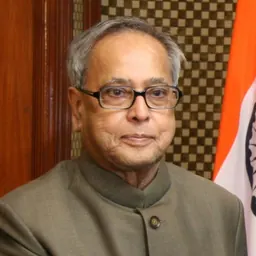
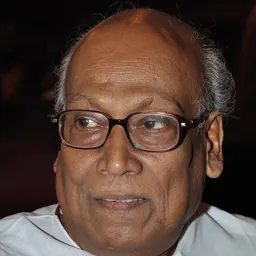
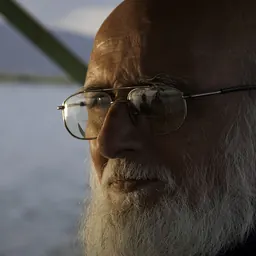
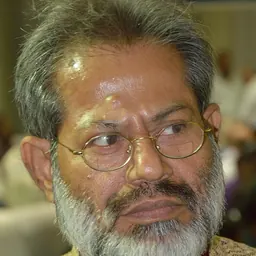
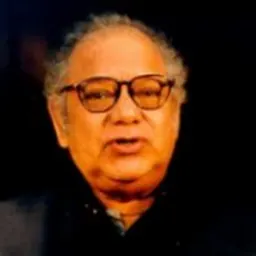


Related people
Same field, nearest in time
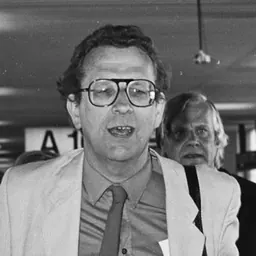

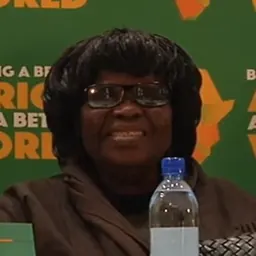
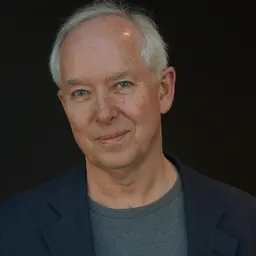
Contemporaries
People whose lives overlapped Sunil Gangopadhyay's





Frequently asked questions
Who was Sunil Gangopadhyay?
Award-winning and bestselling Bengali poet and author (1934-2012)
When was Sunil Gangopadhyay born?
Sunil Gangopadhyay was born on 7 September 1934 in Faridpur District.
When did Sunil Gangopadhyay die?
Sunil Gangopadhyay died on 23 October 2012 in Kolkata.
What was Sunil Gangopadhyay's occupation?
Sunil Gangopadhyay was a poet, writer, children's writer and screenwriter.
What nationality was Sunil Gangopadhyay?
Sunil Gangopadhyay was Indian.
Sources & further reading
· Wikipedia: Sunil Gangopadhyay
Cite this page
APA: Biography.guide. (2026). Sunil Gangopadhyay. https://biography.guide/sunil-gangopadhyay/
MLA: "Sunil Gangopadhyay." Biography.guide, https://biography.guide/sunil-gangopadhyay/.
Chicago: "Sunil Gangopadhyay." Biography.guide. https://biography.guide/sunil-gangopadhyay/.
Data last updated: 2026-09-26 · Spot an error? Report a correction.
Page generated 2026-09-27 05:13 UTC