
About Arthur Tracy Lee
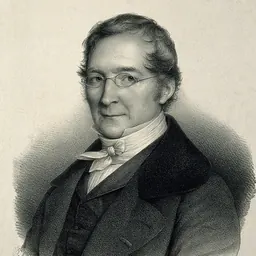
Lived 1814 – 1879 (aged 65). Arthur Tracy Lee was an American painter and military personnel.
Arthur Tracy Lee (June 26, 1814 – December 29, 1879) served as an officer in the regular army before and during the American Civil War. He was also an author, painter, musician, and architect.
Early life and career Lee was born in Northumberland, Pennsylvania, to James Lee and Catharine Shriner. As a youth, he studied art in Philadelphia, supposedly under Thomas Sully. On October 3, 1838, he was commissioned as a second lieutenant in the 5th United States Infantry Regiment, mostly through the influence of Simon Cameron. Less than a month later, on November 1, he was transferred to the 8th United States Infantry Regiment. He assisted in the 1840 removal of Winnebago Indians from Wisconsin and later participated in the Seminole War. While in Florida, he met Margaret Wenthworth Spafford, whom he married on July 27, 1844, at St. Augustine. They had five children, only one of whom survived childhood.
Mexican–American War On March 4, 1845, Lee was promoted to 1st lieutenant. His unit was transferred to Texas in September of that year and placed under General Zachary Taylor. At the battles of Palo Alto and Resaca de la Palma, he commanded a company of the regiment, serving alongside 1st Lieutenant James Longstreet. He wrote a poem about both of these battles.
Other assignments In September 1846, Lee was dispatched to Rochester, New York, to act as a recruiter. During this time, on January 27, 1848, he was promoted to captain. He finished his recruiting duty that July and in the fall, he helped with the removal of Winnebago Indians in Minnesota. Late that year, he returned to Texas and his command of Company C. In October 1849, Lee, along with his company, moved to Fort Croghan to protect white settlers who were intruding on Indian territory. Four different times, from 1849 to 1851, he served as the commander here. His company, along with four other companies of the 8th US Infantry, established Fort McKavett in 1852, to protect west Texas settlers and to act as a rest-stop for California-bound immigrants. During his command here, he had daily contact with southern Comanches, including Buffalo Hump, Yellow Wolf, Ketumsee, and Sanaco. Lee wrote on May 15, 1852, "I have upon all occasions found them to be friendly & well disposed towards the whites, provided they were supplied with food necessary to sustain life."
Lee and his regiment were also dispatched to other camps, including Fort Martin Scott, Fort Worth, Fort Mason, and Fort Chadbourne.
The 8th US Infantry was ordered in October 1854 to establish a fort in the Davis Mountains, which was further west, entering Apache territory. During his four years at Fort Davis, he spent time sketching and watercoloring. There are 154 known paintings, depicting much of what he saw during his service. Lee was subsequently wounded in the right ankle and hip as a result.
After some severe fighting, a fresh column of Confederate infantry appeared on the right and Lee was ordered to withdraw his regiment. As soon as they started withdrawing, three lines of infantry, elevated one line above each other to their right, opened fire. The color-staff was cut in half, causing the colors to fall into the hands of the color-bearer. They retired slowly to the woods, stone wall, and then the marsh, all while under fire from sharpshooters on the left at Devil's Den and from the columns of infantry to the right. Returning to his battle line, Lee transferred command of the regiment to Captain Samuel A. McKee, under advice from the surgeon.
Due to the seriousness of his wounds, Lee did not return to active duty. However, for his actions that day, he was brevetted to lieutenant colonel. On January 20, 1865, he retired from active duty.
Postbellum Lee received a retroactive promotion to colonel on July 28, 1866, for years of service in the United States Army. From 1867 through 1872, he served as the governor of the Old Soldier's Home in Washington, D.C. In 1871, two of his literary works, Army Ballads, and Other Poems and "Reminiscences of the Regiment," which was featured in the History of the Eighth U.S. Infantry, were published.
In 1872, after giving up his position as governor, he moved to Rochester, New York, with Margaret. He continued painting, spending his summers at Shelter Island.
On December 29, 1879, Lee died at his home and was buried in Mount Hope Cemetery in Rochester.
Gallery of works
Don’t just read it —
keep it.
Full-length biographies made to live with: read them, listen on the way to work, watch them tonight.
- E-book
- Audio
- Video
Instant download · yours to keep · every purchase keeps this site free
Important facts
People in Arthur Tracy Lee's life
Named in this biography and alive at the same time





Related people
Same field, nearest in time


Contemporaries
People whose lives overlapped Arthur Tracy Lee's




Frequently asked questions
Who was Arthur Tracy Lee?
American artist, 1814-1879
When was Arthur Tracy Lee born?
Arthur Tracy Lee was born on 26 June 1814 in Northumberland.
When did Arthur Tracy Lee die?
Arthur Tracy Lee died on 29 December 1879 in Rochester.
What was Arthur Tracy Lee's occupation?
Arthur Tracy Lee was a painter and military personnel.
What nationality was Arthur Tracy Lee?
Arthur Tracy Lee was American.
Sources & further reading
Cite this page
APA: Biography.guide. (2026). Arthur Tracy Lee. https://biography.guide/arthur-tracy-lee/
MLA: "Arthur Tracy Lee." Biography.guide, https://biography.guide/arthur-tracy-lee/.
Chicago: "Arthur Tracy Lee." Biography.guide. https://biography.guide/arthur-tracy-lee/.
Data last updated: 2026-09-25 · Spot an error? Report a correction.
Page generated 2026-09-27 05:11 UTC