
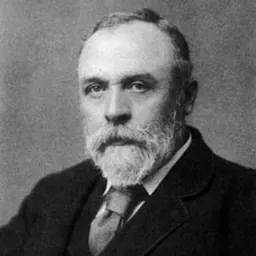
Arthur Stanley Pease
American classical philologist and botanist
About Arthur Stanley Pease
Lived 1881 – 1964 (aged 82). Arthur Stanley Pease was an American botanist, classical philologist, university teacher, botanical collector and scientific collector.
Arthur Stanley Pease (September 22, 1881 – January 7, 1964) was a professor of Classics, a respected amateur botanist, and the tenth president of Amherst College in Amherst, Massachusetts. Pease was once described by his fellow faculty members as an "indefatigable pedestrian, and New Englander to the core."
Personal life Arthur Stanley Pease was born in his grandfather's Somers, Connecticut parsonage. He was the son of Theodore Claudius Pease, briefly a professor at Andover Theological Seminary before his sudden death, and his wife Abby Frances Cutter Pease. Pease was educated at Phillips Academy in Andover, Massachusetts and while living there he acquainted himself with the plants growing in the towns of Essex County.
Academic career Pease attended Harvard College and Harvard University and received AB (1902), AM (1903), and PhD (1905) degrees in classical studies. From 1906 to 1909 he taught Latin at Harvard and Radcliffe College. From 1909 to 1924 he taught at the University of Illinois. Pease starting teaching at Amherst College in 1924 and was appointed college president in 1927. According to a Time magazine's account of his appointment: He is less of a liberal than Dr. Alexander Meiklejohn, Amherst's eighth president; he is less of an administrator than Dr. George D. Olds, Amherst's ninth president. But, as a distinguished scholar, he fulfills the presidential needs of a small New England college.
Five years later, Pease resigned from the presidency of Amherst College to return to his alma mater again as a Latin professor. At Harvard, he was appointed Pope Professor of Latin in 1942 and was made became Professor Emeritus upon his retirement in 1950.
Pease further expounded on his personal views and habits when he said: ...in lack of sufficient cranial space for dead storage, I enter (facts and ideas) methodically on 3 x 5 slips of paper. When enough of a kind are amassed, they are outspread, classified, digested, written down, dehydrated, and lo! and article, or more rarely a book, to be pursued by some lone watcher in Czechoslovakia or beside the Bay of Biscay. Still onward, however, boiling down like Aristotle and the maple-syrup makers, a thousand gallons of facts to a half-pint of principles; or, to change the figure, bringing order into a few of life's storage closets, discovering there some garments which still have good wear in them, and persuading my students to wrap this rainment about their intellectual nakedness. All of which, as Augustine says, is "a great task and a difficult, but God is our helper. About him Fernald wrote "how, with such a keen interest in plants and their natural habitats, he was lured into classical philology is beyond the comprehension of a mere botanist of more limited horizon." Other plants named after Pease include the perennial plant Antennaria peasei, the hawkweed Hieracium peasei, and Salix peasei, a type of willow. Pease himself named a long list of taxa including species in the Aster, Botrychium, Carex, Agropyron, Potentilla, Houstonia, and Epifagus genera. Some of the specimens Pease collected in New Hampshire are now kept at the University of North Carolina at Chapel Hill.
Other work Besides his many botanical articles, Pease published a considerable amount of material on classical languages and literatures, his academic speciality. His most famous work in this field is a detailed commentary of Book Four of Vergil's Aeneid. In some cases, Pease combined his vocation (classics) with his avocation (botany) in the publication of papers such as "Notes on ancient grafting" (1933) and "Mythology and mycology" (1947). Other manuscripts and written materials relating to his life and work — including his correspondence with Amherst College treasurer and botanist Frederick Tuckerman (not to be confused with the poet Frederick Goddard Tuckerman) — are in the possession of Amherst College Archives and Special Collections.
Don’t just read it —
keep it.
Full-length biographies made to live with: read them, listen on the way to work, watch them tonight.
- E-book
- Audio
- Video
Instant download · yours to keep · every purchase keeps this site free
Important facts
People in Arthur Stanley Pease's life
Named in this biography and alive at the same time

Related people
Same field, nearest in time


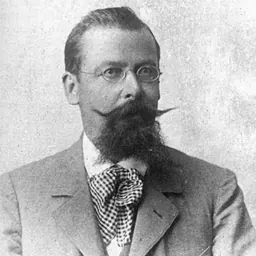
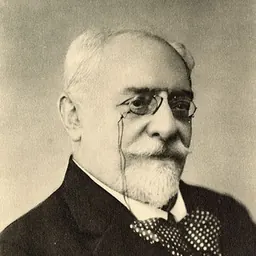
Contemporaries
People whose lives overlapped Arthur Stanley Pease's

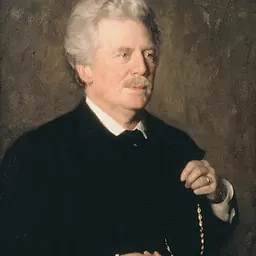
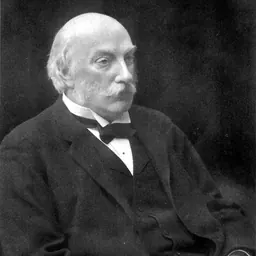


Frequently asked questions
Who was Arthur Stanley Pease?
American classical philologist and botanist (1881-1964)
When was Arthur Stanley Pease born?
Arthur Stanley Pease was born on 22 September 1881 in Somers.
When did Arthur Stanley Pease die?
Arthur Stanley Pease died on 7 January 1964 in Concord.
What was Arthur Stanley Pease's occupation?
Arthur Stanley Pease was a botanist, classical philologist, university teacher, botanical collector and scientific collector.
What nationality was Arthur Stanley Pease?
Arthur Stanley Pease was American.
Sources & further reading
· Wikipedia: Arthur Stanley Pease
· DBpedia: Arthur Stanley Pease
Cite this page
APA: Biography.guide. (2026). Arthur Stanley Pease. https://biography.guide/arthur-stanley-pease/
MLA: "Arthur Stanley Pease." Biography.guide, https://biography.guide/arthur-stanley-pease/.
Chicago: "Arthur Stanley Pease." Biography.guide. https://biography.guide/arthur-stanley-pease/.
Data last updated: 2026-09-20 · Spot an error? Report a correction.
Page generated 2026-09-27 05:23 UTC