
About Arthur Ray Hawkins
Lived 1922 – 2004 (aged 81). Arthur Ray Hawkins was an American military officer and national Museum of Naval Aviation.
Arthur Ray "Hawk" Hawkins (12 December 1922 – 21 March 2004) was an American naval aviator and flying ace of World War II. He was the United States Navy's tenth leading ace with 14 aerial victories to his credit.
Early life Hawkins was born in Zavalla, Texas, on 12 December 1922. At the age of 19 in 1942, he joined the United States Navy after the death of his brother, a United States Army Air Force fighter pilot, who was shot down in the South Pacific.
Naval career 1940s Hawkins was designated a Naval Aviator and commissioned an ensign on 1 January 1943. He was then attached to Fighter Squadron 31 (VF-31) aboard the aircraft carrier from January to October 1944.
While flying from Cabot in 1944, Hawkins was credited with 14 confirmed and three probable kills, all while flying F6F Hellcats. His first victory was near Truk on 29 April 1944 when, seconds after launch from Cabot, he shot down an attacking Japanese torpedo bomber. He subsequently shot down three enemy aircraft on 19 June during the Battle of the Philippine Seas "Marianas Turkey Shoot", one on 8 July during the Battle of Guam, five on 13 September near Mindanao in the Philippine Islands, and four on 21 September during the Battle of Luzon in the Philippines.
Hawkins volunteered for a second tour of duty aboard from June 1945 through October 1945, when VF-31 was dissolved. Hawkins' war record included destroying 39 aircraft on the ground and assisting in the sinking of a battleship. He was awarded the Navy Cross three times, the Distinguished Flying Cross three times, and three Air Medals.
After World War II, Lieutenant Hawkins flew with the U.S. Navy Blue Angels flight demonstration team from 1948 to 1950, flying the Grumman F8F Bearcat piston-engine fighter and later the Grumman F9F-2 Panther jet fighter.
1950s When the Korean War broke out in 1950, the Blue Angels were dissolved, with the majority of the pilots forming Fighter Squadron 191 (VF-191), nicknamed "Satans Kittens". Hawkins served as the squadrons executive officer, flying 40 combat missions from the deck of , and participating in the first carrier-based jet bombing mission of the war.
After the Korean War, the Blue Angels were re-formed, and Lieutenant Commander Hawkins was recalled to serve as their flight leader from 1952 through 1953. During this time, he was the first pilot to survive an ejection from a supersonic aircraft. He was inverted (upside down) and somewhere between and in altitude at the time he ejected. Since he could not reach the pre-ejection lever due to his inverted position, his canopy did not separate and he ejected through the canopy, possibly becoming the first pilot to do that as well.
1960s–1970s In the 1960s, Hawkins commanded Naval Air Station Atsugi in Japan, where he worked to recover Japanese family artifacts lost during World War II. For this work, he was awarded the Order of the Sacred Treasure, Third Class by the Japanese government.
Later life and family Hawkins retired from the U.S. Navy as a captain in 1973 and subsequently worked with the National Museum of Naval Aviation in Pensacola, Florida, retiring in 1997 as its chief-of-staff.
Hawkins' daughter, Jill Hawkins Votaw, followed in his footsteps and was commissioned as an ensign in the U.S. Navy, graduating in 1980 from the United States Naval Academy as a member of the first class to graduate from the academy that included women. She retired from the Naval Reserve as a captain in 2010.
In 1984, Hawkins was inducted into the National Aviation Hall of Fame and in 2001 into the Texas Aviation Hall of Fame. In 2006, Captain Hawkins was inducted into the Naval Aviation Hall of Honor.
Hawkins died on March 21, 2004 in Pensacola, Florida. He is buried at Barrancas National Cemetery.
Awards and decorations
Naval Aviator BadgeNavy Crossw/ two " Gold StarsLegion of Meritw/ " Gold StarDistinguished Flying Crossw/ two " Gold StarsAir Medalw/ three " Gold StarsCombat Action Ribbonw/ " Gold StarNavy Commendation MedalNavy Presidential Unit Citationw/ two " Bronze StarsAmerican Campaign MedalAsiatic-Pacific Campaign Medalw/ one " Silver Star and two " Bronze StarsWorld War II Victory MedalNavy Occupation Service Medalw/ 'Japan' claspChina Service MedalNational Defense Service Medalw/ one " Bronze StarKorean Service Medalw/ three " Bronze StarsThird class of the Order of the Sacred Treasure(Japan)Philippine Liberation Medalw/ one " Bronze StarRepublic of Korea Presidential Unit CitationPhilippine Presidential Unit Citation United Nations Korea MedalRepublic of Korea War Service MedalNavy Pistol Marksmanship Ribbon
1st Navy Cross citation
Lieutenant Arthur Ray Hawkins U.S. Navy Date Of Action: September 13, 1944 The President of the United States of America takes pleasure in presenting the Navy Cross to Lieutenant [then Lieutenant, Junior Grade] Arthur Ray Hawkins, United States Naval Reserve, for extraordinary heroism in operations against the enemy while serving as Pilot of a carrier-based Navy Fighter Plane in Fighting Squadron THIRTY-ONE (VF-31), attached to the USS Cabot (CVL-28), in action against enemy forces in the vicinity of the Philippine Islands, on 13 September 1944. Participating in a pre-dawn take-off to strike against a vastly superior number of hostile aircraft, Lieutenant Hawkins braved heavy anti-aircraft fire from ground installations and, relentlessly pressed home his attacks at perilously low altitudes through intense enemy anti-aircraft fire to shoot down five Japanese air fighters in flames and damaged an additional three airborne enemy planes. By his superb airmanship, aggressive fighting spirit, and unwavering devotion to duty Lieutenant Hawkins contributed substantially to the success of this vital operation, thereby reflecting the highest credit upon himself and the United States Naval Service.
2nd Navy Cross citation
Lieutenant Arthur Ray Hawkins U.S. Navy Date Of Action: September 21, 1944 The President of the United States of America takes pleasure in presenting a Gold Star in lieu of a Second Award of the Navy Cross to Lieutenant [then Lieutenant, Junior Grade] Arthur Ray Hawkins, United States Naval Reserve, for extraordinary heroism in operations against the enemy while serving as Pilot of a carrier-based Navy Fighter Plane in Fighting Squadron THIRTY-ONE (VF-31), attached to the USS Cabot (CVL-28), in action against enemy Japanese forces in the vicinity of the Philippine Islands, on 21 September 1944. Daring in combat, Lieutenant Hawkins participated in the first fighter sweep against an important enemy-held airfield and by his bold tactics and fighting spirit, he succeeded in shooting down four enemy planes and in damaging a fifth. Relentlessly and determined, he pressed home a perilously low-altitude strafing run through intense anti-aircraft fire to inflict severe damage on an enemy plane parked beside the runway. His great personal valor, resourceful initiative and devotion to duty were in keeping with the highest traditions of the United States Naval Service.
3rd Navy Cross citation
Lieutenant Arthur Ray Hawkins U.S. Navy Date Of Action: July 24, 1945 The President of the United States of America takes pleasure in presenting a Second Gold Star in lieu of a Third Award of the Navy Cross to Lieutenant [then Lieutenant, Junior Grade] Arthur Ray Hawkins, United States Naval Reserve, for extraordinary heroism in operations against the enemy while serving as Pilot of a carrier-based Navy Fighter Plane and Division Leader in Fighting Squadron THIRTY-ONE (VF-31), attached to the USS Cabot (CVL-28), in action against major units of the Japanese Fleet at Kure Harbor, Japan, on 24 July 1945. Fearlessly braving intense anti-aircraft fire, Lieutenant Hawkins pressed home a vigorous attack against the enemy battleship Ise to score a direct hit and contribute materially to the final destruction of the hostile vessel. His expert airmanship and courageous devotion to duty were in keeping with the highest traditions of the United States Naval Service.
Don’t just read it —
keep it.
Full-length biographies made to live with: read them, listen on the way to work, watch them tonight.
- E-book
- Audio
- Video
Instant download · yours to keep · every purchase keeps this site free
Important facts
Related people
Same field, nearest in time

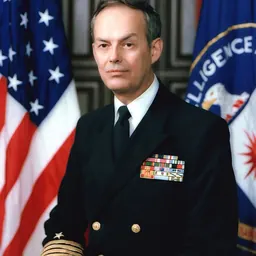

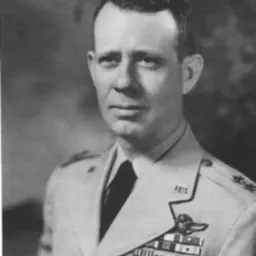

Contemporaries
People whose lives overlapped Arthur Ray Hawkins's
Frequently asked questions
Who was Arthur Ray Hawkins?
American pilot (1922-2004)
When was Arthur Ray Hawkins born?
Arthur Ray Hawkins was born on 12 December 1922 in Zavalla.
When did Arthur Ray Hawkins die?
Arthur Ray Hawkins died on 21 March 2004 in Pensacola.
What was Arthur Ray Hawkins's occupation?
Arthur Ray Hawkins was a military officer and national Museum of Naval Aviation.
What nationality was Arthur Ray Hawkins?
Arthur Ray Hawkins was American.
Sources & further reading
· Wikipedia: Arthur Ray Hawkins
Cite this page
APA: Biography.guide. (2026). Arthur Ray Hawkins. https://biography.guide/arthur-ray-hawkins/
MLA: "Arthur Ray Hawkins." Biography.guide, https://biography.guide/arthur-ray-hawkins/.
Chicago: "Arthur Ray Hawkins." Biography.guide. https://biography.guide/arthur-ray-hawkins/.
Data last updated: 2026-09-20 · Spot an error? Report a correction.
Page generated 2026-09-27 05:21 UTC