
About Arthur Moyse
Lived 1914 – 2003 (aged 88). Arthur Moyse was a British artist and bus conductor.
Arthur Moyse (21 June 1914 – 22 February 2003) was an Anglo-Irish anarchist, artist and writer. He was born in County Wexford, Ireland in 1914. His father, who was a merchant seaman, was lost at sea when he was young. His family, including his mother and his grandmother, left Ireland and moved to Shepherd's Bush in West London. He was politically active during his youth and participated in the 1936 Battle of Cable Street in the East End of London by blocking British Union of Fascists leader Oswald Mosley’s march through the East End. He later served in the British Army during the Second World War. After the war, he worked on the buses for London Transport. From the later 1960s to the early 1980s, Moyse was involved with Freedom, the British anarchist newspaper, to which from 1960 to 2000, he submitted articles. He had several books published and he was a self-taught artist. On his death he left a huge archive of material.
Early life Moyse was brought up in Shepherds Bush by his working mother and his grandmother, who were 'solidly conservative'. Cunliffe (2007) recalled: 'Expelled at 14 as unmanageable, Arthur's serious education was mainly listening to the articulate socialist orator Tony Turner.' Good (2007) recalled that Moyse was entirely self-educated and that he spent much of his childhood in public libraries. While a youth Moyse blocked the British Union of Fascists leader Oswald Mosley’s march through the East End of London duting the 1936 Battle of Cable Street. He later served with the British Army in the Second World War, during which he was part of the 1944 airborne assault at Arnhem in the Netherlands. He was court-martialled twice for insubordination. In 1946, Moyse began work on the buses for London Transport as a bus conductor in West London. He kept his job for decades and refused to leave even when he was offered a promotion, seeing his job as part of his commitment to the working class.
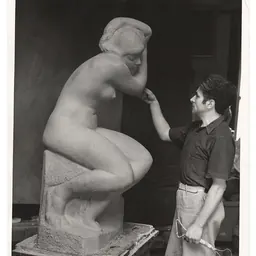
The artist Moyse was a self-taught artist. Dave Cunliffe (2007), the Blackburn-based poet who founded the influential poetry magazine Poetmeat and its successor Global Tapestry, recalled that Moyse was prolific - he produced humorous and satirical cartoons, collages, watercolours, and pen-and-ink work, much of which was directed at the hypocrisies of middle-class life and the establishment. Cunliffe (2007) also recalled that, in the 1960s: Around the middle to late 1960s, Moyse submitted illustrations to Cuddon's Cosmopolitan Review. From the late 1960s to the early 1980s, he was closely associated with Freedom, the British anarchist newspaper, to which he contributed illustrations and political cartoons.
Moyse exhibited his art in various London galleries, including solo shows at the Flowers Gallery, and was a familiar figure in Soho’s radical and bohemian arts scenes. He maintained a habit of sending illustrated letters and postcards to friends, often including satirical or political messages. He also illustrated texts, for example Shelley’s The Mask of Anarchy (1978).
The writer Moyse wrote articles for various journals, including Ambit, Anarchy, Industrial Worker, Freedom and its associated quarterly publication, The Raven. For Freedom he submitted articles under the headings Around the galleries, which at least on one occasion became Round the galleries, which began by at least 1960. His published works include his editorship of the anthology The golden convolvulus (1965), for which he wrote the introduction. This was followed some years later by three publications, More in Sorrow Six short stories (1976), Fragments of Notes for an Autobiography (1982), and a co-authored pamphlet Surrealism and Revolution (1965) with fellow anarchist Jim Duke.
From the above works, The golden convolvulus (1965) attracted notoriety. Wilkinson (2016) documented that Moyse conceived the idea for the anthology and visited Cunliffe in Blackburn, Lancashire to discuss the possibility of its publication. Cunliffe duly published the anthology in an issue of Poetmeat, a bi-monthly avant-garde magazine, under the banner of Screeches Publications, his publishing company. The problems with authority began in mid-July 1965 when the local branch of the Post Office opened packets of the magazine to ensure that they were compliant with 'printed paper rate regulations'. Having opened the packets, the branch drew the attention of the police to them, because of which Cunliffe was asked to reveal the subscribers and mailees of Poetmeat. Cunliffe refused to reveal the information. Consequently, he was charged on two counts, 'for offences against the 1953 Post Office Act and for publishing an obscene article for gain.' Sutherland (1983) observed: 'The jury took several house to return a verdict, and eventually came up with a muddle.' Cunliffe was found 'guilty of sending a postal packet containing indecent material'. However, he was found 'not guilty of publishing an obscene article.'
Much later Cunliffe (2007) quoted Ray Gosling, the broadcaster and journalist, as having described Moyse's appearance in court as follows:
Later years In his later years, Moyse lived in a small, cluttered flat in Shepherd's Bush, surrounded by decades' worth of newspapers, zines, and art materials. He became increasingly reclusive, especially after the death of his beloved dog, Vicki. He died in 2003 at the age of 88.
Legacy In 2019 academic curator Jessica Smith expressed her fear that Moyse's huge archive of material 'has all but disappeared'. The Arts Council holds his work Private View in its collection. Chelsea Arts Club holds one of his works in its collection. And the Victoria and Albert Museum has a print by him in its collection. The John Rylands Research Institute and Library holds a substantial amount of cutting and original artwork by Moyse in its Dave Cunliffe Collection. His artistic and written works have become collectable.
Publications Articles 1960s 1960. 1960. 1960. 1964. 1966. 1966. 1966. 1967. 1968. 1968. 1970s 1972. 1976. 1979. 1980s 1981. 1986. 1987. 1990s 1991. 1994. 1995. 1996. 2000 2000.
Miscellaneous 1964.
Books 1960s 1963. 1965. (With Jim Duke) 1965. 1968. 1970s 1976. 1980s 1982.
Don’t just read it —
keep it.
Full-length biographies made to live with: read them, listen on the way to work, watch them tonight.
- E-book
- Audio
- Video
Instant download · yours to keep · every purchase keeps this site free
Important facts
People in Arthur Moyse's life
Named in this biography and alive at the same time
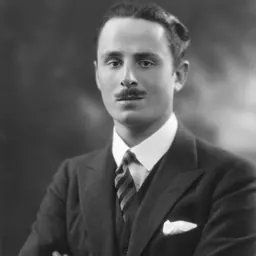

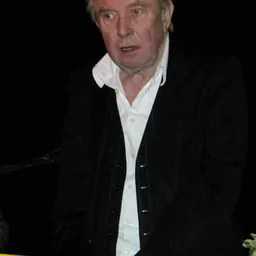

Related people
Same field, nearest in time



Contemporaries
People whose lives overlapped Arthur Moyse's


Frequently asked questions
Who was Arthur Moyse?
anarchist, artist and writer (1914–2003)
When was Arthur Moyse born?
Arthur Moyse was born on 21 June 1914 in County Wexford.
When did Arthur Moyse die?
Arthur Moyse died on 22 February 2003 in London.
What was Arthur Moyse's occupation?
Arthur Moyse was an artist and bus conductor.
What nationality was Arthur Moyse?
Arthur Moyse was British.
Sources & further reading
Cite this page
APA: Biography.guide. (2026). Arthur Moyse. https://biography.guide/arthur-moyse/
MLA: "Arthur Moyse." Biography.guide, https://biography.guide/arthur-moyse/.
Chicago: "Arthur Moyse." Biography.guide. https://biography.guide/arthur-moyse/.
Data last updated: 2026-09-22 · Spot an error? Report a correction.
Page generated 2026-09-27 05:22 UTC