
About Arthur E. Kennelly
Lived 1861 – 1939 (aged 77). Arthur E. Kennelly was an American mathematician, engineer and physicist.
Arthur Edwin Kennelly (December 17, 1861 – June 18, 1939) was an American electrical engineer and mathematician.
Biography Early life Arthur Edwin Kennelly was born on December 17, 1861, in Colaba, India, the son of Irish naval officer Captain David Joseph Kennelly (1831–1907) and Catherine Gibson Heycock (1839–1863). His mother died when he was one or two years old.
In 1863, his father retired from the Navy and later Arthur and his father returned to England, where he was educated at University College School in London. In 1878, his father married Ellen L. Spencer and moved the family to Sydney, Nova Scotia, where he took over the Sydney and Louisbourg Coal and Railway Company Limited. By his father's third marriage, Arthur gained four half siblings, Zaida Kennelly in 1881, David J. Kennelly Jr. in 1882, Nell K. Kennelly in 1883, and Spencer M. Kennelly in 1885.
Career and research Kennelly joined Thomas Edison's West Orange Laboratory in December 1887, staying until March 1894. While there, he had a role in the war of currents, assisting anti-alternating current crusader Harold P. Brown in developing a demonstration to show how alternating current was more dangerous than direct current as well as a further test to determine the type of electricity that should be used in the electric chair, convincing officials that it should be alternating current.
Kennelly then formed a consulting firm in electrical engineering with Edwin Houston. Together they wrote Alternating Electric Currents (1895), Electrical Engineering leaflets (1896), and Electric arc lighting (1902). In 1893, during his research in electrical engineering, he presented a paper on impedance to the American Institute of Electrical Engineers (AIEE). He researched the use of complex numbers as applied to Ohm's law in alternating current circuit theory. In 1902, he investigated the electrical properties of the upper atmosphere's radio spectrum, resulting in the concept of the Kennelly–Heaviside layer. The same year, he was given the entire engineering charge of the expedition which laid Mexican submarine cables on the route Vera Cruz–Frontera–Campeche. He also served as inspector for the Mexican Government during the manufacture of the cable. He was a professor of electrical engineering at Harvard University (1902–1930) and jointly at the Massachusetts Institute of Technology (1913–1924). One of his students at MIT was Vannevar Bush.
In 1911 and 1912, Kennelly advanced applied mathematics by communicating the theory of the hyperbolic angle and hyperbolic functions, first in a course at the University of London and then in a published book.
Kennelly was an active participant in professional organizations such as the Society for the Promotion of the Metric System of Weights and Measures, the Illuminating Engineering Society and the US National Committee of the International Electrotechnical Commission, and also served as the president of both the AIEE and the Institute of Radio Engineers (IRE) during 1898–1900 and 1916, respectively. He was an Invited Speaker of the ICM in 1924 at Toronto.
While Kennelly himself does not appear to have been a significant athlete, he applied his engineering expertise to his avocation: analyzing endurance sports records of horses and humans. He noticed that time vs. distance plots of such sports records formed nearly a straight line when plotted on log-log graph paper. Kennelly thus preceded by 75 years Peter Riegel, who also—apparently independently—noticed this same power law, called by Riegel the "endurance equation". Due to the relatively crude (by today's standards) data available, Kennelly's "Law of Fatigue" utilized the same exponent 9/8 = 1.125 for all of his datasets, whereas Riegel noticed that these exponents differed by sport and by individual.
Kennelly died on June 18, 1939, in Boston, Massachusetts, at the age of 77.
Awards Kennelly received awards from many organizations, including the IEE Institution Premium (1887), the Edward Longstreth Medal (1917), and the Howard N. Potts Medal (1918). In 1932, he was awarded the IRE Medal of Honor (now the IEEE Medal of Honor) "for his studies of radio propagation phenomena and his contributions to the theory and measurement methods in the alternating current circuit field which now have extensive radio application". The following year, he received the AIEE Edison Medal (now the IEEE Edison Medal) "for meritorious achievements in electrical science, electrical engineering and the electrical arts as exemplified by his contributions to the theory of electrical transmission and to the development of international electrical standards".
Kennelly was elected to the American Philosophical Society in 1896, the American Academy of Arts and Sciences in 1905, and the National Academy of Sciences in 1921.
Works See Edwin Houston for the works co-authored with him.
Books 1890: (with Henry David Wilkinson) Practical notes for electrical students (London: "The Electrician" Prtg. & Pub. Co.) 1896: (with H.D. Wilkinson) Electricity in Electro-Therapeutics via Google Books 1912: The application of hyperbolic functions to electrical engineering problems; being the subject of a course of lectures delivered before the University of London in May and June 1911 (London: University of London Press) 1913: Wireless telegraphy and wireless telephony an elementary treatise (New York: Moffat, Yard & Co.) 1917: Artificial Electric Lines: Their Theory, Mode of Construction and Uses (New York: McGraw-Hill) 1928: Vestiges of Pre-metric Weights and Measures Persisting in Metric-system Europe 1926-1927 (New York: The Macmillan Company)
Patents — "Electric meter" — "Electrostatic voltmeter"
Don’t just read it —
keep it.
Full-length biographies made to live with: read them, listen on the way to work, watch them tonight.
- E-book
- Audio
- Video
Instant download · yours to keep · every purchase keeps this site free
Important facts
People in Arthur E. Kennelly's life
Named in this biography and alive at the same time
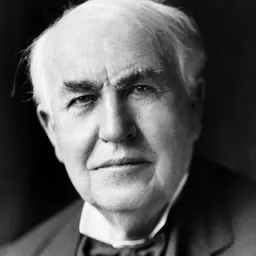
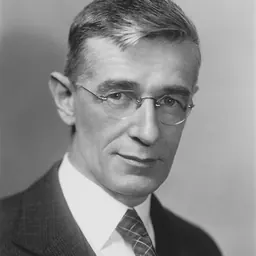
Related people
Same field, nearest in time

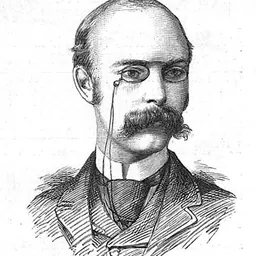

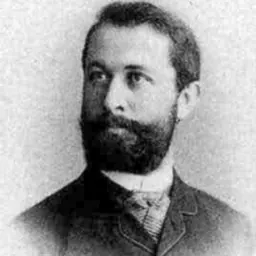
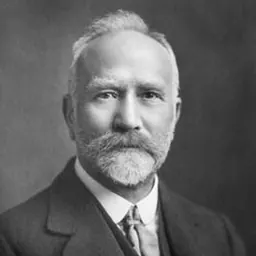
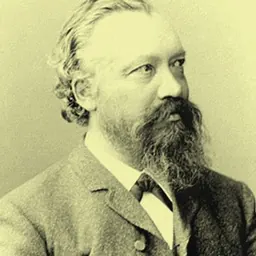
Contemporaries
People whose lives overlapped Arthur E. Kennelly's
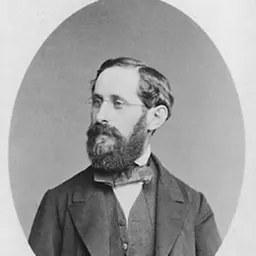



Frequently asked questions
Who was Arthur E. Kennelly?
American electrical engineer (1861–1939)
When was Arthur E. Kennelly born?
Arthur E. Kennelly was born on 17 December 1861 in Colaba.
When did Arthur E. Kennelly die?
Arthur E. Kennelly died on 18 June 1939 in Boston.
What was Arthur E. Kennelly's occupation?
Arthur E. Kennelly was a mathematician, engineer and physicist.
What nationality was Arthur E. Kennelly?
Arthur E. Kennelly was American.
Sources & further reading
· Wikipedia: Arthur E. Kennelly
· DBpedia: Arthur Edwin Kennelly
Cite this page
APA: Biography.guide. (2026). Arthur E. Kennelly. https://biography.guide/arthur-e-kennelly/
MLA: "Arthur E. Kennelly." Biography.guide, https://biography.guide/arthur-e-kennelly/.
Chicago: "Arthur E. Kennelly." Biography.guide. https://biography.guide/arthur-e-kennelly/.
Data last updated: 2026-09-20 · Spot an error? Report a correction.
Page generated 2026-09-27 05:20 UTC