
About Arthur Bergh
Lived 1882 – 1962 (aged 79). Arthur Bergh was an American composer, conductor, violinist, pianist, musician and accompanist.
Arthur Oscar Bergh (March 24, 1882 – February 11, 1962 ) was an American composer, conductor and accompanist. He performed on the piano, violin and organ.
Bergh was born in Saint Paul, Minnesota. Bergh became the recording manager at Emerson Records in 1916; he had previously been employed by Columbia Records, and was convinced to move to Victor Emerson's new company after Emerson himself left Columbia.
In his later life, Bergh worked as a librarian with Hollywood film companies. He died in Los Angeles on February 11, 1962. After Bergh's death, Geraldyne married Los Angeles Superior Court judge McIntyre Faries on December 3, 1965. Geraldyne died in 1998 and was buried in Forest Lawn Memorial Park, Glendale.
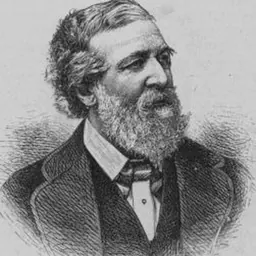
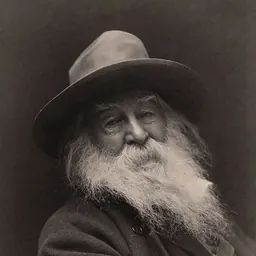
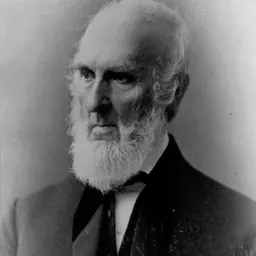
Works He composed a number of operas and operettas, including adaptations of Robert Browning's The Pied Piper of Hamelin and Edgar Allan Poe's The Raven. His Lieder include music to Walt Whitman's The Imprisoned Soul (1939), Percy Bysshe Shelley's Music, When Soft Voices Die (1947), Emily Dickinson's The Grass (1954), and John Greenleaf Whittier's Dear Lord and Father of Mankind (1955).
1908 – The Raven, Op. 20 (Edgar Allan Poe) 1910 – December, Op. 9 No. 1 (Thomas Bailey Aldrich) 1913 – Evening, a Reverie, Op. 15, No. 1 1913 – Meditation in A♭, Op. 15, No. 2 1913 – Serenade Coquette, Op. 15, No. 3 1913 – Here They Come 1914 – The Pied Piper of Hamelin, Op. 23 (Robert Browning) 1915 – Four Tone Pastels, Op. 17 1919 – Vesper Song (Cordelia Brooks Fenno) 1919 – The Goblin Fair (Cordelia Brooks Fenno) 1924 – In Arcady 1926 – Concert Suite for the Pianoforte 1941 – Love Is the Light of the World (Paul Laurence Dunbar) 1938 – Honor and Glory, Op. 30 1938 – Destiny 1938 – O Captain! My Captain! 1939 – The Imprisoned Soul (Walt Whitman) 1941 – Come With Arms Outstretched (Sara Teasdale) 1947 – Music, When Soft Voices Die, Op. 37 (Percy Bysshe Shelley) 1950 – I Heard the Bells on Christmas Day (Henry Wadsworth Longfellow) 1954 – The Grass (Emily Dickinson) 1955 – Dear Lord and Father of Mankind (John Greenleaf Whittier)
Don’t just read it —
keep it.
Full-length biographies made to live with: read them, listen on the way to work, watch them tonight.
- E-book
- Audio
- Video
Instant download · yours to keep · every purchase keeps this site free
Important facts
People in Arthur Bergh's life
Named in this biography and alive at the same time



Related people
Same field, nearest in time



Contemporaries
People whose lives overlapped Arthur Bergh's




Frequently asked questions
Who was Arthur Bergh?
American composer (1882-1962)
When was Arthur Bergh born?
Arthur Bergh was born on 24 March 1882 in Saint Paul.
When did Arthur Bergh die?
Arthur Bergh died on 11 February 1962 in Los Angeles.
What was Arthur Bergh's occupation?
Arthur Bergh was a composer, conductor, violinist, pianist, musician and accompanist.
What nationality was Arthur Bergh?
Arthur Bergh was American.
Sources & further reading
Cite this page
APA: Biography.guide. (2026). Arthur Bergh. https://biography.guide/arthur-bergh/
MLA: "Arthur Bergh." Biography.guide, https://biography.guide/arthur-bergh/.
Chicago: "Arthur Bergh." Biography.guide. https://biography.guide/arthur-bergh/.
Data last updated: 2026-09-26 · Spot an error? Report a correction.
Page generated 2026-09-27 05:14 UTC