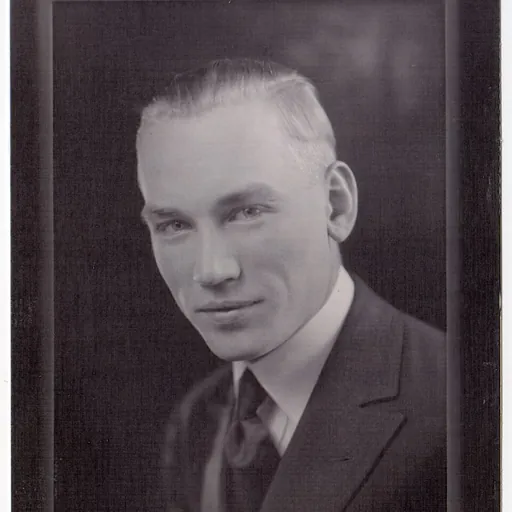
About Arnold Beckman
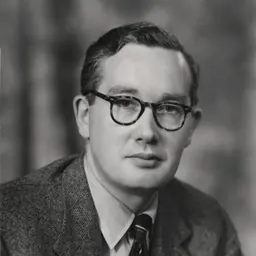
Lived 1900 – 2004 (aged 104). Arnold Beckman was an American chemist, inventor, electrical engineer and businessperson.
Arnold Orville Beckman (April 10, 1900 – May 18, 2004) was an American chemist, inventor, investor, and philanthropist. While a professor at California Institute of Technology, he founded Beckman Instruments based on his 1934 invention of the pH meter, a device for measuring acidity (and alkalinity), later considered to have "revolutionized the study of chemistry and biology". He also developed the DU spectrophotometer, "probably the most important instrument ever developed towards the advancement of bioscience". In 1965, he retired as president of Beckman Instruments, instead becoming the chairman of its board of directors.
Early life Joel Dorman Steele's 1868 book Fourteen Weeks in Chemistry (p.27 of the 1873 edition shown) inspired Beckman at the age of 9. Beckman was born in Cullom, Illinois, a village of about 500 people in a farming community. He was the youngest son of George Beckman, a blacksmith, and his second wife Elizabeth Ellen Jewkes. For his master's degree he studied the thermodynamics of aqueous ammonia solutions, a subject introduced to him by T. A. White. and the Gamma Alpha Graduate Scientific Fraternity in December 1922.
Beckman decided to go to California Institute of Technology (Caltech) for his doctorate. He stayed there for a year, before returning to New York to be near his fiancée, Mabel, who was working as a secretary for the Equitable Life Assurance Society. He found a job with Western Electric's engineering department, the precursor to the Bell Telephone Laboratories. Working with Walter A. Shewhart, Linus Pauling, another of Roscoe G. Dickinson's graduate students, was also asked to stay on at Caltech. Beckman's solution was to make ink with butyric acid, a malodorous substance. Because of this ingredient, no manufacturer wanted to manufacture it. Beckman decided to make it himself. He started the National Inking Appliance Company, obtaining space in a garage owned by instrument maker Fred Henson and hiring two Caltech students, Robert Barton and Henry Fracker. Beckman developed and took out a couple of patents for re-inking typewriter ribbons, but marketing them was not successful. This was Beckman's first experience at running a company and marketing a product, and while this first product failed, Beckman repurposed the company for another product. The National Bureau of Standards ran tests to certify that the DU's results were accurate and repeatable and recommended its use. Theodore L. Brown notes that it "revolutionized the measurement of light signals from samples". Nobel laureate Bruce Merrifield is quoted as calling the DU spectrophotometer "probably the most important instrument ever developed towards the advancement of bioscience."
Development of the spectrophotometer also had direct relevance to the war effort. For example, the role of vitamins in health was being studied, and scientists wanted to identify Vitamin A-rich foods to keep soldiers healthy. Previous methods involved feeding rats for several weeks, then performing a biopsy to estimate Vitamin A levels. The DU spectrophotometer yielded better results in a matter of minutes. The DU spectrophotometer was also an important tool for scientists studying and producing the new wonder drug penicillin. By the end of the war, American pharmaceutical companies were producing 650 billion units of penicillin each month. Much of the work done in this area during World War II was kept secret until after the war.
Infrared
Beckman and his company were involved in a number of secret projects. There was a critical shortage of rubber, which was used in jeep and airplane tires and in tanks. Natural sources from the Far East were unavailable because of the war, and scientists sought a reliable synthetic substitute. Beckman was approached by the Office of Rubber Reserve about developing an infrared spectrophotometer to aid in the study of chemicals such as toluene and butadiene. The Office of Rubber Reserve met secretly in Detroit with Robert Brattain of the Shell Development Company, Arnold O. Beckman, and R. Bowling Barnes of American Cyanamid. Beckman was asked to secretly produce a hundred infrared spectrophotometers to be used by authorized government scientists, based on a design for a single-beam spectrophotometer which had already been developed by Robert Brattain for Shell. Other researchers who were independently pursuing the development of infrared spectrometry, were able to publish and to develop instruments during this time without being affected by secrecy restrictions.
Beckman had continued to develop the infrared spectrophotometer after the release of the IR-1. Facing stiff competition, he decided in 1953 to go forward with a radical redesign of the instrument. The result was the IR-4, which could be operated using either a single or double beam of infrared light. The Los Angeles Chamber of Commerce asked Beckman to represent them in dealing with creation of a local APCD. The new APCD, when formed, asked Beckman to become the scientific consultant to the Air Pollution Control Officer. He held the position from 1948 to 1952.
The Air Pollution Control Officer in question was Louis McCabe, a geologist with a background in chemical engineering. McCabe initially suspected that smog was a result of sulfur dioxide pollution, and proposed that the county convert the suspected pollutant into fertilizer through a costly process. Beckman was not convinced that sulfur dioxide was the real culprit behind Los Angeles smog. He visited Gary, Indiana, where steps were being taken to address sulfur dioxide pollution, and was struck by the characteristic smell of sulfur in the air. Returning, Beckman convinced McCabe that they needed to search for a different cause.
Patent 1071952, "Apparatus for recording gas concentrations in the atmosphere"
Beckman got in touch with a Caltech professor who was working on smog, Arie Jan Haagen-Smit. They developed an apparatus to collect particulate matter from Los Angeles air, using a system of tubing intermittently cooled by liquid nitrogen. Haagen-Smit identified the substance they collected as a peroxy organic material. He agreed to spend a year studying the chemistry of smog. His results, presented in 1952, identified ozone and hydrocarbons from smokestacks, refineries and car exhausts as key ingredients in the formation of smog.
Beckman helped to create the Air Pollution Foundation, a non-profit organization to support research on finding solutions to smog, and educating the public about scientific issues related to smog.
Because Shockley's aging mother lived in Palo Alto, Shockley wanted to establish the laboratory in nearby Mountain View, California. Frederick Terman, provost at Stanford University, offered the firm space in Stanford's new industrial park. The firm launched in February 1956, the same year that Shockley received the Nobel Prize in Physics along with John Bardeen and Walter Houser Brattain "for their researches on semiconductors and their discovery of the transistor effect". Shockley Semiconductor Laboratory was the first establishment working on silicon semiconductor devices in what came to be known as Silicon Valley.
Shockley, however, lacked experience in business and industrial management. Moreover, he decided that the lab would research an invention of his own, the four-layer diode, rather than developing the diffused silicon transistor that he and Beckman had agreed upon. Beckman was reassured by his engineers that the scientific ideas behind Shockley's project were still sound. When appealed to by members of Shockley's lab, Beckman chose not to interfere with its management. Berkeley developed the EASE analog computer, and by 1959 Beckman had contracts with major companies in the aerospace, space, and defense industries, including Boeing Aerospace, Lockheed Aircraft, North American Aviation, and Lear Siegler.
The Beckman Systems Division also developed specialized computer systems to handle large volumes of telemetric radio data from satellites and uncrewed spacecraft. These included systems to process photographs of the Moon, taken by NASA's Ranger spacecraft.
Their first major philanthropic gift went to Caltech. In supporting Caltech, they expanded on the long-term relationship that Beckman had begun as a student at Caltech, and continued as a teacher and trustee. In 1962, they funded the construction of a concert hall, the Beckman Auditorium, designed by architect Edward Durrell Stone. Over a period of years, they also supported the Beckman Institute, Beckman Auditorium, Beckman Laboratory of Behavioral Sciences, and Beckman Laboratory of Chemical Synthesis at the California Institute of Technology. In the words of Caltech's president emeritus David Baltimore, Beckman "has shaped the destiny of Caltech." In 1990, it was considered one of the top ten foundations in California, based on annual gifts. Donations chiefly went to scientists and scientific causes as well as Beckman's alma maters. He is quoted as saying, "I accumulated my wealth by selling instruments to scientists ... so I thought it would be appropriate to make contributions to science, and that's been my number one guideline for charity."
In the 1980s, they funded five major centers: Beckman Research Institute (BRI) at the City of Hope National Medical Center in Duarte, California, United States. Beckman Laser Institute, University of California, Irvine, in Irvine, California Beckman Institute for Advanced Science and Technology at the University of Illinois Urbana–Champaign Beckman Center for Molecular and Genetic Medicine at Stanford University, Stanford, California Beckman Institute, California Institute of Technology, Pasadena, California
The Beckmans also gave to: The Arnold and Mabel Beckman Center for the History of Chemistry at the Chemical Heritage Foundation (now the Science History Institute), Philadelphia, PA The Beckman Center of the National Academies of Sciences, Engineering, and Medicine, Irvine, CA The Pepperdine University School of Business & Management's MBA program (1988)
After Mabel's death in 1989, Arnold Beckman reorganized the foundation to continue in perpetuity, and developed new initiatives for the foundation's giving.
Arnold Beckman envisioned the Beckman Scholars and Beckman Young Investigators programs to support young scientists at the university level. Each year, the Beckman Foundation selects a list of universities and colleges, each of which selects student from its institution for the Beckman Scholars Program. The Beckman Young Investigators Program provides research support to promising faculty members in the early stages of academic careers in the chemical and life sciences, particularly those whose work involves methods, instruments and materials that may open up new avenues of research in science. In 2017, the Beckman Postdoctoral Fellows award was launched, similarly aimed at supporting promising young postdoctoral scholars in their chemistry or chemical instrumentation research.
The Arnold and Mabel Beckman Foundation also supports vision research through its Beckman Initiative in Macular Research and the Beckman-Argyros Award in Vision Research. Supported activities include research into laser surgery and macular degeneration.
Awards and honors National Medal of Technology, awarded to Beckman by President George H. W. Bush, 1989
In 1971, Beckman was awarded an honorary Doctor of Science (Sc.D.) degree from Whittier College.
Arnold Beckman was elected a Fellow of the American Academy of Arts and Sciences in 1976. In 1982, he received the Golden Plate Award of the American Academy of Achievement. Asteroid 3737 Beckman was named after Arnold O. Beckman in 1983. Beckman was inducted into the Junior Achievement US Business Hall of Fame in 1985. In 1987, he was inducted into the National Inventors Hall of Fame in Akron, Ohio. In 2004 he received its Lifetime Achievement Award. It is the highest honor the United States can confer to a US citizen for achievements related to technological progress President George H. W. Bush presented Beckman with the National Medal of Science Award in 1989, "for his leadership in the development of analytical instrumentation and for his deep and abiding concern for the vitality of the nation's scientific enterprise.". He had previously been recognized by the Reagan administration as one of about 30 citizens receiving the 1989 Presidential Citizens Medal for exemplary deeds of service.
In 1989, Beckman received the Charles Lathrop Parsons Award for public service from the American Chemical Society. He was awarded the Order of Lincoln, the state of Illinois' highest honor, by The Lincoln Academy of Illinois in 1991. In 2000, he received a Special Millennium Edition of the Othmer Gold Medal from the Chemical Heritage Foundation in recognition of his multifaceted contributions to chemical and scientific heritage.
The Arnold O. Beckman High School in Irvine, California which has a focus in science education, was named in honor of Arnold O. Beckman. It was not, however, funded by Beckman. The Beckman Coulter Heritage exhibit, which discusses the work of scientists Arnold Beckman and Wallace Coulter, is located at the Beckman Coulter headquarters in Brea, California.
Personal life Beckman married Mabel on June 10, 1925. Arnold Beckman died May 18, 2004, at the age of 104, in hospital in La Jolla, Calif. Mabel and Arnold Beckman are buried beneath a simple headstone in West Lawn Cemetery in Cullom, Illinois, the small town where he was born.
Don’t just read it —
keep it.
Full-length biographies made to live with: read them, listen on the way to work, watch them tonight.
- E-book
- Audio
- Video
Instant download · yours to keep · every purchase keeps this site free
Important facts
People in Arnold Beckman's life
Named in this biography and alive at the same time




Related people
Same field, nearest in time


Contemporaries
People whose lives overlapped Arnold Beckman's






Frequently asked questions
Who was Arnold Beckman?
American chemist (1900–2004)
When was Arnold Beckman born?
Arnold Beckman was born on 10 April 1900 in Cullom.
When did Arnold Beckman die?
Arnold Beckman died on 18 May 2004 in La Jolla.
What was Arnold Beckman's occupation?
Arnold Beckman was a chemist, inventor, electrical engineer and businessperson.
What nationality was Arnold Beckman?
Arnold Beckman was American.
Sources & further reading
Cite this page
APA: Biography.guide. (2026). Arnold Beckman. https://biography.guide/arnold-beckman/
MLA: "Arnold Beckman." Biography.guide, https://biography.guide/arnold-beckman/.
Chicago: "Arnold Beckman." Biography.guide. https://biography.guide/arnold-beckman/.
Data last updated: 2026-09-23 · Spot an error? Report a correction.
Portrait: Wikimedia Commons · author & licence
Page generated 2026-09-27 05:06 UTC