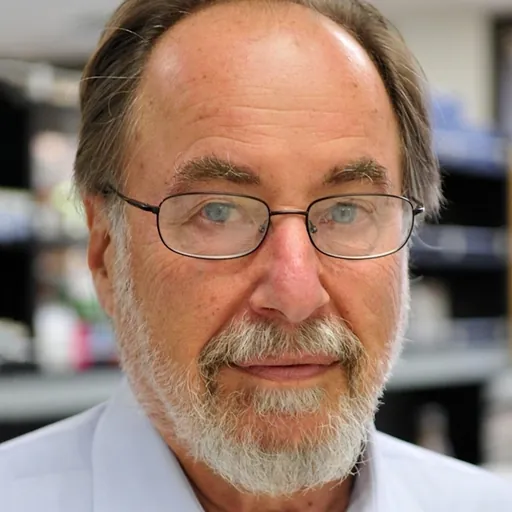
David Baltimore
American biologist and Nobel laureate
About David Baltimore
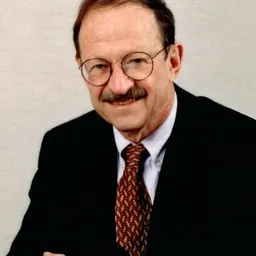
Lived 1938 – 2025 (aged 87). David Baltimore was an American virologist, university teacher, microbiologist, biochemist, geneticist and nobel Prize winner.
David Baltimore (March 7, 1938 – September 6, 2025) was an American biologist, university administrator, and 1975 Nobel laureate in Physiology or Medicine. He was a professor of biology at the California Institute of Technology (Caltech), where he served as president from 1997 to 2006. He founded the Whitehead Institute and directed it from 1982 to 1990. In 2008, he served as president of the American Association for the Advancement of Science.
At age 37, Baltimore won the Nobel Prize with Renato Dulbecco and Howard M. Temin "for their discoveries concerning the interaction between tumour viruses and the genetic material of the cell", specifically the discovery of the enzyme reverse transcriptase. He contributed to immunology, virology, cancer research, biotechnology, and recombinant DNA research. He also trained many doctoral students and postdoctoral fellows, several of whom have gone on to notable and distinguished research careers. In addition to the Nobel Prize, he received a number of other awards, including the U.S. National Medal of Science in 1999 and the Lasker Award in 2021.
Early life and education
Baltimore was born on March 7, 1938, in Manhattan, New York, to Gertrude (Lipschitz) and Richard Baltimore. Raised in the Queens neighborhoods of Forest Hills and Rego Park, he moved with his family to suburban Great Neck, New York, while he was in second grade because his mother felt that the city schools were inadequate. His father had been raised as an Orthodox Jew and his mother was an atheist, and Baltimore observed Jewish holidays and would attend synagogue with his father through his Bar Mitzvah. He graduated from Great Neck North High School in 1956, and credits his interest in biology to a high-school summer spent at the Jackson Laboratory's Summer Student Program in Bar Harbor, Maine. It was at this program that he met Howard Temin, with whom he would later share the Nobel Prize.
Baltimore earned his bachelor's degree in chemistry with high honors at Swarthmore College in 1960. He was introduced to molecular biology by George Streisinger, under whose mentorship he worked for a summer at Cold Spring Harbor Laboratory as part of the inaugural cohort of the Undergraduate Research Program in 1959.
Career and research After his PhD, Baltimore returned to MIT for postdoctoral research with James E. Darnell in 1963. He continued his work on virus replication using poliovirus and pursued training in enzymology with Jerard Hurwitz at Albert Einstein College of Medicine in 1964. There he investigated poliovirus RNA replication and began a long and storied career of mentoring other scientists' early careers including Marc Girard, and Michael Jacobson. They discovered the mechanism of proteolytic cleavage of viral polyprotein precursors, pointing to the importance of proteolytic processing in the synthesis of eukaryotic proteins. He also met his future wife, Alice Huang, who began working with Baltimore at Salk in 1967. He and Alice together carried out key experiments on defective interfering particles and viral pseudo types. During this work, he made a key discovery that polio produced its viral proteins as a single large polyprotein that was subsequently processed into individual functional peptides. Alice S. Huang also moved to MIT to continue her research on vesicular stomatitis virus (VSV). They became a couple, and married in October 1968.
Baltimore extended this work and examined two RNA tumor viruses, Rauscher murine leukemia virus and Rous sarcoma virus. He went on to discover reverse transcriptase (RTase or RT) – the enzyme that polymerizes DNA from an RNA template. In doing so, he discovered a distinct class of viruses, later called retroviruses, that use an RNA template to catalyze synthesis of viral DNA. This overturned the simplified version of the central dogma of molecular biology that stated that genetic information flows unidirectionally from DNA to RNA to proteins. Reverse transcriptase is essential for the reproduction of retroviruses, allowing such viruses to turn viral RNA strands into viral DNA strands. The viruses that fall into this category include HIV. This discovery made it easier to isolate and reproduce individual genes, and was heralded as evidence that molecular and virological approaches to understanding cancer would yield new cancer treatments. The MIT CCR was led by Salvador E. Luria and quickly achieved pre-eminence with a group of faculty including Baltimore, Phillips Robbins, Herman Eisen, Philip Sharp, and Robert Weinberg. At the time, Baltimore's greatest contribution to virology was his discovery of reverse transcriptase (Rtase or RT) which is essential for the reproduction of retroviruses such as HIV and was discovered independently, and at about the same time, by Satoshi Mizutani and Temin. This type of enzymatic activity was also discovered by Tony Hunter, who has done extensive work in the area. He also continued to pursue fundamental questions in RNA viruses and in 1981, Baltimore and Vincent Racaniello, a post-doctoral fellow in his laboratory, used recombinant DNA technology to generate a plasmid encoding the genome of poliovirus, an animal RNA virus. Baltimore persuaded Whitehead that MIT would be the ideal home for the new institute, convinced that it would be superior at hiring the best researchers in biology at the time, thus ensuring quality. The controversy was made worse by an article published by the Boston Globe framing the institute as corporate takeover of MIT. Whitehead Institute's contributions to bioscience have long been consistently outstanding. Less than a decade after its founding with continued leadership by Baltimore, the Whitehead Institute was named the top research institution in the world in molecular biology and genetics, and over a recent 10-year period, papers published by Whitehead scientists, including many from Baltimore's own lab, were the most cited papers of any biological research institute. The Whitehead Institute was an important partner in the Human Genome Project.
Baltimore served as director of the WIBR and expanded the faculty and research areas into key areas of research including mouse and drosophila genetics. During this time, Baltimore's own research program thrived in the new Institute. Important breakthroughs from Baltimore's lab include the discovery of the key transcription factor NF-κB by Dr. Ranjan Sen and David Baltimore in 1986. This was part of a broader investigation to identify nuclear factors required for lg gene expression in B lymphocytes. However, NF-κB turned out to have much broader importance in both innate and adaptive immunity and viral regulation. NF-κB is involved in regulating cellular responses and belongs to the category of "rapid-acting" primary transcription factors. Their discovery led to an "information explosion" involving "one of the most intensely studied signaling paradigms of the last two decades."
As early as 1984, Rudolf Grosschedl and David Weaver, postdoctoral fellows, in Baltimore's laboratory, were experimenting with the creation of transgenic mice as a model for the study of disease. They suggested that "control of lg gene rearrangement might be the only mechanism that determines the specificity of heavy chain gene expression within the lymphoid cell lineage." in 1987, they created transgenic mice with the fused gene that developed fatal leukemia.
David G. Schatz and Marjorie Oettinger, as students in Baltimore's research group in 1988 and 1989, identified the protein pair that rearranges immunoglobulin genes, the recombination-activating gene RAG-1 and RAG-2. this was a key discovery in determining how the immune system can have specificity for a given molecule out of many possibilities, and was considered by Baltimore as of 2005 to be "our most significant discovery in immunology".
Rockefeller University Baltimore served as the director of the Whitehead Institute until July 1, 1990, when he was appointed the sixth president of Rockefeller University in New York City. He moved his research group to New York in stages and continued to make creative contributions to virology and cellular regulation. After resigning on December 3, 1991 (see Imanishi-Kari case), Baltimore remained on the Rockefeller University faculty and continued research until the spring of 1994. He was invited to return to MIT and rejoined the faculty as the Ivan R. Cottrell Professor of Molecular Biology and Immunology. He began serving in the office October 15, 1997 and was inaugurated March 9, 1998.
During Baltimore's tenure at Caltech, United States president Bill Clinton awarded Baltimore the National Medal of Science in 1999 for his numerous contributions to the scientific world. In 2004, Rockefeller University gave Baltimore its highest honor, a Doctor of Science degree (honoris causa).
In 2003, as a postdoctoral fellow in Baltimore's lab at Caltech, Matthew Porteus was the first to demonstrate precise gene editing in human cells using chimeric nucleases.
In October 2005, Baltimore resigned the office of the president of Caltech, saying, "This is not a decision that I have made easily, but I am convinced that the interests of the Institute will be best served by a presidential transition at this particular time in its history ...". Former Georgia Tech Provost Jean-Lou Chameau succeeded Baltimore as president of Caltech. Baltimore was appointed president emeritus and the Robert Andrews Milikan Professor of Biology at Caltech and remained an active member of the institute's community.
Caltech Laboratory (1997–2019) Baltimore's laboratory at Caltech focused on two major research areas: understanding the development and functioning of the mammalian immune system and translational studies creating viral vectors to make the immune system more effective in resisting cancer. Their basic studies went in two directions: understanding the diverse activity of the NF-κB transcription factor, and understanding the normal and pathologic functions of microRNA.
Translational Science Initiatives A primary focus of Baltimore's lab was use of gene therapy methods to treat HIV and cancer. In the early 2000s one of Baltimore's graduate students, Lili Yang, developed a lentivirus vector that allowed for the cloning of genes for two chains of TCR. Recognizing its potentially profound implications for enhancing immunity, Baltimore developed a translational research initiative within his laboratory called "Engineering Immunity." The Bill and Melinda Gates Foundation awarded the program with a Grand Challenge Grant, and he used the funding to divide the initiative into four research programs and hire additional lab staff to lead each one. Two of the research programs sparked gene therapy start-up companies, Calimmune and Immune Design Corp, founded in 2006 and 2008 respectively. A third program focused on the development of an HIV vaccine, and eventually lead to clinical trials at NIH. In recent research led by Jimmy Zhao, Baltimore's team has discovered a small RNA molecule called microRNA-146a (miR-146a) and bred a strain of mice that lacks miR146a. They have used the miR146a(-) mice as a model to study the effects of chronic inflammation on the activity of hematopoietic stem cells (HSCs). Their results suggest that microRNA-146a protects HSCs during chronic inflammation, and that its lack may contribute to blood cancers and bone marrow failure.
Splicing Control Research Another concentration within Baltimore's lab in recent years was control of inflammatory and immune responses, specifically splicing control of gene expression after inflammatory stimuli. This led to further discoveries that delayed splicing was caused by introns, with the revelation that RNA-binding protein BUD13 acts at this intron to increase the amount of successful splicing (2 articles by Luke Frankiw published in 2019 and 2020).
In an autobiographical piece published in Annual Review Immunology in 2019, Baltimore announced that half of his lab space at Caltech would be taken over by a new assistant professor in Fall 2018, and his current lab group would be the last. "I have been involved in research for 60 years, and I think it is time to leave the field to younger people." Reminiscent of the Asilomar conference on recombinant DNA in 1975, those involved want both scientists and the public to be more aware of the ethical issues and risks involved with new techniques for genome modification.
An early spokesperson for federal funding for AIDS research, Baltimore co-chaired the 1986 National Academy of Sciences committee on a National Strategy for AIDS. As of 1996 he was appointed head of the National Institutes of Health (NIH) AIDS Vaccine Research Committee (AVRC).
Biotechnology Baltimore held nearly 100 different biotechnology patents in the US and Europe, and had been preeminent in American biotechnology since the 1970s. In addition to Calimmune and Immune Design, he also helped found s2A Molecular, Inc. He was elected to the National Academy of Sciences USA (NAS) in1974; the American Academy of Arts and Sciences, 1974; the NAS Institute of Medicine (IOM), 1974; the American Association of Immunologists, 1984; the American Philosophical Society, 1997. He was elected a Foreign Member of the Royal Society (ForMemRS) in 1987; the French Academy of Sciences, 2000; and the American Association for Cancer Research (AACR). In 2008, Baltimore was president of the American Association for the Advancement of Science (AAAS).
He published over 700 peer-reviewed articles.
Baltimore was a member of the USA Science and Engineering Festival's Advisory Board and an Xconomist (an editorial advisor for the tech news and media company, Xconomy). Baltimore also served on The Jackson Laboratory's board of trustees, the Bulletin of the Atomic Scientists' Board of Sponsors, Amgen, Inc.'s board of directors, and numerous other organizations and their boards.
In 2019 Caltech named a graduate fellowship program in biochemistry and molecular biophysics in honor of Baltimore. The program combined a $7.5 million gift from the Amgen Foundation with an existing one-year Amgen fellowship and $3.75 million given by Caltech's Gordon and Betty Moore Graduate Fellowship Match.
Controversies Imanishi-Kari case
During the late 1980s and early 1990s, Thereza Imanishi-Kari, a scientist who was in a separate, independent, laboratory at MIT but who had collaborated with Baltimore, was implicated in a case of scientific fraud. The case received extensive news coverage and a Congressional investigation. The case was linked to Baltimore's name because of his scientific collaboration with and later his strong defense of Imanishi-Kari against accusations of fraud.
In 1986, while a professor of biology at MIT and director at Whitehead, Baltimore co-authored a scientific paper on immunology with Thereza Imanishi-Kari (an assistant professor of biology who had her own laboratory at MIT) as well as four others. A postdoctoral fellow in Imanishi-Kari's laboratory, Margot O'Toole, who was not an author, reported concerns about the paper, ultimately accusing Imanishi-Kari of fabricating data in a cover-up. Baltimore, however, refused to retract the paper.
O'Toole soon dropped her challenge, but the NIH, which had funded the contested paper's research, began investigating, at the insistence of Walter W. Stewart, a self-appointed fraud buster, and Ned Feder, his lab head at the NIH.
Around October 1989, when Baltimore was appointed president of Rockefeller University, around a third of the faculty opposed his appointment because of concerns about his behaviour in the Imanishi-Kari case. He visited every laboratory, one by one, to hear those concerns directly from each group of researchers.
In a draft report dated March 14, 1991, based mainly on USSS forensics findings, NIH's fraud unit, then called the Office of Scientific Integrity (OSI), accused Imanishi-Kari of falsifying and fabricating data. It also criticized Baltimore for failing to embrace O'Toole's challenge. Less than a week later, the report was leaked to the press. Baltimore and three co-authors then retracted the paper; however, Imanishi-Kari and Moema H. Reis did not sign the retraction. In the report, Baltimore stated that he may have been "too willing to accept" Imanishi-Kari's explanations and felt he "did too little to seek an independent verification of her data and conclusions." Baltimore publicly apologized for not taking a whistle-blower's charge more seriously.
Amid concerns raised by negative publicity in connection with the scandal, Baltimore resigned as president of Rockefeller University and rejoined the MIT Biology faculty.
In July 1992, the US Attorney for the District of Maryland, who had been investigating the case, announced he would not bring criminal or civil charges against Imanishi-Kari. In October 1994, however, OSI's successor, the Office of Research Integrity (ORI; HHS) found Imanishi-Kari guilty on 19 counts of research misconduct, basing its conclusions largely on Secret Service analysis of laboratory notebooks, relying on forensic analysis of the paperwork, data and ink, rather than the scientific experiments described within.
An HHS appeals panel began meeting in June 1995 to review all charges in detail. In June 1996, the panel ruled that the ORI had failed to prove any of its 19 charges. After throwing out much of the documentary evidence gathered by the ORI, the panel dismissed all charges against Imanishi-Kari. As their final report stated, the HHS panel "found that much of what ORI presented was irrelevant, had limited probative value, was internally inconsistent, lacked reliability or foundation, was not credible or not corroborated, or was based on unwarranted assumptions." It did conclude that "The Cell paper as a whole is rife with errors of all sorts ... [including] some which, despite all these years and layers of review, have never previously been pointed out or corrected. Responsibility ... must be shared by all participants." Neither OSI nor ORI ever accused Baltimore of research misconduct. The reputations of Stewart and Feder, who had pushed for the investigation, were badly damaged.
The Imanishi-Kari controversy was one among several prominent scientific integrity cases of the 1980s and 1990s in the United States. In nearly all cases, defendants were ultimately cleared. In 1993, Yale University mathematician Serge Lang strongly criticized Baltimore's behavior. Historian of science Daniel Kevles, writing after the exoneration of Imanishi-Kari, recounted the affair in his 1998 book, The Baltimore Case. Horace Freeland Judson also gives a critical assessment of Baltimore's actions in The Great Betrayal: Fraud In Science. Baltimore also wrote his own analysis.
Luk van Parijs case In 2005, at Baltimore's request, Caltech began investigating the work that Luk van Parijs had conducted while a postdoc in Baltimore's laboratory. Van Parijs first came under suspicion at MIT, for work done after he had left Baltimore's lab. After van Parijs had been fired by MIT, his doctoral supervisor also noted problems with work van Parijs did at the Brigham and Women's Hospital, before leaving Harvard to go to Baltimore's lab. The Caltech investigation concluded in March 2007. It found van Parijs alone committed research misconduct, and that four papers co-authored by Baltimore, van Parijs, and others required correction.
COVID-19 and lab-leak theory In May 2021, Baltimore was quoted in the Bulletin of the Atomic Scientists in an article about the origins of the COVID-19 virus, saying, "When I first saw the furin cleavage site in the viral sequence, with its arginine codons, I said to my wife it was the smoking gun for the origin of the virus. These features make a powerful challenge to the idea of a natural origin for SARS2." This quote was widely shared and gave credence to the possibility of a Wuhan lab leak that has been discussed extensively as part of investigations into the origin of COVID-19.
A month later, Baltimore told the Los Angeles Times that he "should have softened the phrase 'smoking gun' because I don't believe that it proves the origin of the furin cleavage site but it does sound that way. I believe that the question of whether the sequence was put in naturally or by molecular manipulation is very hard to determine but I wouldn't rule out either origin."
Personal life and death Baltimore married Alice S. Huang in 1968. They had one daughter. Baltimore was an avid fly-fisher. 1971 Eli Lilly Award in Immunology and Microbiology 1974 Fellow of the American Academy of Arts and Sciences 1975 Nobel Prize in Physiology or Medicine 1986 Golden Plate Award of the American Academy of Achievement 1999 National Medal of Science 2021 Lasker-Koshland Special Achievement Award in Medical Science
Honorary degrees 1976 Swarthmore College, Swarthmore, PA 2004 Yale University, New Haven, CT 2004 The Rockefeller University, New York, NY 2005 Harvard University, Cambridge, MA 2012 University of Buenos Aires, Buenos Aires, Argentina
Books Luria, S. E., J.E. Darnell, D. Baltimore and A. Campbell (1978) General Virology 3rd edition John Wiley and Sons, New York, New York.
Darnell, J., H. Lodish and D. Baltimore (1986) Molecular Cell Biology, Scientific American, New York, New York.
Don’t just read it —
keep it.
Full-length biographies made to live with: read them, listen on the way to work, watch them tonight.
- E-book
- Audio
- Video
Instant download · yours to keep · every purchase keeps this site free
Important facts
Family & relationships
People in David Baltimore's life
Named in this biography and alive at the same time





Related people
Same field, nearest in time





Contemporaries
People whose lives overlapped David Baltimore's

Frequently asked questions
Who was David Baltimore?
American biologist and Nobel laureate (1938–2025)
When was David Baltimore born?
David Baltimore was born on 7 March 1938 in Manhattan, New York City.
When did David Baltimore die?
David Baltimore died on 6 September 2025 in Woods Hole.
What was David Baltimore's occupation?
David Baltimore was a virologist, university teacher, microbiologist, biochemist, geneticist and nobel Prize winner.
What nationality was David Baltimore?
David Baltimore was American.
Sources & further reading
Cite this page
APA: Biography.guide. (2026). David Baltimore. https://biography.guide/david-baltimore/
MLA: "David Baltimore." Biography.guide, https://biography.guide/david-baltimore/.
Chicago: "David Baltimore." Biography.guide. https://biography.guide/david-baltimore/.
Data last updated: 2026-09-20 · Spot an error? Report a correction.
Portrait: Wikimedia Commons · author & licence
Page generated 2026-09-27 04:57 UTC