
About Archibald Lampman
Lived 1861 – 1899 (aged 37). Archibald Lampman was a Canadian poet and writer.
Archibald Lampman (17 November 1861 – 10 February 1899) was a Canadian poet. "He has been described as 'the Canadian Keats;' and he is perhaps the most outstanding exponent of the Canadian school of nature poets." The Canadian Encyclopedia says that he is "generally considered the finest of Canada's late 19th-century poets in English."
Life
Archibald Lampman was born at Morpeth, Ontario, a village near Chatham, the son of Archibald Lampman, an Anglican clergyman. "The Morpeth that Lampman knew was a small town set in the rolling farm country of what is now western Ontario, not far from the shores of Lake Erie. The little red church just east of the town, on the Talbot Road, was his father's charge." In 1868 he contracted rheumatic fever, which left him lame for some years and with a permanently weakened heart.
Lampman attended Cobourg Collegiate, followed by Trinity College School in Port Hope, Ontario, While at university, he published early poems in Acta Victoriana, the literary journal of Victoria College. In 1883, after a frustrating attempt to teach high school in Orangeville, Ontario, he took an appointment as a low-paid clerk in the Post Office Department in Ottawa, a position he held for the rest of his life.
Lampman "was slight of form and of middle height. He was quiet and undemonstrative in manner, but had a fascinating personality. Sincerity and high ideals characterized his life and work."
On 3 September 1887, Lampman married 20-year-old Maude Emma Playter. "They had a daughter, Natalie Charlotte, born in 1892. Arnold Gesner, born May 1894, was the first boy, but he died in August. A third child, Archibald Otto, was born in 1898." He also became a close friend of Indian Affairs bureaucrat Duncan Campbell Scott; Scott introduced him to camping, and Lampman introduced Scott to writing poetry. One of their early camping trips inspired Lampman's classic Morning on the Lièvre which, in 1961, became the text for, and subject of, an award-winning National Film Board of Canada film of the same name.
Lampman, Campbell, and Scott together wrote a literary column, "At the Mermaid Inn," for the Toronto Globe from February 1892 until July 1893. (The name was a reference to the Elizabethan-era Mermaid Tavern.) As Lampman wrote to a friend:
Campbell is deplorably poor.... Partly in order to help his pockets a little Mr. Scott and I decided to see if we could get the Toronto "Globe" to give us space for a couple of columns of paragraphs & short articles, at whatever pay we could get for them. They agreed to it; and Campbell, Scott and I have been carrying on the thing for several weeks now. A plaque on the site carries a few lines from his poem "In November":
Writing
In May 1881, when Lampman was at Trinity College, someone lent him a copy of Charles G. D. Roberts's recently published first book, Orion and Other Poems. The effect on the 19-year-old student was immediate and profound:
Lampman sent Roberts a fan letter, which "initiated a correspondence between the two young men, but they probably did not meet until after Roberts moved to Toronto in late September 1883 to become the editor of Goldwin Smith's The Week."
The Canadian Encyclopedia calls his poems "for the most part close-packed melancholy meditations on natural objects, emphasizing the calm of country life in contrast to the restlessness of city living. Limited in range, they are nonetheless remarkable for descriptive precision and emotional restraint. Although characterized by a skilful control of rhythm and sound, they tend to display a sameness of thought."
"Lampman wrote more than 300 poems in this last period of his life, although scarcely half of these were published prior to his death. For single poems or groups of poems he found outlets in the literary magazines of the day: in Canada, chiefly the Week; in the United States, Scribner's Magazine, The Youth's Companion, the Independent, the Atlantic Monthly, and Harper's Magazine. In 1888, with the help of a legacy left to his wife, he published Among the millet and other poems," his first book, at his own expense.
Lampman never considered himself more than a minor poet, as he once confessed in a letter to a friend: "I am not a great poet and I never was. Greatness in poetry must proceed from greatness of character — from force, fearlessness, brightness. I have none of those qualities. I am, if anything, the very opposite, I am weak, I am a coward, I am a hypochondriac. I am a minor poet of a superior order, and that is all." A federal historic plaque marking this designation stands at Trinity Anglican Church in Morpeth. (1920) The prize was briefly issued as the Lampman-Scott Award. (2007 to 2009) Since 1999, the annual Archibald Lampman Poetry Reading at Trinity College, University of Toronto, has brought leading Canadian poets to campus.
Physical memorials and monuments
In Ottawa The main branch of the Ottawa Public Library features a stained-glass window depicting Lampman alongside other literary figures. Historical plaques on Slater Street, Daly Avenue, and at Saint Margaret's Church on Montreal Road commemorate places associated with his life and writing. The Poets Pathway includes a bronze plaque featuring his poem "In Beechwood Cemetery". A memorial medallion honoring Lampman was installed in the chapel of Trinity College. (1906) A second medallion is located at Trinity College School in Port Hope.
National Canada Post issued a commemorative postage stamp featuring Lampman's portrait against a nature backdrop. (1989)
Place names The town of Lampman, Saskatchewan, located near Estevan in the region known as Poet's Corner, was named for him. (founded 1910; incorporated 1963)
Cultural adaptations and influence Canadian singer-songwriter Loreena McKennitt adapted Lampman's poem "Snow" for her album To Drive the Cold Winter Away. (1987) She later re-recorded "Snow" for the EP A Winter Garden (1995) and the album A Midwinter Night's Dream (2008). The Upper Canada Choristers commissioned composer Stephen Chatman to set three Lampman poems ("The Bird and the Hour", "Snow", and "Voices of Earth") for choir. Publications
Poetry
Prose
Don’t just read it —
keep it.
Full-length biographies made to live with: read them, listen on the way to work, watch them tonight.
- E-book
- Audio
- Video
Instant download · yours to keep · every purchase keeps this site free
Important facts
People in Archibald Lampman's life
Named in this biography and alive at the same time
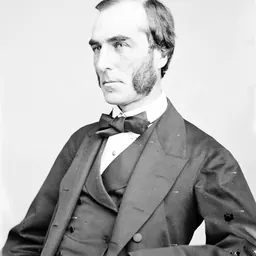


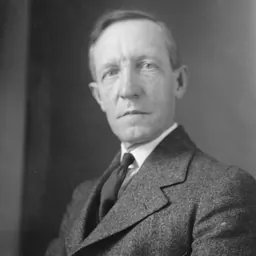

Related people
Same field, nearest in time

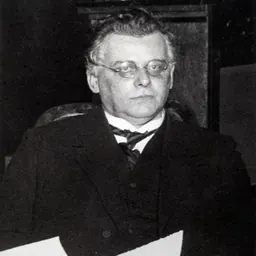
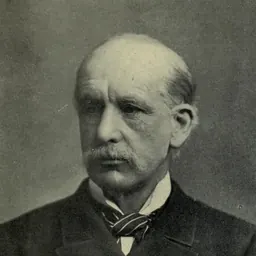
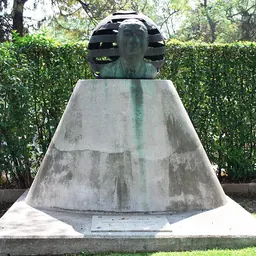
Contemporaries
People whose lives overlapped Archibald Lampman's
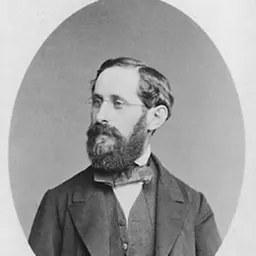

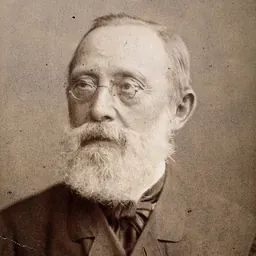

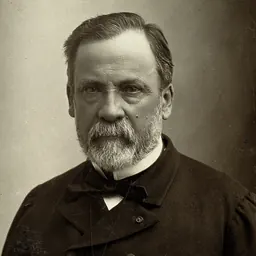

Frequently asked questions
Who was Archibald Lampman?
Canadian poet (1861–1899)
When was Archibald Lampman born?
Archibald Lampman was born on 17 November 1861 in Ottawa.
When did Archibald Lampman die?
Archibald Lampman died on 10 February 1899 in Ontario.
What was Archibald Lampman's occupation?
Archibald Lampman was a poet and writer.
What nationality was Archibald Lampman?
Archibald Lampman was Canadian.
Sources & further reading
· Wikipedia: Archibald Lampman
Cite this page
APA: Biography.guide. (2026). Archibald Lampman. https://biography.guide/archibald-lampman/
MLA: "Archibald Lampman." Biography.guide, https://biography.guide/archibald-lampman/.
Chicago: "Archibald Lampman." Biography.guide. https://biography.guide/archibald-lampman/.
Data last updated: 2026-09-25 · Spot an error? Report a correction.
Page generated 2026-09-27 05:10 UTC