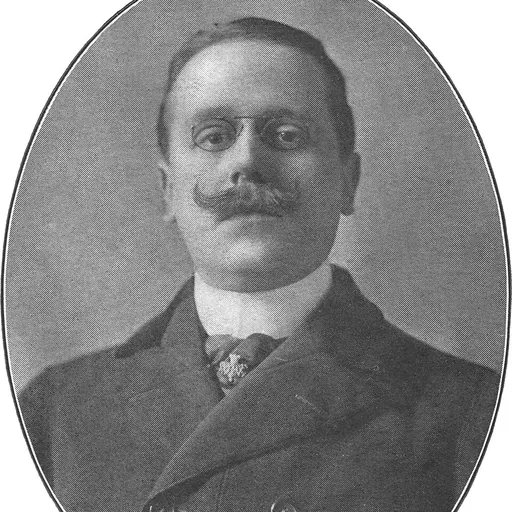
About Archibald Joyce
Lived 1873 – 1963 (aged 89). Archibald Joyce was a British composer and bandleader.
Archibald Joyce (25 May 1873 – 22 March 1963), born Arthur Joyce,
Life Arthur Joyce was born in London in May 1873 at 68 Winchester Street, Pimlico. His father was in the Grenadier Guards as a band sergeant. He showed his musical abilities early, singing in a church choir in Paddington and learning violin and piano. His first known composition, completed at the age of 11, was a march that was performed several times by the conductor Dan Godfrey (in his pre-Bournemouth bandmaster days). He began his professional career as a pianist at London's Oxford Music Hall in the 1890s but soon also started playing for the ballet, most notably the company run by Katti Lanner at the Empire Theatre of Varieties in Leicester Square with Madame Genée as its leading ballerina. (He later toured with Terry, in 1909-1910). But he soon formed the Archibald Joyce Dance Orchestra, employing up to 100 players depending on the venue (which ranged from seaside pavilions to dance halls, great houses, aristocratic balls and 'coming out' dances during the London season) Its fame extended to Europe and America. He recorded for the Gramophone Company HMV-label in London as early as 1912, and from the early 1920s his orchestras recorded material for the Aeolian Company's Vocalion Records label. The heyday of his band was in the pre-war and immediate post war periods, although he continued conducting and recording with his own ensembles throughout the 1920s and his music becoming a staple for dance-medley records as the gramophone industry evolved. But Joyce mostly didn't follow contemporaries such as Eric Coates, Albert Ketèlbey and Haydn Wood into the fields of light concert music for listening, or broadcasting and library music. His music remained primarily for dancing. The waltzes he composed stuck strictly to the form, with lots of repeated sections demanded by the dancers.
In the 1990s Philip Lane helped lead a revival of interest in Joyce with a radio documentary, The English Waltz King, also providing new arrangements of his music for a Marco Polo recording (re-issued on Naxos in 2022).
Music Joyce's first published piece, a two-step called The Moke's Parade (1905), did not become popular. But the first to attract any attention was the waltz Sweet Memories in 1908. Joyce's early two-steps include I'll Dance till de Sun Breaks Thro''' and Mickey's Birthday (or An Irish Stew), both written in 1909.
The waltz Dreaming of 1911 was one of the first examples of the 'hesitation' waltz craze, and remained Joyce's most famous composition, selling one and a quarter million copies of the sheet music between 1911 and 1920. Many different recordings exist. Salome was a common topic of Joyce's work, and he wrote four waltzes on the subject; Vision of Salome in 1909, Passing of Salome in 1912, Reincarnation (subtitled Salome) in 1919, and Phantom of Salome in 1945.
Although his style remained static across his entire career, Joyce kept composing into the 1940s and beyond, often for Oxford and Cambridge university balls. In 1942, he wrote the waltz Bohemia. Song of the River came out in 1946 and was broadcast by the BBC. His last published piece was Recruits on Parade, which appeared in 1951.
His music was taken up by other dance orchestras (Alfredo Campoli, Debroy Somers and others) and by amateur pianists. It also became familiar worldwide through its inclusion in musical revues and films. Dreaming was given lyrics by Earl Carroll and introduced in the US by Miss Kitty Gordon in Oliver Morosco's comedy with music, Pretty Mrs Smith (1913). In the US a conventional method of gaining public exposure for a song was to arrange to have it included in a revue: in this way Vision of Salome (1909) was included in Florenz Ziegfeld Jr.'s Follies of 1910. Songe d'Automne and A Thousand Kisses were incorporated into Charlie Chaplin's latter-day soundtrack added to his The Gold Rush in 1925. In 1948 film composer Benjamin Frankel included Dreaming as part of his score for Trottie True, evoking the Edwardian period in which the film is set.
Joyce disliked jazz, avoiding the syncopation and saxophones favoured by the younger generation of dance hall composers. His ensemble was among the first generation of dance orchestras, soon to lose ground to brass and saxophone-dominated bands. Junior Wireless Operator Harold Bride claimed the orchestra aboard Titanic played 'Autumn' as it sank. This has led to speculation that Bride was referring to Songe d'Automne, which was part of the orchestra's repertoire.
A theory has arisen that the last song played was indeed Songe d'Automne, and that the survivors misinterpreted it as Nearer, my God, to Thee''. This is because both songs begin with the same three notes.
Don’t just read it —
keep it.
Full-length biographies made to live with: read them, listen on the way to work, watch them tonight.
- E-book
- Audio
- Video
Instant download · yours to keep · every purchase keeps this site free
Important facts
People in Archibald Joyce's life
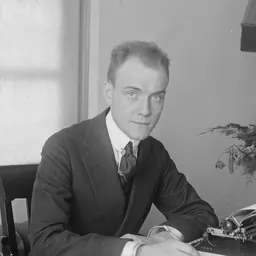
Named in this biography and alive at the same time


Related people
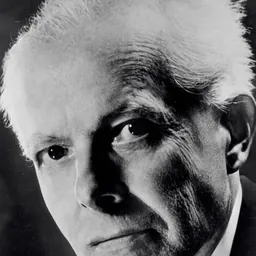
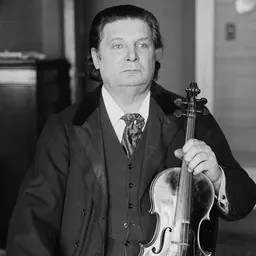
Same field, nearest in time




Contemporaries
People whose lives overlapped Archibald Joyce's


Frequently asked questions
Who was Archibald Joyce?
British composer (1873-1963)
When was Archibald Joyce born?
Archibald Joyce was born on 25 May 1873 in Belgravia.
When did Archibald Joyce die?
Archibald Joyce died on 22 March 1963 in Sutton.
What was Archibald Joyce's occupation?
Archibald Joyce was a composer and bandleader.
What nationality was Archibald Joyce?
Archibald Joyce was British.
Sources & further reading
Cite this page
APA: Biography.guide. (2026). Archibald Joyce. https://biography.guide/archibald-joyce/
MLA: "Archibald Joyce." Biography.guide, https://biography.guide/archibald-joyce/.
Chicago: "Archibald Joyce." Biography.guide. https://biography.guide/archibald-joyce/.
Data last updated: 2026-09-22 · Spot an error? Report a correction.
Portrait: Wikimedia Commons · author & licence
Page generated 2026-09-27 05:01 UTC