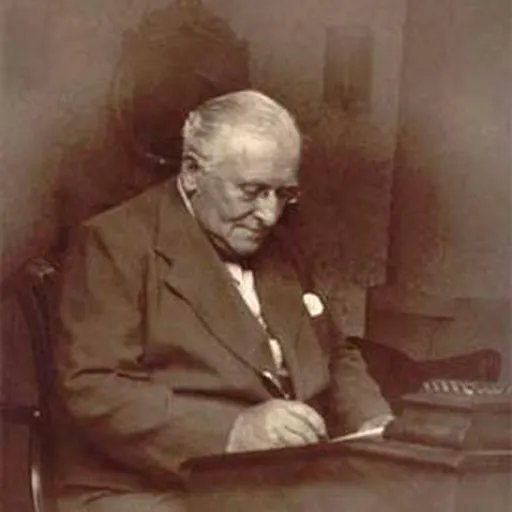
About Albert Ketèlbey
Lived 1875 – 1959 (aged 84). Albert Ketèlbey was a British conductor, composer, pianist and musician.
Albert William Ketèlbey (; born Ketelbey; 9 August 1875 – 26 November 1959) was an English composer, conductor and pianist, best known for his short pieces of light orchestral music. He was born in Birmingham and moved to London in 1889 to study at Trinity College of Music. After a brilliant studentship he did not pursue the classical career predicted for him, becoming musical director of the Vaudeville Theatre before gaining fame as a composer of light music and as a conductor of his own works.
For many years Ketèlbey worked for a series of music publishers, including Chappell & Co and the Columbia Graphophone Company, making arrangements for smaller orchestras, a period in which he learned to write fluent and popular music. He also found great success writing music for silent films until the advent of talking films in the late 1920s.
The composer's early works in conventional classical style were well received, but it was for his light orchestral pieces that he became best known. One of his earliest works in the genre, In a Monastery Garden (1915), sold over a million copies and brought him to widespread notice; his later musical depictions of exotic scenes caught the public imagination and established his fortune. Such works as In a Persian Market (1920), In a Chinese Temple Garden (1923), and In the Mystic Land of Egypt (1931) became best-sellers in print and on records; by the late 1920s he was Britain's first millionaire composer. His celebrations of British scenes were equally popular: examples include Cockney Suite (1924) with its scenes of London life, and his ceremonial music for royal events. His works were frequently recorded during his heyday, and a substantial part of his output has been put on CD in more recent years.
Ketèlbey's popularity began to wane during the Second World War and his originality also declined; many of his post-war works were re-workings of older pieces and he increasingly found his music ignored by the BBC. In 1949 he moved to the Isle of Wight, where he spent his retirement, and he died at home in obscurity. His work has been reappraised since his death; in a 2003 poll by the BBC radio programme Your Hundred Best Tunes, Bells Across the Meadows was voted the 36th most popular tune of all time. On the last night of the 2009 Proms season the orchestra performed his In a Monastery Garden, marking the fiftieth anniversary of Ketèlbey's death—the first time his music had been included in the festival's finale.
Biography Early life and education, 1875–95 Albert William Ketèlbey was born on 9 August 1875 at 41 Alma Street in the Aston area of Birmingham, England. He was the second of five children of George Henry, a jewellery engraver, and his wife Sarah Ann, Aston. The grave accent was Albert's invention: the family name was spelled without it at the time of his birth and there had been several variants of the name in the previous generations. All the children were taught a musical instrument and Ketèlbey's brother, Harold, was later a violinist of note. Albert showed a natural talent for the piano and singing, and he subsequently became head chorister at St Silas' Church in nearby Lozells. His younger sister was the historian Doris Ketelbey.
At the age of eleven Ketèlbey joined the Birmingham and Midland Institute school of music (now the Royal Birmingham Conservatoire) where he was tutored by Dr Alfred Gaul in composition and Dr H. W. Wareing in harmony. At the age of thirteen Ketèlbey composed his first serious piece of music, "Sonata for Pianoforte",
Early career, 1896–1914 In 1896 Ketèlbey took up the post of conductor for a travelling light opera company; his father, who wanted his son to be a composer of serious music, disapproved of what he saw as a lightweight role. After a two-year tour Ketèlbey was appointed as musical director of the Opera Comique Theatre—at age 22, the youngest theatrical conductor in London at the time. He moved into a house in Bruton Street, in London's Mayfair, where he wrote the song "Blow! Blow! Thou Winter Wind", to words from Shakespeare's As You Like It. The Opera Comique staged a successful revival of the musical Alice in Wonderland between December 1898 and March 1899, and according to his biographer John Sant, it is possible that Ketèlbey wrote some of the music. This was followed by the comic opera A Good Time from April, for which Ketèlbey wrote the music and songs. Following poor reviews, the short run of the piece ended in May and the Opera Comique closed because of the losses brought about by the production. There, Ketèlbey began a relationship with the actress and singer Charlotte "Lottie" Siegenberg. The couple married in 1906 but the relationship was childless. The same year Ketèlbey began undertaking transcription work at the music publisher A. Hammond & Co, making arrangements of music for smaller orchestras. Throughout the time working for the companies he continued to compose and publish his own work, comprising organ music, songs, duets, piano pieces and anthems. He worked for Columbia for over twenty years and rose to the position of Musical Director and Adviser, working with leading musicians across a range of musical styles; Columbia released more than 600 recordings with Ketèlbey conducting. by 1920 over a million copies of the sheet music had been sold. There are two competing stories detailing the inspiration behind the piece: although Ketèlbey later said that he wrote the work for an old friend, he also stated that he composed it after visiting a monastery. while McCanna opines that from the first bar, listeners "... might sooner expect such a device in the impassioned world of a [Gustav] Mahler symphony than in a genteel English salon piece". |group=n Except for a brief interval in 1926 when he resigned over a dispute about the allocation of funds to its members, he remained a lifelong member. In 1919 he composed the romantic work In the Moonlight, which his publisher considered to be "a work of striking beauty". In the following year he wrote Wedgwood Blue—a gavotte—and In a Persian Market; the latter became one of his more popular works. The musicologist Jonathan Bellman, calling In a Persian Market "immortal", describes it as "an 'intermezzo scene' for band or small orchestra; reprehensibly demeaning or delightfully tacky". The work was not without its critics; the composer and conductor Nicolas Slonimsky quotes the view of a Russian journal that "the suite ... had its 'immaculate conception' in imperialistic colonial England. The composer's intention is to convince the listener that all's well in the colonies where beautiful women and exotic fruits mature together, where beggars and rulers are friends, where there are no imperialists, no restive proletarians." (Slonimsky quotes from Krasnukha, G (1931).) "Innocent" Propaganda of Imperialism. Russian Association of Proletarian Musicians. which led to heated correspondence in the journal over the following months between the composer and the critic.
In 1921 Ketèlbey moved from his home in St John's Wood, where he had been living for the previous seven years, to Frognal, an area of Hampstead, north west London. He installed a billiards table in the basement, which became his favoured form of relaxation. In the following year Ketèlbey wrote In a Chinese Temple Garden, followed in 1924 by Sanctuary of the Heart and Cockney Suite. The last of these contained the finale "'Appy 'Ampstead", After three weeks the case ended with the judge finding against Columbia.
Such was Ketèlbey's popularity that by 1924 his works could be heard several times a day in restaurants and cinemas, and in that year the Lyons tea shops spent £150,000 on playing his music in their outlets. He continued to build on his success in 1925 with In a Lovers' Garden and In the Camp of the Ancient Britons—inspired by a trip he took to Worlebury Camp, near Weston-super-Mare. He undertook annual tours of Britain, conducting his music with municipal orchestras, and also worked with the BBC Wireless Orchestra. He was invited to conduct several international orchestras, and spent time in Belgium, Germany, France, Switzerland and particularly in the Netherlands, where he built a strong relationship with the Concertgebouw and Kursaal Grand Symphony orchestras. His music was popular on the continent and his obituarist in The Times later reported that one Viennese critic considered that Ketèlbey's music was behind only that of Johann Strauss and Franz Lehár. Sant writes that Ketèlbey subsequently became Britain's first millionaire composer. In February 1930 he began what became an annual series of concerts at the Kingsway Hall, conducting a new work, The Clock and the Dresden Figures. In a review of the 1933 concert, the critic S.R. Nelson wrote that "as a descriptive writer Ketèlbey really does take some beating. He has the happy knack of combining infinitely melodious themes and the cleverly diluted likeness of the authentic atmosphere."
The introduction of talking films in 1927 with The Jazz Singer and the subsequent growth of the medium had a serious impact on composers and music publishers involved in the film industry as it heralded a decline in the sales of sheet music. Although Ketèlbey's income from this source declined, the period was also marked by a rise in the popularity of the radio and gramophones and his new compositions were successful with audiences at home. By the early 1930s over 1,500 broadcasts of his work were made on BBC Radio in a year, and more than 700 on continental radio stations, including a weekly Sunday programme of his music, sponsored by Decca Records on Radio Luxembourg. For this programme he wrote the theme music, "Sunday Afternoon Reverie", with the melody based on the musical notes D E C C A. In the following year Ketèlbey wrote the march With Honour Crowned for the King's silver jubilee; the work was played for the royal family at Windsor Castle before Ketèlbey conducted its first public performance at Kingsway Hall. The work was played at that year's Trooping the Colour and at the Jubilee Thanksgiving Service at St Paul's Cathedral.
Ketèlbey continued to conduct on his annual tours during the Second World War, but these were on a smaller scale because of travel restrictions. He also continued with his annual concerts at Kingsway Hall, and introduced a new march, Fighting for Freedom, which he had written in a supportive response to Winston Churchill's "We shall fight on the beaches" speech. Apart from composing and conducting, he also acted as a Special Constable during the war.
Post-war; retirement and death, 1946–59 The winter of 1946–47 was harsh, and in February the sub-zero temperatures burst the water main outside Ketèlbey's Hampstead home. With his house partially flooded, he lost most of his correspondence, manuscripts and papers, and he and his wife both contracted pneumonia. The couple were taken to the Regent's Park Nursing Home, where Lottie died two days later. He sold his house and moved temporarily to the Hendon Hall Hotel, where he had a nervous breakdown. He spent the remainder of the year staying in hotels in southern England; in Bournemouth he began a relationship with Mabel Maud Pritchett, a hotel manageress, and the couple married in October in the following year.
In 1949 Ketèlbey and his new wife moved to the Isle of Wight, and purchased Rookstone, Egypt Hill, in Cowes, where he partly retired, although he composed occasionally. Tastes in popular music had changed during and after the Second World War and his music declined in popularity; his income in 1940 had been £3,493, which dropped to £2,906 in 1950—a particularly steep drop when wartime inflation is considered. McCanna writes that apart from a commission for the National Brass Band competition in 1945, Ketèlbey produced nothing memorable after the war, As a student, Ketèlbey composed a cadenza for the first movement of Beethoven's First Piano Concerto, judged "clever and effective" in performance in 1890.
For the chamber repertoire, Ketèlbey composed a string quartet (c. 1896) and a quintet for piano and wind (1896) which won the Costa Prize and the College Gold Medal. His 1894 Romance for violin and piano was praised as "a charming, musicianly work". His other early works include choral pieces, including the anthems "Every good Gift"; "Behold upon the mountains", and "Be strong, all ye people" (all 1896). After these works he moved professionally into conducting light opera, and serious music became the exception rather than the rule in his compositions. The composer's more avowedly serious music was less widely esteemed by his compatriots. In a 1928 profile the magazine The British Musician commented, "There is no need to explain here why his serious music, whether written thirty years ago or as recently as 1927 ... has not won the popularity of, say, Edward German's dances: it is pleasant music, delightfully scored; but it is not so fascinating as that from which it derives—the music of the Viennese writers of dance music, of Delibes and Gounod and the like." The reviewer added, "Albert Ketèlbey's works of the Monastery Garden type are by far the best that anyone in this country has written, and they represent the end to which he was born."
Light orchestral Ketèlbey, a capable player of the cello, clarinet, oboe, and horn, was a skilled orchestrator. Ketèlbey establishes the eastern setting in the opening section, employing the distinctive melodic intervals, A–B–E. The orchestral players are instructed to sing at two points in the score, a descending motif representing beggars crying for baksheesh.
Ketèlbey sought to repeat the exoticism of In a Persian Market in several later pieces. Among them is In a Chinese Temple Garden (1923), described as an "oriental phantasy", with episodes depicting a priestly incantation, two lovers, a wedding procession, a street brawl and the restoration of calm by the beating of the temple gong. Another example is In the Mystic Land of Egypt (1931), which, like its Persian predecessor, opens with a vigorous march theme followed by a broad romantic melody. Again, the composer employs unconventional musical devices for colour—in this case a chromatic scale, descending at each appearance until the closing bars, where it is inverted.
Among Ketèlbey's light orchestral works with a wholly British flavour is Bells Across the Meadows (1921), redolent, in the words of McDonald, of "rose-entwined thatched cottages standing amidst gardens full of hollyhocks with a gentle brook bubbling on its rustic way and cows grazing peacefully in the pastures beyond". Ketèlbey depicts successively a royal procession from Buckingham Palace to the Houses of Parliament; an East End pub, with a main theme based on the Cockney ditty "'Arf a pint of mild and bitter"; a waltz at a palais de danse; a sombre glimpse of the Cenotaph in Whitehall; and in the finale, "'Appy 'Ampstead", a picture of the August Bank Holiday fair on Hampstead Heath.
Instrumental works In addition to arrangements for solo instruments of his popular orchestral works, Ketèlbey wrote a range of music for organ and for piano. Some of the more serious of these pieces were published under his "Vodorinski" pen name. Among the organ works are Pastorale and Rêverie dramatique, both dating from about 1911.
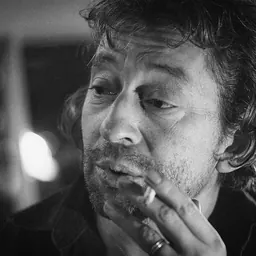
Songs Throughout his career Ketèlbey composed songs, providing the words for most of those written after 1913. His first, unpublished, song, "Be Still, Sad Heart" dates from 1892, and during the rest of the 1890s he wrote songs for children as well as sentimental ballads like "Believe Me True" (1897) for their seniors. Many had words by Florence Hoare, whose other lyrics included English words for songs by Tchaikovsky, Gounod and Brahms. Ketèlbey's popular ballads included "The Heart's Awakening" (1907), "My Heart-a-dream" (1909), "I Loved You More Than I Knew" (1912), "My Heart Still Clings to You" (1913), "Will You Forgive?" (1924), and "A Birthday Song" (1933). He wrote patriotic songs for use in three wars: "There's Something in the English After all" (1899, during the Boer War), "The Trumpet Voice of Motherland is Calling" (1914, for the First World War) and "Fighting for Freedom" (1941, during the Second World War). His sole Shakespeare setting, "Blow! Blow! Thou Winter Wind" (1898, revised 1951), was written as incidental music for a production of As You Like It. while Serge Gainsbourg used the theme of In a Persian Market for his 1977 song "My Lady Héroïne".
Dempsey, writing in 2001, considered that Ketèlbey's "late-Romantic tone miniatures ... are deserving of reappraisal". Tim Page, the music critic for The Washington Post, considers that Ketèlbey's work expresses an "ornate, perfumed, genteel Orientalism [which] found expression in miniatures"; he adds that "all of Ketèlbey's music is pretty weird—deeply derivative yet unmistakably personal, tidy in form yet grandiose in execution, amiable and often touching despite its unashamed mawkishness."
Notes, references and sources
Don’t just read it —
keep it.
Full-length biographies made to live with: read them, listen on the way to work, watch them tonight.
- E-book
- Audio
- Video
Instant download · yours to keep · every purchase keeps this site free
Important facts
People in Albert Ketèlbey's life
Named in this biography and alive at the same time



Related people
Same field, nearest in time


Contemporaries
People whose lives overlapped Albert Ketèlbey's

Frequently asked questions
Who was Albert Ketèlbey?
English composer, conductor and pianist (1875–1959)
When was Albert Ketèlbey born?
Albert Ketèlbey was born on 9 August 1875 in Birmingham, Aston.
When did Albert Ketèlbey die?
Albert Ketèlbey died on 26 November 1959 in Cowes.
What was Albert Ketèlbey's occupation?
Albert Ketèlbey was a conductor, composer, pianist and musician.
What nationality was Albert Ketèlbey?
Albert Ketèlbey was British.
Sources & further reading
Cite this page
APA: Biography.guide. (2026). Albert Ketèlbey. https://biography.guide/albert-ketelbey/
MLA: "Albert Ketèlbey." Biography.guide, https://biography.guide/albert-ketelbey/.
Chicago: "Albert Ketèlbey." Biography.guide. https://biography.guide/albert-ketelbey/.
Data last updated: 2026-09-22 · Spot an error? Report a correction.
Portrait: Wikimedia Commons · author & licence
Page generated 2026-09-27 04:58 UTC