
About Arcadio Huang
Lived 1679 – 1716 (aged 36). Arcadio Huang was a Chinese catholic priest and translator.
Arcadio Huang (, born in Xinghua, modern Putian, in Fujian, 15 November 1679, died on 1 October 1716 in Paris) was a Chinese Christian convert, brought to Paris by the Missions étrangères. He took a pioneering role in the teaching of the Chinese language in France around 1715. He was preceded in France by his compatriot Michael Shen Fu-Tsung, who visited the country in 1684.
His main works, conducted with the assistance of young Nicolas Fréret, are the first Chinese-French lexicon, the first Chinese grammar of the Chinese, and the diffusion in France of the Kangxi system with two hundred fourteen radicals, which was used in the preparation of his lexicon.
His early death in 1716 prevented him from finishing his work, however, and Étienne Fourmont, who received the task of sorting his papers, assumed all the credit for their publication.
Only the insistence of Nicolas Fréret, as well as the rediscovery of the memories of Huang Arcadio have re-established the pioneering work of Huang, as the basis which enabled French linguists to address more seriously the Chinese language.
Origins Here is the genealogy of Arcadio Huang (originally spelled Hoange) according to Stephen Fourmont:
He received the education of a Chinese literatus under the protection of French missionaries. The French missionaries saw in Arcadio an opportunity to create a "literate Chinese Christian" in the service of the evangelization of China. In these pioneer years (1690–1700), it was urgent to present to Rome examples of perfectly Christianized Chinese, in order to reinforce the Jesuits' position in the Rites controversy.
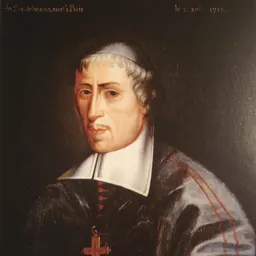
Journey to the West Artus de Lionne (1655–1713), here in 1686, brought Arcadio Huang to Europe and France in 1702.
On 17 February 1702, under the protection of Artus de Lionne, Bishop of Rosalie, Arcadio embarked on a ship of the English East India Company in order to reach London. By September or October 1702, Mr. de Rosalie and Arcadio left England for France, in order to travel to Rome.
On the verge of being ordained a priest in Rome and being presented to the pope to demonstrate the reality of Chinese Christianity, Arcadio Huang apparently renounced and declined ordination. Rosalie preferred to return to Paris to further his education, and wait for a better answer.
Installation in Paris According to his memoirs, Arcadio moved to Paris in 1704 or 1705 at the home of the Foreign Missions. There, his protectors continued his religious and cultural training, with plans to ordain him for work in China. But Arcadio preferred life as a layman. He settled permanently in Paris as a "Chinese interpreter to the Sun King" and began working under the guidance and protection of abbot Jean-Paul Bignon. Huang is said to have been Montesquieu's inspiration for the narrative device in his Persian Letters, an Asian who discusses the customs of the West.
Huang became very well-known in Parisian salons. In 1713 Huang married a Parisian woman named Marie-Claude Regnier.
Debate after his death
After the death of Huang on 1 October 1716, Fourmont became officially responsible for classifying papers of the deceased. He made a very negative report on the contents of these documents and continued to criticize the work of Huang. Continuing his work on the languages of Europe and Asia (and therefore the Chinese), he took all the credit for the dissemination of the 214 key system in France, and finally published a French-Chinese lexicon and a Chinese grammar, without acknowledging the work of Huang, whom he was continuing to denigrate publicly.
Meanwhile, Fréret, also an Academician, and above all a friend and first student of Arcadio Huang, wrote a thesis on the work and role of Arcadio in the dissemination of knowledge about China in France. Documents saved by Nicolas-Joseph Delisle, Arcadio's second student, also helped to publicize the role of the Chinese subject of the king of France.
Since then, other researchers and historians investigated his role, including Danielle Elisseeff who compiled Moi, Arcade interprète chinois du Roi Soleil in 1985.
Don’t just read it —
keep it.
Full-length biographies made to live with: read them, listen on the way to work, watch them tonight.
- E-book
- Audio
- Video
Instant download · yours to keep · every purchase keeps this site free
Important facts
People in Arcadio Huang's life
Named in this biography and alive at the same time



Related people
Same field, nearest in time



Contemporaries
People whose lives overlapped Arcadio Huang's




Frequently asked questions
Who was Arcadio Huang?
Chinese philologist
When was Arcadio Huang born?
Arcadio Huang was born on 15 November 1679 in Putian.
When did Arcadio Huang die?
Arcadio Huang died on 1 October 1716 in Paris.
What was Arcadio Huang's occupation?
Arcadio Huang was a catholic priest and translator.
What nationality was Arcadio Huang?
Arcadio Huang was Chinese.
Sources & further reading
Cite this page
APA: Biography.guide. (2026). Arcadio Huang. https://biography.guide/arcadio-huang/
MLA: "Arcadio Huang." Biography.guide, https://biography.guide/arcadio-huang/.
Chicago: "Arcadio Huang." Biography.guide. https://biography.guide/arcadio-huang/.
Data last updated: 2026-09-20 · Spot an error? Report a correction.
Page generated 2026-09-27 05:08 UTC