
About Apries
Lived 650 BC – 567 BC (aged 82–83). Apries was an Egyptian statesperson.
Apries is the name by which Herodotus and Diodorus designate Wahibre Haaibre, a pharaoh of Egypt , the fourth king (counting from Psamtik I) of the Twenty-sixth dynasty of Egypt. He was equated with the Ouaphris of Manetho, who correctly records that he reigned for 19 years. Apries is also called Hophra in Jeremiah 44:30 (; ).
Biography Apries inherited the throne from his father, pharaoh Psamtik II, in In the 4th year of his reign, Apries' sister Ankhnesneferibre was made the new God's Wife of Amun at Thebes. Jerusalem, following an 18 month-long siege, was destroyed by the Babylonians in either Apries's unsuccessful attempt to intervene in the politics of the Kingdom of Judah was followed by a mutiny of soldiers from the strategically important Aswan garrison.
According to classical historians, Apries campaigned in the Levant, took Sidon and so terrified the other cities of Phoenicia that he secured their submission. A recently uncovered stela from Tahpanhes records that attempted to invade Egypt in but Apries' forces were capable to repel the invasion.
In Cyrenaica to the west, Battus II of Cyrene had encouraged further Greek settlement in his city, especially from the Peloponnese and Crete. This sparked conflict with the indigenous Libyans, whose king Adicran appealed to Apries for help around Apries launched a military expedition against Cyrene, but was decisively defeated at the Battle of Irasa. Alternatively, Herodotus holds that Apries survived the battle, and was captured and treated well by the victorious Amasis, until the Egyptian people demanded justice against him, whereby he was placed into their hands and strangled to death. Amasis thus secured his kingship over Egypt and was then its unchallenged ruler.
Amasis, however, reportedly treated Apries' mortal remains with respect and observed the proper funerary rituals by having Apries' body carried to Sais and buried there with "full military honours." Amasis, the former general who had declared himself pharaoh, also married Apries' daughter, Khedebneithirbinet II, to legitimise his accession to power. While Herodotus claimed that the wife of Apries was called Nitetis (, in Greek), "there are no contemporary references naming her" in Egyptian records.
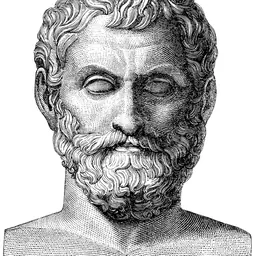
Eusebius placed the eclipse of Thales in in the eighth or twelfth year of Apries' reign.
Monuments An obelisk which Apries erected at Sais was moved by the 3rd century AD Roman Emperor Diocletian and originally placed at the Temple of Isis in Rome. It is today located in front of the Santa Maria sopra Minerva basilica church in Rome.
Footnotes
Don’t just read it —
keep it.
Full-length biographies made to live with: read them, listen on the way to work, watch them tonight.
- E-book
- Audio
- Video
Instant download · yours to keep · every purchase keeps this site free
Important facts
People in Apries's life
Named in this biography and alive at the same time
Related people
Same field, nearest in time


Contemporaries
People whose lives overlapped Apries's


Frequently asked questions
Who was Apries?
4th Egyptian pharaoh of the 26th dynasty
When was Apries born?
Apries was born in 650 BC.
When did Apries die?
Apries died in 567 BC.
What was Apries's occupation?
Apries was a statesperson.
What nationality was Apries?
Apries was Egyptian.
Sources & further reading
Cite this page
APA: Biography.guide. (2026). Apries. https://biography.guide/apries/
MLA: "Apries." Biography.guide, https://biography.guide/apries/.
Chicago: "Apries." Biography.guide. https://biography.guide/apries/.
Data last updated: 2026-09-20 · Spot an error? Report a correction.
Page generated 2026-09-27 05:18 UTC