
About Antonio Salvi
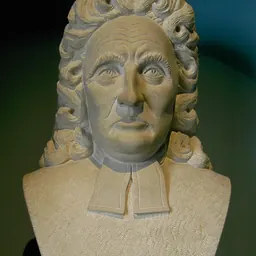
Lived 1664 – 1724 (aged 60). Antonio Salvi was a poet, librettist, writer and physician.
Antonio Salvi (17 January 1664 – 21 May 1724) was an Italian physician, court poet and librettist, active mainly in Florence, Italy. He was in the service of the grand-ducal court of Tuscany and the favourite librettist of Prince Ferdinando de' Medici. Salvi was one of the developers of the opera seria.
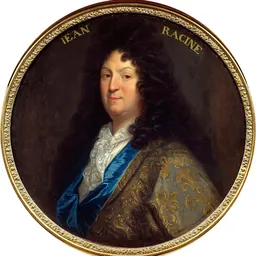
Life Salvi was born in Lucignano and became a court physician in Florence for the Medici family. From 1694 (?) he wrote libretti for the theatre in Livorno and Florence and adapted works by Jean Racine and Molière.; Salvi took many of his plots from French tragedy. Between 1701 and 1710 seven of his works were performed in the Villa di Pratolino. After the death of Ferdinando (III) de' Medici in 1713 he decided to work outside the Grand Duchy of Tuscany: in Rome, Reggio Emilia, Turin, Venice and Munich. His libretti were set to music by several famous composers including Scarlatti, Vivaldi and Handel. He died in Florence, aged 60.
Vivaldi wrote three operas for Florence to texts by Antonio Salvi. All were produced at the Teatro della Pergola.
Works Astianatte (1701), based on Andromaque by Jean Racine, set to music by Giacomo Antonio Perti, Antonio Maria Bononcini, Francesco Gasparini, Vinci, Giovanni Bononcini and Niccolò Jommelli Arminio (1703), set to music by Alessandro Scarlatti, Antonio Caldara, Carlo Francesco Pollarolo, Johann Adolph Hasse, Georg Friedrich Handel and Baldassare Galuppi Dionisio Re di Portogallo (1707), set to music by Georg Friedrich Handel as Sosarme Ginevra Principessa di Scozia (1708), set to music by Giacomo Antonio Perti and Antonio Vivaldi; as Ariodante set to music by Carlo Francesco Pollarolo, Georg Friedrich Handel and Georg Christoph Wagenseil Berenice (1709), set to music by Georg Friedrich Handel Rodelinda Regina de' Longobardi (1710), set to music by Giacomo Antonio Perti, Georg Friedrich Handel and Carl Heinrich Graun Lucio Papirio (1714), set to music by Francesco Gasparini, Luca Antonio Predieri, Leonardo Leo and Nicola Antonio Porpora Il pazzo per politica (1717), set to music by Luca Antonio Predieri und Tomaso Albinoni (as Eumene) Scanderbeg (1718), set to music by Antonio Vivaldi Adelaide (1722), set to music by Pietro Torri, Nicola Antonio Porpora, Georg Friedrich Handel (as Lotario), Giuseppe Maria Orlandini and Antonio Vivaldi.
Don’t just read it —
keep it.
Full-length biographies made to live with: read them, listen on the way to work, watch them tonight.
- E-book
- Audio
- Video
Instant download · yours to keep · every purchase keeps this site free
Important facts
People in Antonio Salvi's life
Named in this biography and alive at the same time

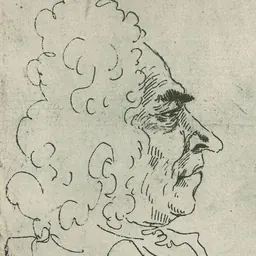
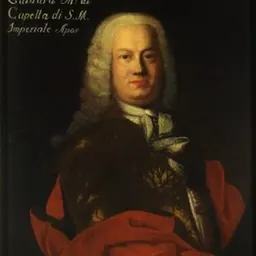

Related people
Same field, nearest in time

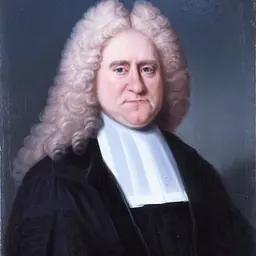
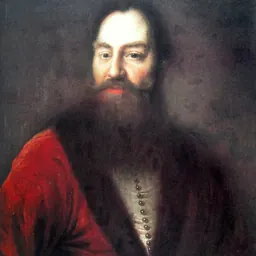

Contemporaries
People whose lives overlapped Antonio Salvi's


Frequently asked questions
Who was Antonio Salvi?
Italian poet (1664-1724)
When was Antonio Salvi born?
Antonio Salvi was born on 17 January 1664 in Lucignano.
When did Antonio Salvi die?
Antonio Salvi died on 21 May 1724 in Florence.
What was Antonio Salvi's occupation?
Antonio Salvi was a poet, librettist, writer and physician.
Sources & further reading
Cite this page
APA: Biography.guide. (2026). Antonio Salvi. https://biography.guide/antonio-salvi/
MLA: "Antonio Salvi." Biography.guide, https://biography.guide/antonio-salvi/.
Chicago: "Antonio Salvi." Biography.guide. https://biography.guide/antonio-salvi/.
Data last updated: 2026-09-20 · Spot an error? Report a correction.
Page generated 2026-09-27 05:11 UTC