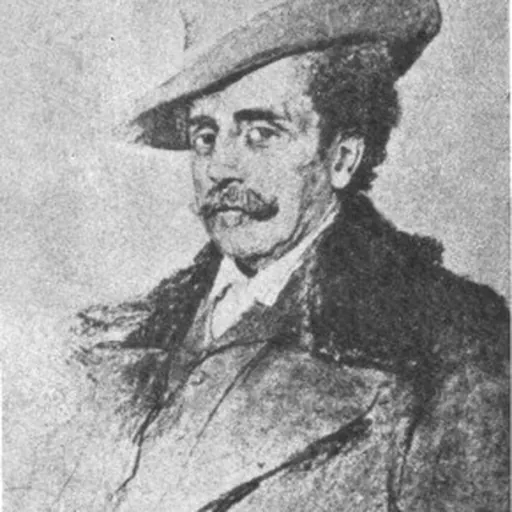
About Antonio Labriola
Lived 1843 – 1904 (aged 60). Antonio Labriola was an Italian philosopher, university teacher, journalist and writer.
Antonio Labriola (; 2 July 1843 – 12 February 1904) was an Italian Marxist theoretician and philosopher. Although an academic philosopher and never an active member of any Marxist political party, his thought exerted influence on many political theorists in Italy during the early 20th century, including the founder of the Italian Liberal Party, Benedetto Croce, as well as the leaders of the Italian Communist Party, Antonio Gramsci and Amadeo Bordiga. He also influenced the Russian revolutionary and Soviet politician Leon Trotsky.
Biography Labriola was born in Cassino (then in the Papal States), the son of a schoolteacher. In 1861, he entered the University of Naples. Upon graduating, he remained in Naples and became a schoolteacher. During this period, he pursued an interest in philosophy, history and ethnography. The early 1870s saw Labriola take up journalism, and his writings from this time expressed liberal and anticlerical views.
In 1874, Labriola was appointed as a professor in Rome, where he would spend the rest of his life teaching, writing, and debating. Although he had been critical of liberalism since 1873, his move towards Marxism was gradual, and he did not explicitly express a socialist viewpoint until 1889. He died in Rome on 2 February 1904.
Philosophical work Heavily influenced by Georg Wilhelm Friedrich Hegel and Johann Friedrich Herbart, Labriola's approach to Marxist theory was more open-ended than that of theorists such as Karl Kautsky. He saw Marxism not as a final, self-sufficient schematisation of history, but rather as a collection of pointers to the understanding of human affairs.
These pointers needed to be somewhat imprecise if Marxism was to take into account the complicated social processes and variety of forces at work in history. Marxist theory was to be understood as a theory critical of ideology, in that it sees no truths as everlasting, and was ready to drop its own ideas if experience should so dictate. His description of Marxism as a "philosophy of praxis" would appear again in Gramsci's Prison Notebooks.
Don’t just read it —
keep it.
Full-length biographies made to live with: read them, listen on the way to work, watch them tonight.
- E-book
- Audio
- Video
Instant download · yours to keep · every purchase keeps this site free
Important facts
People in Antonio Labriola's life
Named in this biography and alive at the same time




Related people
Same field, nearest in time

Contemporaries
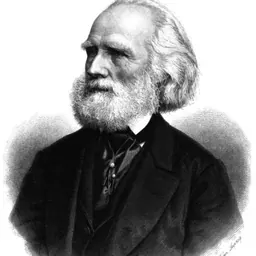
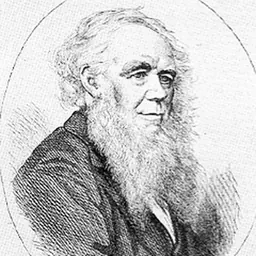
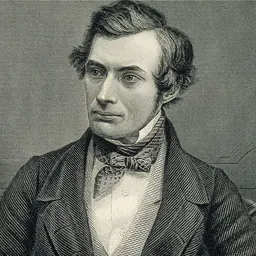
People whose lives overlapped Antonio Labriola's

Frequently asked questions
Who was Antonio Labriola?
Italian philosopher (1843-1904)
When was Antonio Labriola born?
Antonio Labriola was born on 2 July 1843 in Cassino.
When did Antonio Labriola die?
Antonio Labriola died on 12 February 1904 in Rome.
What was Antonio Labriola's occupation?
Antonio Labriola was a philosopher, university teacher, journalist and writer.
What nationality was Antonio Labriola?
Antonio Labriola was Italian.
Sources & further reading
Cite this page
APA: Biography.guide. (2026). Antonio Labriola. https://biography.guide/antonio-labriola/
MLA: "Antonio Labriola." Biography.guide, https://biography.guide/antonio-labriola/.
Chicago: "Antonio Labriola." Biography.guide. https://biography.guide/antonio-labriola/.
Data last updated: 2026-09-21 · Spot an error? Report a correction.
Portrait: Wikimedia Commons · author & licence
Page generated 2026-09-27 04:59 UTC