
About Antonio Crutta
Lived 1727 – 1814 (aged 86–87). Antonio Crutta was a diplomat and translator.
Antonio Crutta (; ; 1727 – June 11, 1812) was a diplomat and politician in the Polish court for around 30 years in the reign of Stanisław August Poniatowski. For his services, to the Polish state he was ennobled in 1792.
Life and family His father was Albanian and descended from the Albanian Kruta (Kryethi) tribe. His mother was Italian. The family has established themselves in Pera since 1693. They were known to serve Russian, French, English, Polish and Venetian embassies as interpreters. Another member of the family titled "Doctor Crutta" or "Signor Crutta" is mentioned as a dragoman and chancellor in service of the British embassy between 1745 and 1764 in the European colony of Larnaca.
Crutta entered early in the service of Poland on January 1, 1748, as the chancellor of the Republic of Venice in Larnaca in Cyprus. He worked in Cyprus until 1765 when he arrived through the British ambassador to Constantinople to transmit his offers to the King of Poland. Descorches and Crutta worked to withdraw the Ottoman Empire from war in order to maintain the peace with Poland, but due to the insurrection, their work was useless. He asked the Royalty to pay off his old debts which he had acquired in Cyprus and Istanbul and the Polish king paid 23 ducats a month, which Crutta deemed insufficient for his services and complained. He spoke 9 languages. His personal name in archival documents has been spelled as Antonio, Antoine and Antoni. His brother Pierre, and his son Jean, followed in the same tracks, and worked in Istanbul, trying to persuade the French to help the Poles form an alliance. He received an English passport by the English ambassador in Warsaw and travelled to Constantinople where he met French diplomat Marie Louis Descorches. However Tadeusz Kościuszko, who had sent Pierre on the mission, was overthrown and Pierre remained in Istanbul until he died in 1797. Crutta had also served in the British embassy under John Murray, as one of its many "Levantine" (Catholic and Italian-speaking) translators.
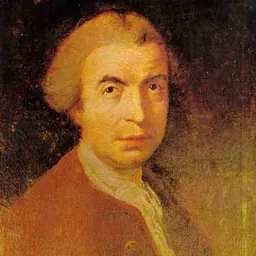
Situated in the northwestern section of the parish cemetery in Lewiczyn, an obelisk carved from sandstone stands, crowned with an urn partially covered by a spire and adorned with a vine garland. Above the epitaph, which details the names of Antoni Krutta (d. 1812) and his daughter Eliza, who was married to General Wojciech Piotr Bedliński, are two intricately carved coats of arms. His brother, Joseph Crutta, was also a dragoman for the Russian embassy in Istanbul. He spent several years in prison in the Château des Sept Tours together with Russian ambassador Vasily Repnin. There exists a well-known portrait of Antoine Crutta, painted by Canaletto, representing the election of King Stanisław August Poniatowski in 1764. Joseph Crutta wanted to stay in Istanbul and work as the Russian consul as the Russian climate could prove fatal. Joseph Crutta apparently died in 1780 from drug abuse and so did his brother Alexander Crutta. He served as interpreter and translator of King Stanisław August Poniatowski during the Russo-Turkish war of 1787-92 in Poland. His role in the negotiations was to "melt the suspicions of the Turks without arousing the suspicions of the Russians". In 1777, he accompanied MP Numanbey, representing the Ottoman Sultan, and translating Treaty Documents. In 1792, for his services in helping maintain the peace between Poland and the Ottomans that he was ennobled by the Rzeczpospolita. He spent the last years of his life in Lewiczyn, in the estates of his son-in-law, Wojciech Piotr Bedliński. He died there on June 11, 1812, and is buried in Lewiczyn, near his daughter Eliza and her husband Wojciech Bedliński.
Depiction in painting L'Élection de Stanislas Auguste (1778). "Election of Stanislas Augustus" by Italian painter Bernardo Bellotto first in 1776, which was given to court marshal Francizsek Rzewuski. The painting currently in the Poznan National Museum. A second one was painted in 1778 with more details. The painting depicts the election of 1764, September 7, outside of Warsaw, now a district of the capital. According to museum exhibition curator Stephane Loire, curator from the Painting Department of the Louvre Museum Andrzej Rottermund and curator at the Royal Château in Varsovie Hanna Malachowicz, Antonio Crutta is depicted at the far right, standing in front of Bellotto with his three daughters. Antonio is depicted in Bernardo Bellotto's painting "Election of Stanislas Augustus" from 1776 and 1778. Mieczyslaw Wallis describes him as follows: Standing in front of the tent, a stout grand man, deed in a fur cap and blue coat, in floral zupper and red greyhounds with a dagger stuck behind his belt, looking through the magnifying glass of the election, an expert in Eastern languages and head office of the Crown Chancellery, Antoni Łukasz Crutta (1725-1812), Albanian, or more specifically Italian, Albanian, probably a Venetian citizen who arrived in 1765 Warsaw, in 1775 he obtained an indigenate, and on February 26, 1778 he received the title of consistory officer in foreign countries.
Don’t just read it —
keep it.
Full-length biographies made to live with: read them, listen on the way to work, watch them tonight.
- E-book
- Audio
- Video
Instant download · yours to keep · every purchase keeps this site free
Important facts
People in Antonio Crutta's life
Named in this biography and alive at the same time



Related people
Same field, nearest in time

Contemporaries
People whose lives overlapped Antonio Crutta's




Frequently asked questions
Who was Antonio Crutta?
Albanian diplomat
When was Antonio Crutta born?
Antonio Crutta was born in 1727 in Venice.
When did Antonio Crutta die?
Antonio Crutta died in 1814 in Lewiczyn.
What was Antonio Crutta's occupation?
Antonio Crutta was a diplomat and translator.
Sources & further reading
Cite this page
APA: Biography.guide. (2026). Antonio Crutta. https://biography.guide/antonio-crutta/
MLA: "Antonio Crutta." Biography.guide, https://biography.guide/antonio-crutta/.
Chicago: "Antonio Crutta." Biography.guide. https://biography.guide/antonio-crutta/.
Data last updated: 2026-09-22 · Spot an error? Report a correction.
Page generated 2026-09-27 05:21 UTC