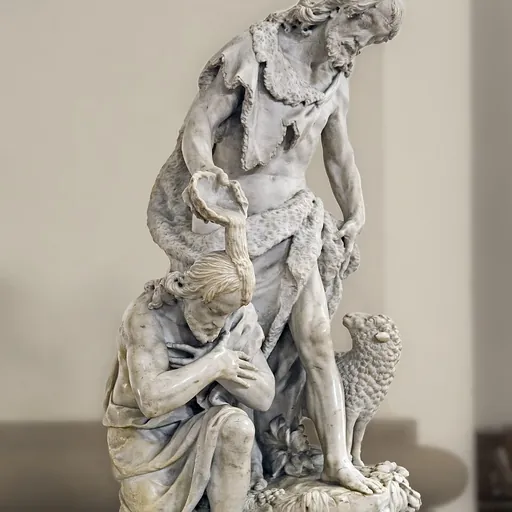
About Antonio Bonazza
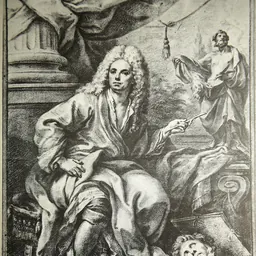
Lived 1698 – 1762 (aged 63–64). Antonio Bonazza was an Italian sculptor.
Antonio Bonazza (23 December 1698 – 12 January 1763) was an Italian sculptor of the Rococo. He is considered one the greatest and most original Venetian sculptors of the 18th century; his activity was widespread, and his art distinguished by its vivid and picturesque naturalism.
Biography
Early career Antonio was the son of Giovanni Bonazza, a prominent sculptor active in Padua (1654–1736), and member of a large family of sculptors. He may have been influenced by Orazio Marinali of Vicenza. He is first recorded working in collaboration with his father and brothers Tommaso and Francesco on the marble reliefs depicting the Adoration of the Shepherds (1730) and the Adoration of the Magi (1732) in the Cappella del Rosario of Santi Giovanni e Paolo, Venice, which are characterized by tender naturalistic detail. Later he produced the eight slightly rigid stucco Virtues (1741) in the Madonna Addolorata al Torresino, Padua, and the fourteen marble reliefs of the Stations of the Cross in the parish church at Cornegliana (Padua).
Mature works In 1742 he created his masterpiece, a series of garden sculptures executed for the Villa Widmann at Bagnoli di Sopra. Here, alongside mythological figures, are a soldier, an oriental, a Moor, a huntsman, a peasant, a gentleman and gentlewoman, and a quarrelsome old man and woman, engaged in a witty comedy reminiscent of Carlo Goldoni’s contemporary plays; indeed Goldoni was a guest at the villa.
Bonazza was also a gifted portraitist, as demonstrated in the portraits in pietra tenera of Pope Benedict XIV and Cardinal Rezzonico (later Pope Clement XIII) (both 1746; Padua Cathedral) and the vivid portrait in marble of the doctor Alessandro Knips Macoppe (Universityo of Padua).
Antonio’s mature religious works tend to be more conventional. His many saints and angels include the marble figures of Saints Peter and Paul (1746) for the high altar of the parish church at Bagnoli di Sopra, the angels (1750s) for the church of San Tommaso dei Filippini, Padua, distinguished by their wonderfully rounded luminous surfaces, and the angels executed in a broader, freer style for the parish church at Valnogaredo. His works in low relief include the slightly heavy, yet atmospheric reliefs (1753–5) for the altar of the Sacrament in Montagnana Cathedral, showing the Sacrifice of Isaac, Elijah and the Angel and the Last Supper.
In 1757 he completed a further series of garden sculptures, of Flora, Pomona, Zephyrus and Vertumnus, for the Peterhof Garden at Saint Petersburg. Antonio is best known for his sculpture of genre themes, carved in local stone. His genre subjects may have influenced Franz Anton Bustelli’s porcelain figures produced at Nymphenburg porcelain factory.
Gallery
Don’t just read it —
keep it.
Full-length biographies made to live with: read them, listen on the way to work, watch them tonight.
- E-book
- Audio
- Video
Instant download · yours to keep · every purchase keeps this site free
Important facts
People in Antonio Bonazza's life
Named in this biography and alive at the same time
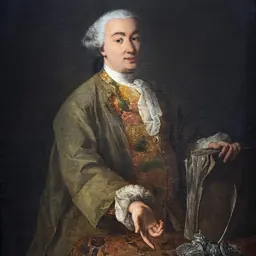


Related people
Same field, nearest in time


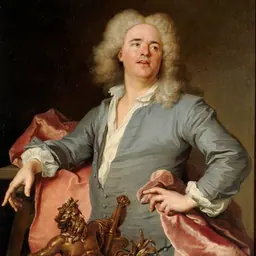
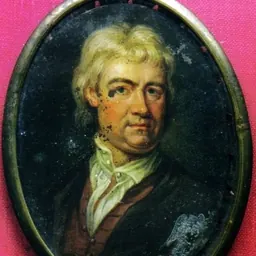

Contemporaries
People whose lives overlapped Antonio Bonazza's




Frequently asked questions
Who was Antonio Bonazza?
Italian artist (1698-1762)
When was Antonio Bonazza born?
Antonio Bonazza was born on 23 December 1698 in Padua.
When did Antonio Bonazza die?
Antonio Bonazza died in 1762.
What was Antonio Bonazza's occupation?
Antonio Bonazza was a sculptor.
What nationality was Antonio Bonazza?
Antonio Bonazza was Italian.
Sources & further reading
Cite this page
APA: Biography.guide. (2026). Antonio Bonazza. https://biography.guide/antonio-bonazza/
MLA: "Antonio Bonazza." Biography.guide, https://biography.guide/antonio-bonazza/.
Chicago: "Antonio Bonazza." Biography.guide. https://biography.guide/antonio-bonazza/.
Data last updated: 2026-09-21 · Spot an error? Report a correction.
Portrait: Wikimedia Commons · author & licence
Page generated 2026-09-27 05:01 UTC