About Antonio Bellucci
Lived 1654 – 1726 (aged 72). Antonio Bellucci was an Italian painter, decorator and printmaker.
Antonio Bellucci (19 February 1654 – 29 August 1726) was an Italian soldier who became a painter of the Rococo period and is best known for his work in England, Germany, and Austria. He was one of the many Venetian-trained artists of his time, including Ricci, Tiepolo, Amigoni, and others, who sought commissions north of Italy, providing patrons with the then-popular Italianate grand-manner frescoes for private palaces.
Biography Born and died in Pieve di Soligo. He initially trained with Domenico Difnico in Sebenico (Šibenik) in Venetian Dalmatia (now part of Croatia). By 1675, he was working in Venice, painting St Lorenzo Giustiniani praying for the city’s deliverance from the plague of 1447 (c. 1691) for the church of San Pietro di Castello. He painted a Nativity for the church of the Ascension in Venice. Several of the landscapes of Antonio Tempesta are enriched with figures by Bellucci.
Among his pupils were Antonio Balestra and perhaps Jacopo Amigoni.
In 1692, he completed four altarpieces depicting various saints for the church of Klosterneuburg. From 1695 to 1700 and from 1702 to c. 1704, he lived in Vienna. He painted the Triumph of Hercules and other allegorical ceilings at the Palais Liechtenstein for Charles VI.
Career From 1705 to 1716, he travelled to Düsseldorf to work for Johann Wilhelm, Elector of the Palatinate, a member of the Wittelsbach family; he worked there almost continuously until his patron's death in 1716. For Schloss Bensberg, he painted the Marriage of John William with Anna Maria Luisa de’ Medici and Elector Palatine John William Handing the Baton of Command to his Son.
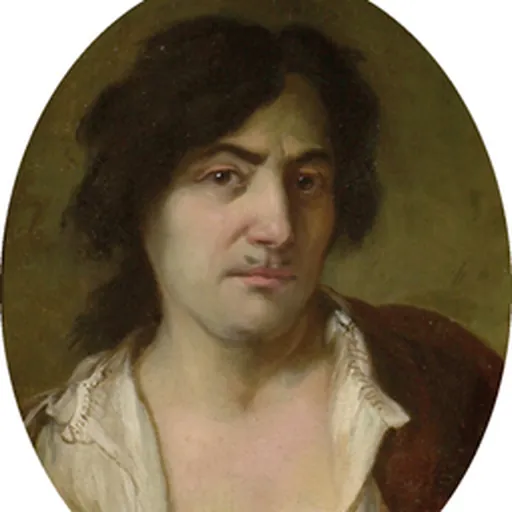
From 1716 to 1722, Bellucci worked in England, where he fulfilled several commissions for James Brydges, 1st Duke of Chandos, including ceilings at Cannons, the duke's country seat near London; at the neighbouring St Lawrence, Whitchurch the paintings of the Nativity and the Descent from the Cross, which are seen on either side of the altar, and the Transfiguration, which is above the Duke's pew, are attributed to him. There is an almost Romantic self-portrait of Belluci, shirt open, at the Ashmolean Museum, Oxford. The reproduction here does not legibly show that on his breast is written the word 'pictor' (painter), perhaps indicating that to be an artist was his heart's desire. He returned to his native country late in life and died in Soligo.
Works The King's Sick Son (c.1700) Gemäldegalerie Alte Meister (Kassel)
Don’t just read it —
keep it.
Full-length biographies made to live with: read them, listen on the way to work, watch them tonight.
- E-book
- Audio
- Video
Instant download · yours to keep · every purchase keeps this site free
Important facts
more
Antonio Baluzzi, Anton Bellucci, Belluci, Bellucci, Belluzzi, Belucci, Antonius Bellucci, Bellucha, A. Bellucci, Belloutsi, Beluzi, BeluzziPeople in Antonio Bellucci's life
Named in this biography and alive at the same time

Related people
Same field, nearest in time
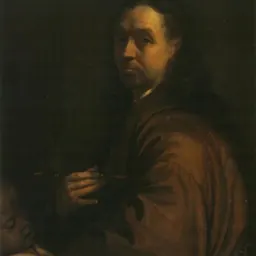

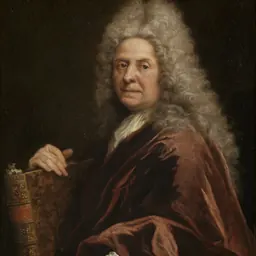

Contemporaries
People whose lives overlapped Antonio Bellucci's




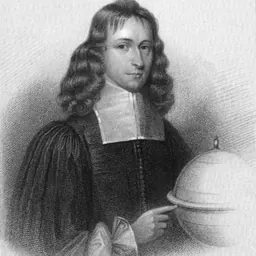
Frequently asked questions
Who was Antonio Bellucci?
Venetian painter (1654-1726)
When was Antonio Bellucci born?
Antonio Bellucci was born on 19 February 1654 in Pieve di Soligo.
When did Antonio Bellucci die?
Antonio Bellucci died on 29 August 1726 in Pieve di Soligo.
What was Antonio Bellucci's occupation?
Antonio Bellucci was a painter, decorator and printmaker.
What nationality was Antonio Bellucci?
Antonio Bellucci was Italian.
Sources & further reading
Cite this page
APA: Biography.guide. (2026). Antonio Bellucci. https://biography.guide/antonio-bellucci/
MLA: "Antonio Bellucci." Biography.guide, https://biography.guide/antonio-bellucci/.
Chicago: "Antonio Bellucci." Biography.guide. https://biography.guide/antonio-bellucci/.
Data last updated: 2026-09-22 · Spot an error? Report a correction.
Portrait: Wikimedia Commons · author & licence
Page generated 2026-09-27 05:02 UTC