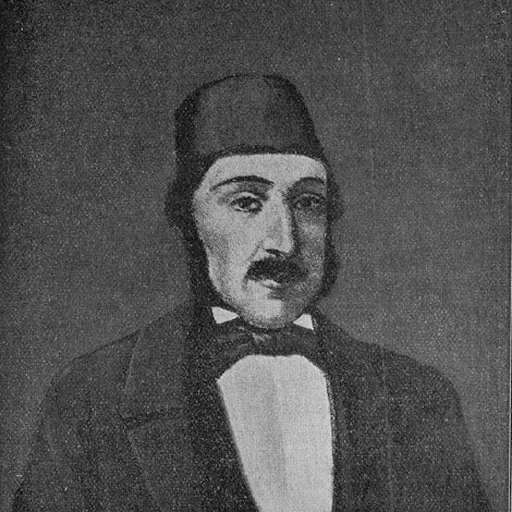
About Anton Pann
Lived 1796 – 1854 (aged 57–58). Anton Pann was a Turkish and Romanian composer, musicologist, poet, publisher, translator and teacher.
Anton Pann (; born Antonie Pantoleon-Petroveanu , and also mentioned as Anton Pantoleon or Petrovici; 1790s—2 November 1854) was an Ottoman-born Wallachian composer, musicologist, and Romanian-language poet, also noted for his activities as a printer, translator, and schoolteacher. Pann was an influential folklorist and collector of proverbs, as well as a lexicographer and textbook author.
Biography
Early years Pann was born sometime between 1794 and 1798, in Sliven, Rumelia (in what is today Bulgaria). According to some accounts, his mother, Thomaida, was an ethnic Greek, while his father, Pantoleon Petrov, was Bulgarian; it is known that he worked as a coppersmith bucket-maker. There is a commonly held view by Romani community activists, who consider Pann among the most prominent Romani artists. This view is also accepted by some Romanian authors. Various other interpretations state that Pantoleon Petrov, who died during Anton Pann's childhood, The writer, who was the youngest of Petrov and Thomaida's three sons, eventually adopted the surname Pann, as a colloquial contraction of his father's given name. and allowed to attend the religious music school founded by Petros Ephesios (d. 1840). This was matched by his interest in other musical traditions: in his churchly practice, he endorsed the tradition of Byzantine hymns and removed modulations of Levantine inspiration, while he was among the first of his generation to use modern notation and Italian markings for tempo.
Together with Ion Creangă and Petre Ispirescu, Pann was among the first major interpreters of Romanian folklore in 19th-century literature.
Pann's poetic language often relies on elaborate successions of images, metaphors, or maxims. According to Călinescu, "the fundamental method" used by Pann is "the almost monstrous accumulation of aphorism, around an initial idea and through a very wide [process of] association", amounting to "a burlesque effect". but Pann's direct implication in the creative process was allegedly not confirmed by sources. During the interwar period, the works of Anton Pann were reflected and complimented in the modernist poetic art of Ion Barbu. Barbu's uses Pann's main character to tragic effect, depicting, in willing contrast to the proverbial setting, Nastratin's violent self-sacrifice.
In 1945, Lucian Blaga authored a three-act play named Anton Pann, centered on the poet's Șcheii Brașovului period. A museum of the life and activity of Anton Pann exist in Râmnicu Vâlcea, and, since 1990, a public theater in the same city bears his name.
Works
Literary works ("Musical Lyrics") ("Various Poems or Worldly Chants") ("The Correction Instrument for Drunks") ("Hristoitia or the School of Morals") ("The New Erotokritus") ("March of the Spring") ("A Memoir of the Great Fire") ("Collection of Proverbs or the Story of the Word") ("Testament") ("Archir the Wise and His Nephew Anadam") ("The Hospital of Love or the Singer of Longing") ("A Countryside Gathering or Father Albu's Trip") ("Lyrics or Songs to the Stars") ("The Poet of Drunkenness. Comprising the Names of Drunks and All Deeds Caused by Drunkenness") ("The Triumph of Drunkenness or the Testament Left by a Penitent Drunk to His Son") ("The Mischiefs of Nastratin Hogea") ("Versified Stories and Anecdotes") ("[Sayings] Gathered from Folk and Returned to Folk")
Textbooks ("The Theoretical and Practical Basis of Church music or the Melodic Grammar") ("Dialog in Three Languages: Russian, Romanian and Turkish") ("Concise Musical Grammar, Theoretical and Practical")
Don’t just read it —
keep it.
Full-length biographies made to live with: read them, listen on the way to work, watch them tonight.
- E-book
- Audio
- Video
Instant download · yours to keep · every purchase keeps this site free
Important facts
People in Anton Pann's life
Named in this biography and alive at the same time
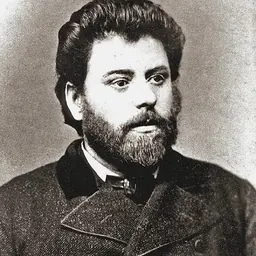

Related people
Same field, nearest in time

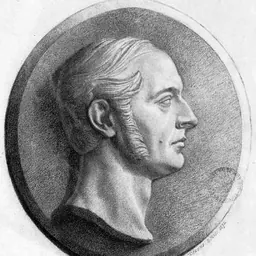
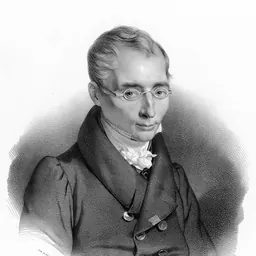


Contemporaries
People whose lives overlapped Anton Pann's





Frequently asked questions
Who was Anton Pann?
Wallachian composer & musicologist (1796–1854)
When was Anton Pann born?
Anton Pann was born in 1796 in Sliven.
When did Anton Pann die?
Anton Pann died on 3 November 1854 in Bucharest.
What was Anton Pann's occupation?
Anton Pann was a composer, musicologist, poet, publisher, translator and teacher.
What nationality was Anton Pann?
Anton Pann was Turkish and Romanian.
Sources & further reading
Cite this page
APA: Biography.guide. (2026). Anton Pann. https://biography.guide/anton-pann/
MLA: "Anton Pann." Biography.guide, https://biography.guide/anton-pann/.
Chicago: "Anton Pann." Biography.guide. https://biography.guide/anton-pann/.
Data last updated: 2026-09-23 · Spot an error? Report a correction.
Portrait: Wikimedia Commons · author & licence
Page generated 2026-09-27 05:05 UTC