
Antoine Quentin Fouquier-Tinville
French lawyer during the French Revolution and Reign of Terror
About Antoine Quentin Fouquier-Tinville
Lived 1746 – 1795 (aged 48). Antoine Quentin Fouquier-Tinville was a French magistrate, lawyer, politician and civil servant.
Antoine Quentin Fouquier de Tinville (, 10 June 17467 May 1795), also called Fouquier-Tinville and nicknamed posthumously the Provider of the Guillotine was a French lawyer and accusateur public of the Revolutionary Tribunal during the French Revolution and Reign of Terror.
From March 1793 he served as the "public prosecutor" in Paris, demanding the execution of numerous accused individuals, including famous ones, like Marie-Antoinette, Danton or Robespierre and overseeing the sentencing of over two thousand of them to the guillotine. In April 1794, it was decreed to centralise the investigation of court records and to bring all the political suspects in France to the Revolutionary Tribunal to Paris. Following the events of the 10th Thermidor, he was arrested early August.
Biography
Origins The Fouquier de Tinville family, now known as Fouquier d'Hérouel, descends from an old bourgeois family from the vicinity of Saint-Quentin, in the present-day department of Aisne. In the 18th century, Éloy Fouquier de Tinville, lord of Tinville, Hérouel, Auroir, and Foreste, was a farmer and a royal officer in Péronne.
Early career
Antoine Fouquier de Tinville was born in Hérouel on 10 June 1746, and was baptized two days later (which often leads to confusion regarding his birthdate). He was the second of five siblings. His father, Éloy Fouquier de Tinville, In 1775 Fouquier-Tinville married Geneviève-Dorothée Saugnier, his cousin, with whom he would have five children (two twins). He was widowed seven years later. Four months after his wife's death, he remarried Henriette Jeanne Gérard d'Arcourt, with whom he would spend the rest of his life. They had three children together.
In early 1791 freedom of defence became the standard; any citizen was allowed to defend another. From the beginning, the authorities were concerned about this experiment's future. Derasse suggests it was a "collective suicide" by the lawyers in the Assembly. In criminal cases, the expansion of the right gave priority to the spoken word.
Little is known of the part he played at the outbreak of the Revolution. According to himself, he was part of the National Guard at its formation. He was active in the political committee of his section in 1789. In September 1791 former "advocates" lost their title, their distinctive form of dress, their status, and their profession orders and adapted their practices to the new political and legal situation.
Public accuser
When the Revolutionary Tribunal of Paris was created by the National Convention on 10 March 1793, and Fauré refused, Fouquier was appointed on 15 March as public accuser, an office that he filled from the end of the month until 1 August 1794. The documents were sent by the Committee of General Security to the public accuser, who examined them, summarized the facts, grouped the grievances, quoted the incriminating words or writings, and mentioned the denials of the accused. In a word, he drew up his indictment. Fouquier was known for his radicalism. On 29 July he accused Jacques-Bernard-Marie Montané, president of the tribunal, of being insufficiently radical. On 17 September the Law of Suspects was introduced. On 26 September 1793 Martial Herman was appointed as president and René-François Dumas as vice president; Coffinhal and Joachim Vilate were each appointed as one of the judges and jurors, Adrien Nicolas Gobeau as substitute of the public accuser
Fouquier lived at Rue Saint-Honoré but moved to Place Dauphine and then to :fr:Quai de l'Horloge both on Île de la Cité. An apartment between the towers of the Conciergerie was the home of Fouquier-Tinville. He lived there with his wife and twins while conducting the trials in the courtroom. His activity in the Conciergerie and the Palace of Justice earned him the reputation of one of the most sinister figures of the Revolution. His office as public accuser arguably reflected a need to display the appearance of legality during what was essentially political command, more than a need to establish actual guilt.
On 29 October 1793, Fouquier-Tinville sent a letter to the National Convention, which was later used during his trial. In the letter, he wrote: He did not align with any specific political movement, keeping his distance from factions such as the Jacobins, and he did not maintain any particular relationships with leaders from the Montagnards, such as Maximilien Robespierre, as reported by Antoine Boulant.
On 21 May 1794 the government decided that the Terror would be centralised, with almost all the tribunals in the provinces closed and all the trials held in Paris.
On 10 June 1794, Georges Couthon introduced the Law of 22 Prairial, which radically simplified proceedings before the Revolutionary Tribunal. Defendants were deprived of legal counsel, witnesses could be dispensed with, and juries were instructed to decide cases on the basis of their moral conviction rather than formal rules of evidence. According to one deputy, if the law were adopted, "all we have to do is blow our brains out". Fouquier-Tinville expressed concern about the practical consequences of the legislation and wrote to Robespierre, but received no reply.
The law marked the beginning of the Grande Terreur. The Tribunal increasingly functioned as an instrument of repression, with acquittal and death becoming the only possible verdicts. The courtroom was enlarged to accommodate a growing number of defendants, and plans were even considered to place a guillotine inside the Palais de Justice, although executions continued elsewhere in Paris.
At the beginning of Thermidor Year II, Parisian prisons held more than 8,000 suspects. The number of death sentences rose sharply, and more than 2,400 people were condemned by the Revolutionary Tribunal during the final months of the Terror. Within three days, 156 prisoners were guillotined, including the members of the Parlement of Toulouse. The scale of the executions created serious problems for the city's cemeteries, leading to the excavation of new mass graves at Picpus Cemetery in July 1794.
Among the last groups prosecuted by Fouquier-Tinville were eight religious women, including seven former Carmelite nuns living in Paris. The indictment accused them of maintaining a centre of religious fanaticism and sheltering refractory priests and counter-revolutionaries. Fouquier-Tinville portrayed them as enemies of the Republic who sought to undermine the principles of liberty and equality.
Downfall
On 26–27 June, Robespierre demanded that Fouquier-Tinville, who had become involved in the trial of Catherine Théot, be replaced because he was considered too closely associated with the Committee of General Security.
During the events of 9 Thermidor, Fouquier-Tinville remained at his post. When the presiding judge Dumas was arrested during a session of the Revolutionary Tribunal by decree of the Convention, Fouquier-Tinville insisted that "justice take its course" and ordered the proceedings to continue. That evening, while dining with Coffinhal, he learned of the arrest of Robespierre, Couthon, Saint-Just and their associates. Invited to join the insurgents at the Hôtel de Ville, he refused, declaring that he recognised only the authority of the Convention. During the night he reported to the Committee of Public Safety and, after learning of the defeat of the Commune, congratulated the Convention on its victory.
On the morning of 10 Thermidor (28 July 1794), Fouquier-Tinville appeared before the Convention to assure it of the Tribunal's loyalty. He pointed out a legal difficulty concerning the verification of the identities of the prisoners, since thirteen of those declared hors la loi were members of the insurrectionary Commune. After the Convention resolved the issue, Fouquier-Tinville supervised the formal identification of Robespierre and the other outlawed insurgents. Since they had already been declared hors la loi, no trial was required, and they were sent directly to the guillotine under the provisions of the law of 22 Prairial.
Although Fouquier-Tinville was initially retained as public prosecutor by the new government, as confirmed by Barère before the Convention, his position soon became untenable. On 14 Thermidor, Fréron denounced him as an accomplice of the Terror and demanded his arrest . Imprisoned on 1 August 1794, he argued that he had merely executed the laws and decrees enacted by the Convention and the Committee of Public Safety. On 21 Thermidor, Year II (8 August 1794), he was allowed to present his defence before the National Convention. His arguments failed to persuade the deputies, who decided that he, together with several judges and jurors of the Revolutionary Tribunal, should stand trial for his role during the Terror.
Trial
Tallien, one of the leaders of the Thermidorians and a central deputy in the fall of Robespierre, opposed subjecting him to thorough questioning. This is generally interpreted as a maneuver aimed at preventing Fouquier-Tinville from providing lists of deputies who may have been complicit in his judicial work, including Tallien himself. These are his final words, which he wrote before his execution: I have nothing to reproach myself with; I have always complied with the laws, I have never been a creature of Robespierre or Saint-Just; on the contrary, I have been on the verge of being arrested four times. I die for my country and without reproach. I am satisfied: later, my innocence will be recognized.
Analysis Long considered the primary instigator of the judicial Terror, his role is now nuanced, with the most recent research including him in a broader process of judicial Terror with other actors. However, in some cases, he is said to have shown a desire for independence from political power, especially by granting significant rights to certain defendants. He was quoted in an article and in Illusions perdues of Honoré de Balzac. He is also to be found in Les Mémoires d'outre-tombe of Chateaubriand.
Cinema: Fouquier was played by Roger Planchon in Andrzej Wajda's film Danton (1983). He appears as a character in the opera Andrea Chenier by Umberto Giordano.
Video game : Tinville appears in the game We. The Revolution where he aids the player as a prosecutor for the Revolutionary Tribunal during the Reign of Terror.
Notable victims Charlotte Corday Adam Philippe, Comte de Custine and his son, Marie Antoinette Girondist Jacques Pierre Brissot and 21 Girondins Madame Roland Olympe de Gouges Antoine Lavoisier Mme du Barry Antoine Barnave Armand Louis de Gontaut, duc de Lauzun, later duc de Biron Jacques Hébert as well as the leaders of the "armées révolutionnaires" were denounced by the Revolutionary Tribunal as accomplices of Hébert. Dantonists. George Danton Marie Jean Hérault de Séchelles Pierre Philippeaux Camille and Lucile Desmoulins Malesherbes, a lawyer who had defended the king and the deputés Isaac René Guy le Chapelier and Jacques Guillaume Thouret, four times elected president of the Constituent Assembly were taken to the scaffold. Cécile Renault Élisabeth of France Alexandre de Beauharnais André Chénier Martyrs of Compiègne Princess of Monaco Maximilien Robespierre and twenty-one of his associates were executed on 10 Thermidor Year II (28 July 1794). Further executions of members of the Paris Commune followed over the next two days. Soon afterwards, the Revolutionary Tribunal was suspended and replaced by a temporary commission. Although Fouquier-Tinville had initially remained in office, he was arrested on 14 Thermidor and became one of the principal targets of the Thermidorian reaction.
Don’t just read it —
keep it.
Full-length biographies made to live with: read them, listen on the way to work, watch them tonight.
- E-book
- Audio
- Video
Instant download · yours to keep · every purchase keeps this site free
Important facts
People in Antoine Quentin Fouquier-Tinville's life
Named in this biography and alive at the same time


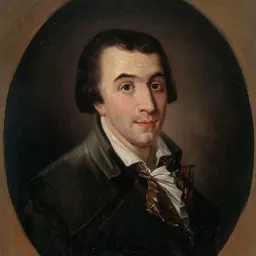
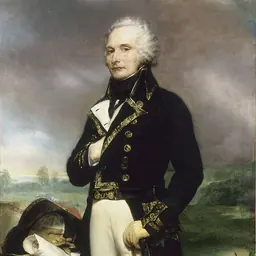
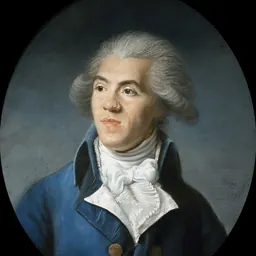

Related people
Same field, nearest in time

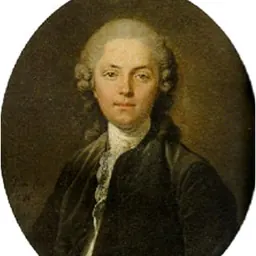
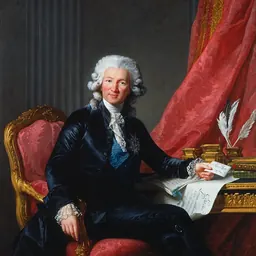
Contemporaries
People whose lives overlapped Antoine Quentin Fouquier-Tinville's
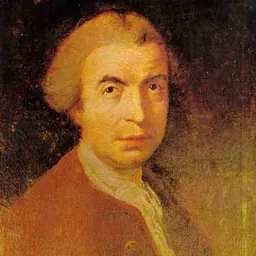





Frequently asked questions
Who was Antoine Quentin Fouquier-Tinville?
French lawyer during the French Revolution and Reign of Terror (1746-1795)
When was Antoine Quentin Fouquier-Tinville born?
Antoine Quentin Fouquier-Tinville was born on 10 June 1746 in Foreste.
When did Antoine Quentin Fouquier-Tinville die?
Antoine Quentin Fouquier-Tinville died on 7 May 1795 in Paris.
What was Antoine Quentin Fouquier-Tinville's occupation?
Antoine Quentin Fouquier-Tinville was a magistrate, lawyer, politician and civil servant.
What nationality was Antoine Quentin Fouquier-Tinville?
Antoine Quentin Fouquier-Tinville was French.
Sources & further reading
· Wikipedia: Antoine Quentin Fouquier-Tinville
· DBpedia: Antoine Quentin Fouquier-Tinville
Cite this page
APA: Biography.guide. (2026). Antoine Quentin Fouquier-Tinville. https://biography.guide/antoine-quentin-fouquier-tinville/
MLA: "Antoine Quentin Fouquier-Tinville." Biography.guide, https://biography.guide/antoine-quentin-fouquier-tinville/.
Chicago: "Antoine Quentin Fouquier-Tinville." Biography.guide. https://biography.guide/antoine-quentin-fouquier-tinville/.
Data last updated: 2026-09-22 · Spot an error? Report a correction.
Page generated 2026-09-27 05:18 UTC