
About Anne Killigrew
Lived 1660 – 1685 (aged 24–25). Anne Killigrew was an English and British painter, poet, writer and artist.
Anne Killigrew (1660–1685) was an English poet and painter, described by contemporaries as "A Grace for beauty, and a Muse for wit." Born in London, she and her family were active in literary and court circles. Killigrew's poems were circulated in manuscript and collected and published posthumously in 1686 after she died from smallpox at age 25. They have been reprinted several times by modern scholars, most recently and thoroughly by Margaret J. M. Ezell.
Early life and inspiration Anne Killigrew was born in early 1660, before the Restoration, at St Martin's Lane in London. Her mother Judith Killigrew was a talented musician who played the lute and read Shakespeare. Her grandfather, Robert Killigrew, was knighted by King James I in 1603, and appointed Vice-Chamberlain to Queen Henrietta Maria in 1630. Her father Henry Killigrew was a chaplain to Charles I, and chaplain and almoner to James, Duke of York (the future James II).
One of her aunts, also named Anne Killigrew (1607-1641), was appointed Lady-in-waiting to Queen Henrietta Maria beginning in 1631 and Dresser to the Queen beginning in April 1637. Themes and details of her poetry and painting indicate that she was well versed in the Bible, Roman and Greek mythology, and philosophy.
It was not unusual for poets, especially for women, not to see their work published in their lifetime.
The Poet and the Painter Anne Killigrew excelled in multiple media, which was noted by contemporary poet, mentor, and family friend, John Dryden in his dedicatory ode to her. He addresses her as "the Accomplisht Young LADY Mrs Anne Killigrew, Excellent in the two Sister-Arts of Poësie, and Painting."
Scholars believe that Killigrew painted a total of 15 paintings. Both her poems and her paintings emphasize women and nature, and many of her paintings display biblical and mythological imagery. Several of her poems reference her own paintings, including "St. John Baptist Painted by her self in the Wilderness, with Angels appearing to him, and with a Lamb by him", "HERODIAS Daughter presenting to her Mother St. JOHN's Head in a Charger, also Painted by her self", and "On a Picture Painted by her self, representing two Nimphs of DIANA's, one in a posture to Hunt, the other Batheing."
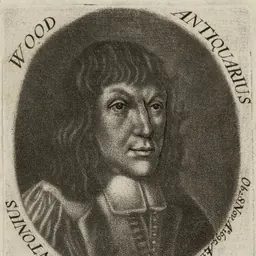
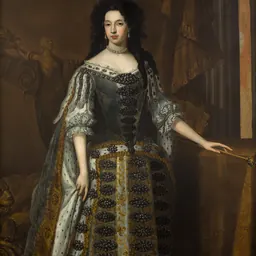
Killigrew was skilled at portraits. James Winn has suggested that the faces of the Graces in "Venus attired by the Graces" resemble those in portraits known to be of Anne Finch, Mary of Modena and Anne Killigrew. Anthony Wood in his 1721 essay defends Dryden's praise of Killigrew, confirming that Killigrew "was equal to, if not superior" to any of the compliments lavished upon her. Furthermore, Wood asserts that Killigrew's poems must have been well received in her time, otherwise "her Father would never have suffered them to pass the Press" after her death. as irony, as a validation of poetry rather than of a person, or as political allegory.
Robert Daly suggests that Dryden's ode should be read in the context of Dryden's beliefs about poetry as a moral force, and with an awareness of Dryden's involvement within a contemporary community of poets. Dryden viewed poets as teachers of moral truths, and repeatedly sought to celebrate and encourage other writers. Killigrew was significant to Dryden as a moral exemplar as well as a writer of poems, and is praised by him on both grounds and presented as a model for others. For Dryden, these are not separate issues but deeply connected: religion, morals, poetry and politics are fundamentally interrelated. Anne Killigrew may be a younger poet of lesser skill than Dryden, but she shares Dryden's "operative ethic". Seen in this light, as an "ethically sensitive poet", who was "a member of the community whose goals he sought to serve, she merited and received his best effort". In praising Killigrew and encouraging others to read her work, Dryden "serve the long cause of poetry."
Critiques of Killigrew's poetry
Killigrew's work includes religious and pastoral poems, as well as tributes to those in family and court circles, and intensely personal poems.
The very poetic structures that women chose reflected this and helped them to avoid charges of inappropriate self-display.
Finally Killigrew introduces darker themes into the pastoral form, using it to warn women of the dangerous potential of transient love affairs. All too often pastoral love is a matter of beauty or availability. The speaker lists the suffering nymphs who have given away their hearts only to be tossed aside. Killigrew's changes to the pastoral tradition suggest a commentary on both the moral tradition of the pastoral and the mores of the Stuart court, which has been described as both hedonistic and "notoriously libertine". In "To the Queen", Killigrew turns the heroic mode of her opening poem, "Alexandreis", on its head and uses it to critique the Stuart court. Alexander's "Frantic Might" is contrasted with the queen's "Grace and Goodness."
quote Th'Envious Age, only to Me alone, Will not allow, what I do write, my Own, But let 'em Rage, and 'gainst a Maide Conspire, So Deathless Numbers from my Tuneful Lyre Do ever flow; so Phebus I by thee Divinely Inspired and possest may be; I willingly accept Cassandras Fate, To speak the Truth, although believ'd too late. but later destroyed by a fire. Her mother, Judith Killigrew, was also buried there, as of 2 February 1683.
Writing Mezzotint of Anne Killigrew, based on a self portrait she had painted.
Editions
Poems
Alexandreis To the Queen A Pastoral Dialogue On Death Upon Being Contented with a Little On Billinda On an Atheist On Galla A Farewell to Worldly Joys The Complaint of a Lover Love, the Soul of Poetry To my Lady Berkeley St. John the Baptist Herodias Nimphs of Diana's An Invective against Gold The Miseries of Man Verses Queen Katherine My Lord Colrane The Discontent A Pastoral Dialogue A Pastoral Dialogue On my Aunt Mrs. A. K. On a Young Lady On the Duchess of Grafton Penelope to Ulysses An Epitaph on Herself An Ode Young Gallant Cloris Charmes Upon a Little Lady Motions of Eudora
Don’t just read it —
keep it.
Full-length biographies made to live with: read them, listen on the way to work, watch them tonight.
- E-book
- Audio
- Video
Instant download · yours to keep · every purchase keeps this site free
Important facts
People in Anne Killigrew's life
Named in this biography and alive at the same time


Related people
Same field, nearest in time

Contemporaries
People whose lives overlapped Anne Killigrew's




Frequently asked questions
Who was Anne Killigrew?
English poet and artist (1660-1685)
When was Anne Killigrew born?
Anne Killigrew was born in 1660 in St Martin's Lane.
When did Anne Killigrew die?
Anne Killigrew died on 16 June 1685 in London.
What was Anne Killigrew's occupation?
Anne Killigrew was a painter, poet, writer and artist.
What nationality was Anne Killigrew?
Anne Killigrew was English and British.
Sources & further reading
Cite this page
APA: Biography.guide. (2026). Anne Killigrew. https://biography.guide/anne-killigrew-painter/
MLA: "Anne Killigrew." Biography.guide, https://biography.guide/anne-killigrew-painter/.
Chicago: "Anne Killigrew." Biography.guide. https://biography.guide/anne-killigrew-painter/.
Data last updated: 2026-09-20 · Spot an error? Report a correction.
Page generated 2026-09-27 05:18 UTC