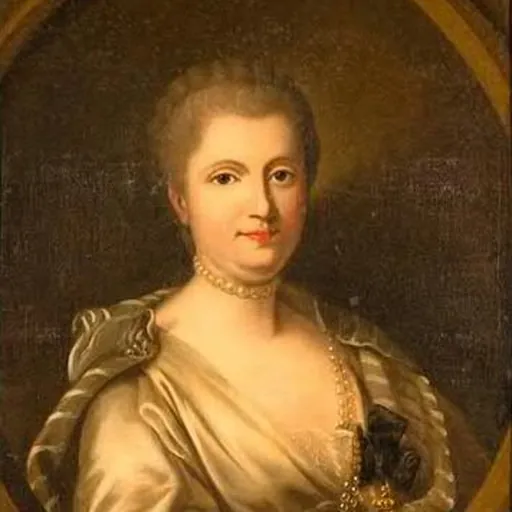
About Anne d'Arpajon
Lived 1729 – 1794 (aged 65). Anne d'Arpajon was a French lady-in-waiting.
Anne d'Arpajon, comtesse de Noailles (born Anne Claude Louise; 4 March 1729 – 27 June 1794 ) was a French noblewoman and court official. She served as the dame d'honneur of two Queens of France, Marie Leszczyńska and Marie Antoinette. She was called "Madame Etiquette" by Marie Antoinette for her insistence that the minutiae of court etiquette could never be altered or disregarded.
Early life Anne d'Arpajon was the daughter of Louis de Sévérac, Marquis of Arpajon-sur-Cère (1667–1736), and Anne Charlotte Le Bas de Montargis. Her father purchased the Marquisat of Saint-Germain-lès-Châtres in 1720 and was granted permission by Philippe d'Orléans (Regent for Louis XV), to rename it Saint-Germain-lès-Arpajon, and its seat as Arpajon. Her mother was a lady-in-waiting to Marie Louise Élisabeth d'Orléans, daughter of the regent.
Anne Claude married Philippe de Noailles, Duke of Mouchy, Captain of the Hunts at Versailles, on 27 November 1741, aged only twelve. Noailles was one of the leading families of France. While having the title duke of Mouchy and prince de Poix, he was known at court as the comte de Noailles.
Courtier In 1763, she was appointed dame d'honneur to queen Marie Leszczyńska, succeeding Marie Brûlart. She served until the death of the queen five years later. Her position made her the first in rank of all ladies-in-waiting at the French royal court. Her daughter Louise Henriette Charlotte Philippine de Noailles was appointed dame du palais.
Upon the death of the queen in 1768, she retained her position awaiting to be transferred to the equivalent position in the household of the new Dauphine of France, alongside the Dame d'atour, Amable-Gabrielle de Villars, and the rest of the ladies-in-waiting to the late queen. In the spring of 1770, they were dispatched to the border to welcome the new dauphine, Marie Antoinette of Austria, upon her arrival in France.
In April 1770, she and the rest of the Household of the Dauphine were introduced to Marie Antoinette by her husband Philippe de Noailles in the Pavilion of Kehl at Rhen. During the ceremony when the new crown princess was handed over from her Austrian to her French entourage, a famous scene allegedly took place, in which Marie Antoinette lost her composure, burst into tears and threw herself into the arms of the countess de Noailles, whose chilly response resulted in her regaining her composure.
As dame d'honneur, Anne de Noailles was responsible for overseeing the behavior of Marie Antoinette and her ladies-in-waiting. She was tasked with instructing the future queen in the etiquette of the French royal court and ensuring her compliance. Early on, this role led to discord between de Noailles and Marie Antoinette, who resented the restrictions imposed on her life by court etiquette. During their journey from the border to a meeting with the king and the dauphin in the Forest of Compiègne, de Noailles in Nancy reproached Marie Antoinette for being overly familiar with her relatives from the House of Lorraine, reminding her that, as the dauphine, she should not treat the king's subjects as equals. On 25 August 1793, the de Noailles and their daughter were placed under house arrest on their estate in accordance with the decree against potential enemies of the state. Their daughter was transferred to Beauvais and Chantilly on 6 October, while they were initially allowed to remain in their home because of their age.
On 16 October, Anne and Philippe de Noailles were transferred to La Force Prison in Paris. In the warrant for their arrest, Philippe de Noailles was described as the father of an enemy of the state, while Anne de Noailles was included in the arrest simply in her capacity as his wife.
In La Force, however, prisoners were separated by gender, and the couple was transferred to Luxembourg Prison after having successfully asked to be moved to a prison where they could share a cell. They also asked that their daughter be transferred with them, but this was not granted. As with other prisoners, they were allowed to have servants and were waited upon by their maid Latour, who left descriptions of their imprisonment. They lived comfortably in prison and socialized with the other aristocratic prisoners, particularly the Duchess of Orléans. During their imprisonment, they were given a questionnaire, which was answered by Philippe de Noailles, and which Anne de Noailles also signed with the comment that she had never had any opinions other than those of her husband.
On 5 April 1794, they were joined by their daughter-in-law and niece Louise de Noailles (1758–1794), as well as her grandmother and mother, Catherine de Cossé-Brissac and Henriette Anne Louise d'Aguesseau, who were also the widow and daughter-in-law of Philippe's brother Louis, 4th duc de Noailles.
Anne and Philippe de Noailles were transferred to the Conciergerie, where they were put on trial before the tribunal. Philippe de Noailles was sentenced to death after being judged guilty of the charges of being an enemy agent and having supplied enemy émigrés and enemies of the state with funds. Anne de Noailles received the same sentence as an accomplice of her husband.
Anne and her husband Philippe were guillotined on 27 June 1794. On 22 July 1794, their daughter-in-law Louise de Noailles, as well as their sister-in-law and niece, Catherine de Cossé-Brissac and Henriette Anne Louise d'Aguesseau, were guillotined. Their other niece, Adrienne, wife of the Marquis de Lafayette, was saved by the intervention of America's Minister to France, James Monroe. They and the other nobles who died on the guillotine are buried in the mass grave at the Picpus Cemetery.
Issue Louise Henriette Charlotte Philippine de Noailles (1745-1832) Charles Adrien de Noailles (1747) Prince of Poix Louis Philippe de Noailles (1748-1750) Prince of Poix Daniel François Marie de Noailles (1750-1752) Marquis of Noailles, later Prince of Poix Philippe de Noailles, Duke of Mouchy (1752-1819) Louis Marie de Noailles, Viscount of Noailles (1756-1804)
In popular culture Anne d'Arpajon was played by Cora Witherspoon in Marie Antoinette (1938) and by Judy Davis in Marie Antoinette (2006).
Don’t just read it —
keep it.
Full-length biographies made to live with: read them, listen on the way to work, watch them tonight.
- E-book
- Audio
- Video
Instant download · yours to keep · every purchase keeps this site free
Important facts
Family & relationships
People in Anne d'Arpajon's life
Named in this biography and alive at the same time
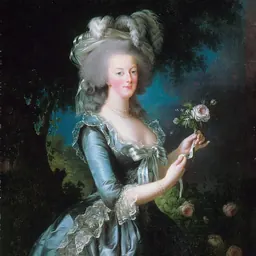
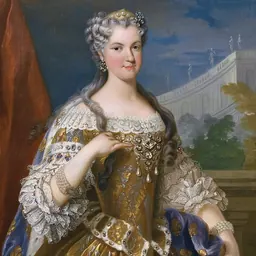


Related people
Same field, nearest in time

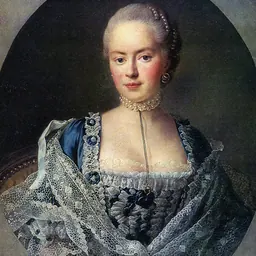

Contemporaries
People whose lives overlapped Anne d'Arpajon's






Frequently asked questions
Who was Anne d'Arpajon?
French noblewoman (1729-1794)
When was Anne d'Arpajon born?
Anne d'Arpajon was born on 4 March 1729 in Arpajon.
When did Anne d'Arpajon die?
Anne d'Arpajon died on 27 June 1794 in Paris.
What was Anne d'Arpajon's occupation?
Anne d'Arpajon was a lady-in-waiting.
What nationality was Anne d'Arpajon?
Anne d'Arpajon was French.
Sources & further reading
· DBpedia: Anne de Noailles (1729–1794)
Cite this page
APA: Biography.guide. (2026). Anne d'Arpajon. https://biography.guide/anne-d-arpajon/
MLA: "Anne d'Arpajon." Biography.guide, https://biography.guide/anne-d-arpajon/.
Chicago: "Anne d'Arpajon." Biography.guide. https://biography.guide/anne-d-arpajon/.
Data last updated: 2026-09-23 · Spot an error? Report a correction.
Portrait: Wikimedia Commons · author & licence
Page generated 2026-09-27 05:06 UTC