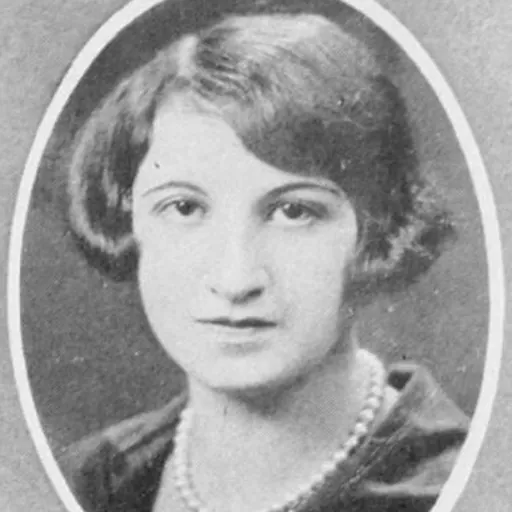
About Anne Anastasi
Lived 1908 – 2001 (aged 92). Anne Anastasi was an American psychologist and university teacher.
Family and education Anne Anastasi was born on December 19, 1908, in New York City to Anthony Anastasi and Theresa Gaudiosi Anastasi. Her father died when she was a baby, and his family did not remain in contact. She grew up with her mother, her mother's brother, and her grandmother. Theresa supported the family, eventually working for the Italian newspaper Il Progresso. Anne was homeschooled by her grandmother until sixth grade. After brief periods in public and preparatory schools, she entered Barnard College at age 15. Her interests in mathematics and psychology. She graduated from Barnard College with a bachelor's degree in psychology at age 20 in 1928, and completed a PhD in psychology at Columbia University in 1930.
Anastasi was hired by Harry Hollingworth to teach at Barnard, where she remained from 1930 to 1939. She worked at Queens College, City University of New York from 1939 to 1947, becoming chair of the department. She worked at Fordham University from 1947 to 1979, serving as chair from 1968 to 1974. She retired as a full professor in 1979, and became a professor emerita.
Differential psychology In 1937, Anastasi published the first edition of Differential Psychology, a pioneering work on what she defined as "the scientific study of differences between groups" Her definition encompassed not only race and ethnicity, but also group differences reflective of age, education, family, gender, religion, and social class. Her approach to the study of culture and difference has been described as an "elegant model" that incorporates a number of current fields of study with "brilliant simplicity".
Anastasi also addressed the methodological challenges involved in studying group differences. These were clearly demonstrated in the 1930s by Nazi "race science". Anastasi's summary of such work was blistering: "The array of evidence in support of this [Aryan supremacy] is incomplete and one-sided at its best, and fantastic and mythical at its worst." Between the methodological difficulties involved and the horrors perpetrated by the Nazis, differential psychology largely disappeared as a field of research. By 1954, Anastasi herself had moved from the study of group differences to that of individual differences.
Psychological testing Problems addressed Anastasi's 1983 essay "What Do Intelligence Tests Measure?" aimed to correct misinterpretations regarding the understanding and use of aptitude and personality tests. Anastasi pointed out that the "testing boom" of the 1920s caused the term IQ to be adopted and misused by the general public. According to Anastasi, the misappropriation of the term created connotations that intelligence is heritable, stable throughout one's lifespan, and resistant to change. She cautioned against interpreting such tests as serving a strong predictive function, as scores only indicated to what degree a person acquired the knowledge and skills for the criterion of a given test. They evaluate for what is in high demand within a specific context; what an individual can achieve in the future depends not only on his or her present intellectual status as determined by the test, but also on subsequent experiences. encapsulates Anastasi's methodological positions. Anastasi stressed that, in order to evaluate any psychometric test, the tester must be knowledgeable of the main features of the tests, particularly as they apply to norms, validity, and reliability. Her approach to standard scores and standard deviation was one in which she believed that understanding statistical concepts was essential to understanding the meaning of statistical computation. Instead of approaching such tests as fundamentally different from norm-referenced tests, Anastasi maintained that the two could be combined to give a more comprehensive evaluation of the individual's test performance. An example is the Stanford Diagnostic Test in reading and mathematics, which assesses specific subject mastery by combining both interpretations. In the latest edition of the book, Anastasi and her co-author Susana Urbina suggested that more accurate results can be obtained by combining information from several fairly homogeneous tests. Each one would cover a single trait, or different aspect of the criterion.
Legacy APA Division 5: Quantitative and Qualitative Methods awards the Anne Anastasi Dissertation Award.
Don’t just read it —
keep it.
Full-length biographies made to live with: read them, listen on the way to work, watch them tonight.
- E-book
- Audio
- Video
Instant download · yours to keep · every purchase keeps this site free
Important facts
Related people
Same field, nearest in time



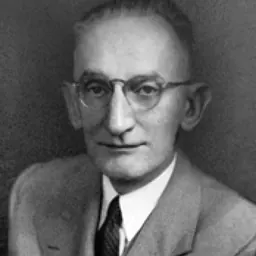

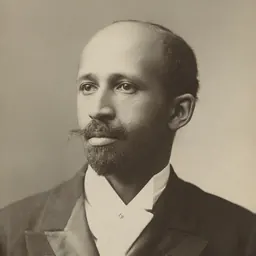
Contemporaries
People whose lives overlapped Anne Anastasi's


Frequently asked questions
Who was Anne Anastasi?
American psychologist (1908-2001)
When was Anne Anastasi born?
Anne Anastasi was born on 19 December 1908 in New York City.
When did Anne Anastasi die?
Anne Anastasi died on 4 May 2001 in New York City.
What was Anne Anastasi's occupation?
Anne Anastasi was a psychologist and university teacher.
What nationality was Anne Anastasi?
Anne Anastasi was American.
Sources & further reading
Cite this page
APA: Biography.guide. (2026). Anne Anastasi. https://biography.guide/anne-anastasi/
MLA: "Anne Anastasi." Biography.guide, https://biography.guide/anne-anastasi/.
Chicago: "Anne Anastasi." Biography.guide. https://biography.guide/anne-anastasi/.
Data last updated: 2026-09-20 · Spot an error? Report a correction.
Portrait: Wikimedia Commons · author & licence
Page generated 2026-09-27 04:58 UTC