
About Anna Maria Lenngren
Lived 1754 – 1817 (aged 62). Anna Maria Lenngren was a Swedish poet, translator, salonnière and writer.
Anna Maria Lenngren (; 18 June 1754 – 8 March 1817) was one of the most famous poets in Swedish history. Her father and brother were also poets.
One of her best-known poems is Några ord till min kära dotter, ifall jag hade någon ("Advice to my dear daughter, if I had one"). She also wrote about Sweden's class system in the satirical poems against snobbery Hans nåds morgonsömn ("His Grace's morning snooze") and Grevinnans besök ("The Countess's visit").
Life Early life Anna Maria Lenngren was born in Uppsala as the daughter of the poet Magnus Brynolf Malmstedt (1724–1798), a professor in Latin at Uppsala University, and Märta Johanna Florin (d. 1788). Her father was a member of the Moravian Church and was known for his social work; from 1772, he hosted a school for poor children in his home. Both her parents published hymns, and her brother Johan Magnus (1749–80) wrote secular poems.
Anna Maria Lenngren became set against religion and in favor of the realism of the Age of Enlightenment through dislike of her father's passionate religious feelings; but her humanism and passion for social justice have also been attributed to her father's influence. In her social views, she felt sympathy for the working classes, opposed the privileges of the nobility and acted as a spokesperson for the "third estate", idealizing a simple and humble life style. She was one of only three women members of the Utile Dulci, the others being Anna Charlotta von Stapelmohr and Anna Brita Wendelius.
Her successful early career during the 1770s was influenced by her feminist ideas, foremost her defense of women's right to participate and engage in intellectual work. She herself officially discontinued her career after her marriage by only publishing her works under anonymous pseudonyms and refusing to admit to them. Her poem Dröm, which was given as a response to the admiration from the Academy in 1797, and in which she describe herself as unworthy, has also been interpreted as ironic in this regard. Above all, she fought for the intellectual freedom of women; that also women should be allowed to have opinions, and criticized male double standards.
Her best-known poems on the class system are ("Morning prayer of His Grace") and ("Visit from the Countess"), in which she satirizes snobbery, and ("Boys"), in which she laments the fact that children of all classes can play with each other during their childhood, but that this solidarity and friendship is destroyed when they became adults, along with the popular ("There was no oatmeal but still a happy Christmas"), in which she describes the effects of poverty.
Legacy
Anna Maria Lenngren is one of the most famous poets in the history of Sweden. Her production has made her one of the few 18th-century Swedish poets who are still commonly read, and she has been published a number of times after her death during the 19th, 20th and 21st centuries.
In accordance with her instructions, her collected poems were published after her death by her widower under the name ("Attempts at Poetry"). After its publication, the Royal Swedish Academy had a memorial medal made with the inscription: "The less she sought fame, the more she gained it".
Her correspondence with her personal friend Gustaf af Leopold from 1795 to 1798 has been published.
In fiction Anna Maria Lenngren is portrayed in the novel ("Chamber-pot child") by Anna Laestadius Larsson from 2014, where she, alongside Ulrika Pasch, Ulrika Widström, Jeanna von Lantingshausen, Marianne Ehrenström and Sophie von Fersen, becomes a member in a Blue Stockings Society organized by the Queen of Sweden and Norway, Hedvig Elisabeth Charlotte of Holstein-Gottorp.
Works Poems , Upsala, 1772 , Upsala veckotidningar, 1772, Upsala , Upsala, 1774 , Upsala vecko-tidning, 1774
, Uppsala, 1775 Uppsala, 1778 Impromptu, Lunds vecko-blad, 1775 , Stockholm, 1777 , 1778 , 1798 , 1819 (The Portraits) (Visit from the Countess) (Miss Juliana) (His Grace's morning snooze) (The Boys) (The happy party) (Advice to my dear daughter, if I had one) 1794 (Other fabrics, Other customs!)
Prose Contributions in , 1774–1777 Contributions in , 1778–1803, 1809–1810, 1814–1816 Contributions in , 1789–1791, 1793, 1796–1797, 1801, 1816 Contributions in , 1792, 1794–1797, 1801 Contributions in , 1795, 1796, 1798, 1800, 1803, 1816
Translations J F Marmontel: Lucile operetta, 1776 , Comedie ballet, 1778 , Heroide, 1778 C-S Favart: Arsene, comedie, 1779 O Wolff: , 1819
Don’t just read it —
keep it.
Full-length biographies made to live with: read them, listen on the way to work, watch them tonight.
- E-book
- Audio
- Video
Instant download · yours to keep · every purchase keeps this site free
Important facts
People in Anna Maria Lenngren's life
Named in this biography and alive at the same time
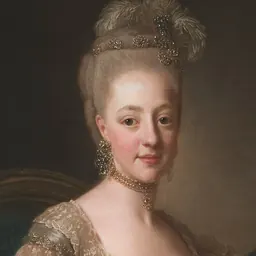


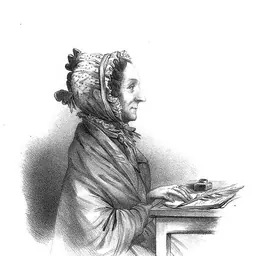

Related people
Same field, nearest in time

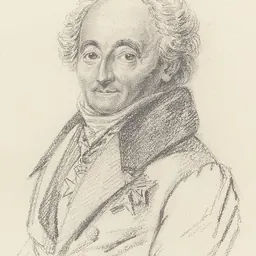
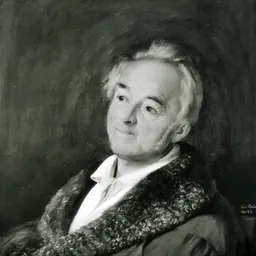
Contemporaries
People whose lives overlapped Anna Maria Lenngren's





Frequently asked questions
Who was Anna Maria Lenngren?
Swedish writer (1754-1817)
When was Anna Maria Lenngren born?
Anna Maria Lenngren was born on 18 June 1754 in Uppsala.
When did Anna Maria Lenngren die?
Anna Maria Lenngren died on 8 March 1817 in Klara Church Parish.
What was Anna Maria Lenngren's occupation?
Anna Maria Lenngren was a poet, translator, salonnière and writer.
What nationality was Anna Maria Lenngren?
Anna Maria Lenngren was Swedish.
Sources & further reading
· Wikipedia: Anna Maria Lenngren
· DBpedia: Anna Maria Lenngren
Cite this page
APA: Biography.guide. (2026). Anna Maria Lenngren. https://biography.guide/anna-maria-lenngren/
MLA: "Anna Maria Lenngren." Biography.guide, https://biography.guide/anna-maria-lenngren/.
Chicago: "Anna Maria Lenngren." Biography.guide. https://biography.guide/anna-maria-lenngren/.
Data last updated: 2026-09-26 · Spot an error? Report a correction.
Page generated 2026-09-27 05:15 UTC