
Angus MacDonald
Roman Catholic Archbishop of St. Andrews and Edinburgh
About Angus MacDonald
Lived 1844 – 1900 (aged 55). Angus MacDonald was a catholic priest and catholic bishop.
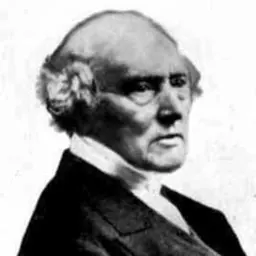
Angus MacDonald (18 September 1844 – 29 April 1900) was a Scottish Roman Catholic priest, who later served as the first Bishop of Argyll and the Isles from 1878 to 1892 and as the third Archbishop of St. Andrews and Edinburgh from 1892 to 1900. In addition to his role in building new church buildings, parochial schools, and other institutions after almost three centuries of religious persecution of the Catholic Church in Scotland, Archbishop MacDonald is most notable for his leadership role in the Highland Land League agitation as Bishop of Argyll and the Isles. The Bishop embraced this role in order to end the absolute power of the Anglo-Scottish landlord class to profit through rackrenting and the Highland Clearances on their estates, and to improve the living standards of the laity during a time when he led "the most impoverished Diocese in Britain."
Early life Born in Borrodale on the Isle of Skye on 18 September 1844, he was the third son of Angus MacDonald and Mary MacDonald (née Watson). His elder brother was Hugh MacDonald, Bishop of Aberdeen. Angus MacDonald was educated at St Cuthbert's College, Ushaw. Afterwards, he graduated from the University of London with a Bachelor of Arts. The Diocesan See, however, had been placed in Oban anyway, because Oban was, according to the 1882 Ordnance Gazetteer of Scotland, "the capital of the West Highlands and the Charing Cross of the Hebrides."
He became a familiar sight on the Highland steamboats, often clad in oilskin and sou'wester. He built churches and schools, and, with his priests, worked incessantly for the glory of God and the increase of the religion to which he and his ancestors had always adhered. While rebuilding churches where excessive rents, religious discrimination, political bossism, and the Highland Clearances by the Anglo-Scottish landowning gentry had already made the See of Argyll and the Isles, "the most impoverished Diocese in Britain", Bishop MacDonald also cared very deeply, as he once wrote, about working, "to obtain redress for the people", during the same era as the Highland Land League agitation.
In May 1883, Bishop MacDonald wrote a letter to the Crofter's Commission from the Oban Rectory he shared with the famous Scottish Gaelic poet Fr. Allan MacDonald, "I refer to the way in which the Catholics (i.e. the great bulk of the population) of South Uist and Barra have been dealt with in educational matters, in being refused Catholic teachers in schools attended almost exclusively by Catholic children... I believe that a statement of this case will show the existence of a widespread evil, in the dependent and downgrading position in which such tenants are apt to be placed - with no security of tenure, no guarantee against removal at will, and with the fear constantly hanging over them, that if they assert their rights they may be made to suffer for it, without having power to obtain redress... In other Catholic districts on the mainland, Catholics had their feeling invariably respected by [school] boards composed mainly of non-Catholic members. Here [in the Islands], where they could have by their votes secured a majority of seats and then looked after their own interests, they were deterred by fear from exercising that right."
According to Roger Hutchinson, the Bishop's choice to assign Gaelic-speaking priests from the Scottish mainland to parishes in the Hebrides was accordingly no accident. About that time, when the Bishop and his priests, similarly to Irish priests during the Repeal Campaign, the Tithe War and the Land War, were the leaders of direct action, rent strikes, and other acts of resistance to the Anglo-Scottish landlords, Fr. Michael MacDonald has since commented, "I think that one of the things that may have influenced the boldness of the priests at that time was simply that they had no relations on the islands who could have been got at by the estate Factor or others."
Roger Hutchinson further writes that the hostility of Bishop MacDonald and his priests to the absolute power granted to the landlords under Scots property law at the time, which Hutchinson inaccurately labels as Liberation Theology rather than Distributism, was fueled by a deep sense of outrage over the decimation of the Catholic population of the Scottish Gaeldom by the Highland Clearances. A further influence was the knowledge that the roots of the Clearances lay in the Classical Liberalism preached in Adam Smith's The Wealth of Nations during the Scottish Enlightenment and in that ideology's hostility to, "bigotry and superstition"; which were, in 18th- and 19th-century Scotland, routinely used as shorthand for Roman Catholicism.
After 14 years as Bishop of Argyll and the Isles, he was translated to the Metropolitan see of St Andrews and Edinburgh on 15 July 1892. His replacement as Bishop of Argyle and the Isles was George Smith. John Lorne Campbell, however, has subtly criticized the Vatican's decision to appoint Bishop Smith to an overwhelmingly Gaelic-speaking Diocese. This is because Bishop Smith, a native of Banffshire, was "a successor who, although a man of holy personality, knew no Gaelic."
As Archbishop and Primate of Scotland, MacDonald continued with the same zeal, humility, gentleness, tact, and firm attention to everything in his new duties as he had had under his old charge.
He died in office on 29 April 1900, aged 55.
Don’t just read it —
keep it.
Full-length biographies made to live with: read them, listen on the way to work, watch them tonight.
- E-book
- Audio
- Video
Instant download · yours to keep · every purchase keeps this site free
Important facts
People in Angus MacDonald's life
Named in this biography and alive at the same time



Related people
Same field, nearest in time

Contemporaries
People whose lives overlapped Angus MacDonald's

Frequently asked questions
Who was Angus MacDonald?
Roman Catholic Archbishop of St. Andrews and Edinburgh
When was Angus MacDonald born?
Angus MacDonald was born on 18 September 1844 in Borrodale.
When did Angus MacDonald die?
Angus MacDonald died on 29 April 1900.
What was Angus MacDonald's occupation?
Angus MacDonald was a catholic priest and catholic bishop.
What nationality was Angus MacDonald?
Angus MacDonald's recorded nationality: Scottish people.
Sources & further reading
· DBpedia: Angus MacDonald (bishop)
Cite this page
APA: Biography.guide. (2026). Angus MacDonald. https://biography.guide/angus-macdonald-catholic-priest/
MLA: "Angus MacDonald." Biography.guide, https://biography.guide/angus-macdonald-catholic-priest/.
Chicago: "Angus MacDonald." Biography.guide. https://biography.guide/angus-macdonald-catholic-priest/.
Data last updated: 2026-09-20 · Spot an error? Report a correction.
Page generated 2026-09-27 05:23 UTC